Germany builds data ark for US climate science — SkimNews
Get the Energy newsletter
Daily energy & climate — solar, EVs, oil, the policy fights and tech bets shaping the transition. Free.
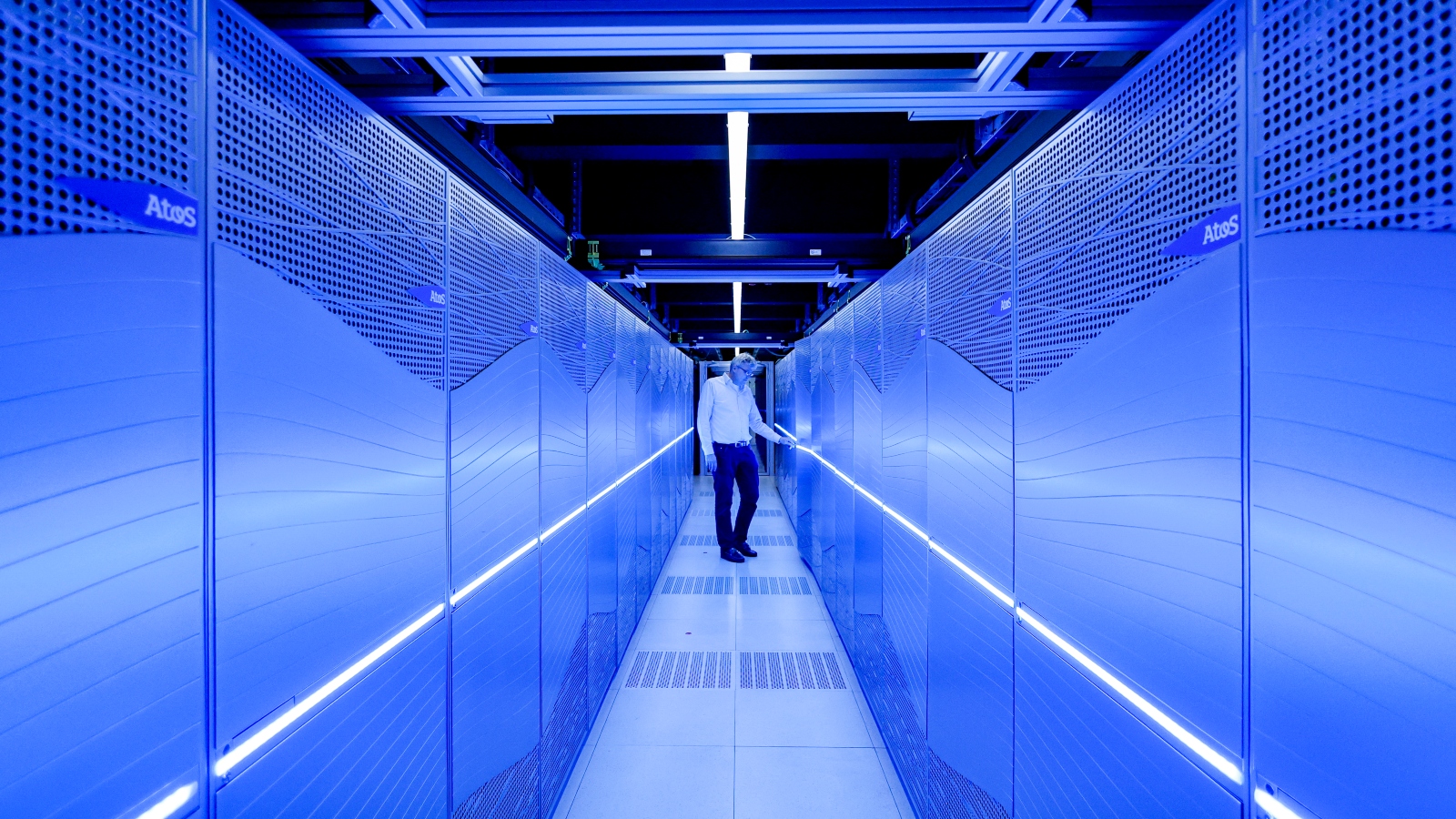
- Germany's DKRZ in Hamburg is adding roughly 5 petabytes of storage to its existing 254 PB for the CMIP7-ark project, a backup of US climate simulations feeding the 2029 IPCC assessment, with DKRZ's Christopher Kadow warning that 'important contributions might be lost for technical or political reasons.'
- The German Research Foundation launched a $35 million program in late 2025 to permanently store copies of US public scientific data; program manager Kathrin Winkler said 'deletion of data has also become a possibility' and warned of manipulation 'to skew findings in a desired direction.'
- The Trump administration quit both the UN IPCC and the UN Framework Convention on Climate Change in January 2025, slashed climate research funding, stripped human-caused warming references from government websites, and attempted to defund the Mauna Loa CO2 observatory — a cut Congress later rejected.
- Elon Musk's Department of Government Efficiency completely removed datasets from NASA's SEDAC in April 2025, forcing institutions to scrape 300 federally funded datasets from active servers and transfer them to Harvard's Dataverse Repository, according to former SEDAC manager Alex de Sherbinin.
- The American Geophysical Union formed the US Academic Alliance for the IPCC after the administration refused to send US experts to 2025 IPCC meetings, nominating nearly 300 scientists as authors, and launched a global Data Resilience Project in summer 2025.
- Six other backup initiatives — including SHIELD and SEND (Secure Endangered Earth Data) — have received funding alongside CMIP7-ark, reflecting a broader paradigm shift as single-site storage is now deemed too precarious given hacking, natural disasters, and war.
- Russia's bombardment of Ukraine has destroyed universities and research institutes; Ukrainian researcher Anastasiia Lutsenko said Russians 'know how much lasting harm they can inflict by attacking science,' and a German-Polish-Ukrainian team had already transferred 1808–1880 meteorological records to the University of Giessen before the invasion.
Why it matters: The German Research Foundation's $35 million commitment marks a structural shift: allied governments are now treating US scientific data as critical infrastructure requiring sovereign foreign backup, not merely as academic records. US researchers gain a safety net for the 2029 IPCC assessment, but the baseline assumption that US agencies will reliably steward publicly funded data has collapsed — forcing the world's largest scientific community to rely on sneakernet shipments of hard drives to Germany.
Ask SkimNews