Qasem Basir Missile Debuts Against US Carrier Group — SkimNews

Get the Geopolitics newsletter
Daily geopolitics — wars, elections, sanctions, the diplomatic moves that move markets. Free.
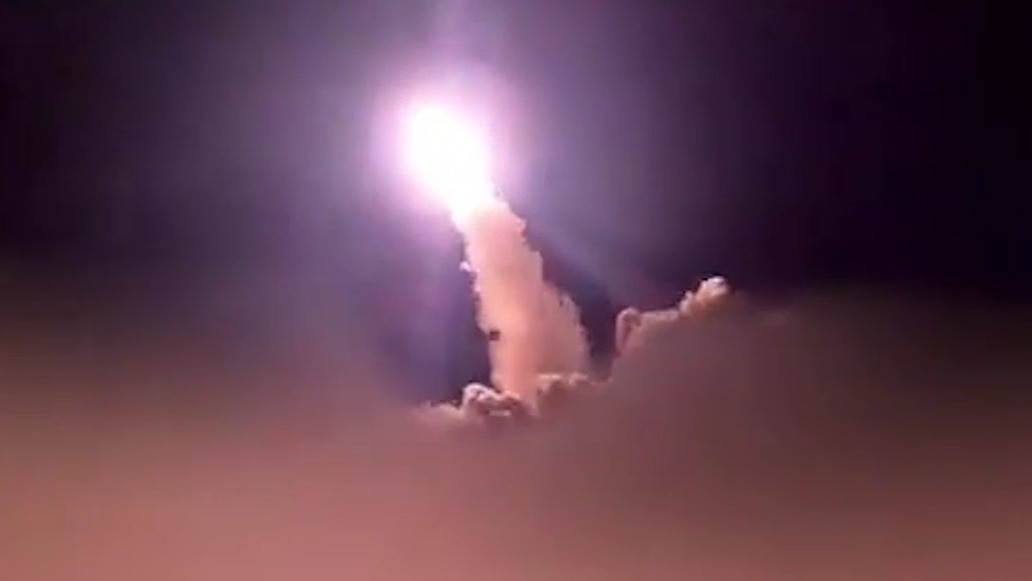
- Iran reportedly fired the solid-fuel, 1,200-km-range Qasem Basir — carrying a 500-kg maneuverable warhead and passive electro-optical terminal sensors — at the USS George Washington and escort destroyers near the Strait of Hormuz; CENTCOM said all incoming attacks failed without US casualties.
- CENTCOM retaliated by destroying multiple Iranian crude tankers linked to the IRGC off Kharg Island and Jask, an "asymmetric economic deterrence" response that hit commercial rather than military targets.
- The Qasem Basir's electro-optical seeker compares terminal-phase imagery to stored reference data to correct onto a moving target and emits no detectable signal, making it harder to jam or detect than active-radar seekers.
- Iran's kill web may integrate Russian ISR satellites and signals intelligence with Chinese commercial imaging constellations for wide-area, sub-meter tracking, while Iranian coastal radar and the Khayyam satellite narrow targeting — placing the missile at the sharp end of a tiered chain.
- The Iran War has effectively cut off 25% of global oil supplies via Hormuz, and Houthi capture of Perim Island at the Bab Al-Mandeb (another 12% of global oil) could force the US to stretch naval forces across two chokepoints in constrained battlespace.
- Iran has resumed producing liquid- and solid-fuel ballistic missiles in greater quantities than before the war began using underground facilities and stockpiled parts, per WSJ reporting that contradicts Defense Secretary Pete Hegseth's earlier claim that Iran could not regenerate its arsenal.
- Iran could retaliate asymmetrically by striking Gulf state desalination plants — which supply virtually all their water — while only 3% of Iran's own water comes from desalination, giving Tehran leverage in any escalation.
Why it matters: Terminal optical guidance on a solid-fuel anti-ship missile, paired with Russian and Chinese ISR support, means US carriers and destroyers could face saturation attacks that deplete finite interceptor stockpiles without needing a sinking. The WSJ-reported missile production resurgence — contradicting Hegseth's claim that Iran couldn't regenerate — means Tehran can sustain that pressure longer than US officials publicly concede.
Ask SkimNews