Japan's Koizumi visits Yasukuni Shrine on 81st WWII anniversary — SkimNews

Get the Geopolitics newsletter
Daily geopolitics — wars, elections, sanctions, the diplomatic moves that move markets. Free.
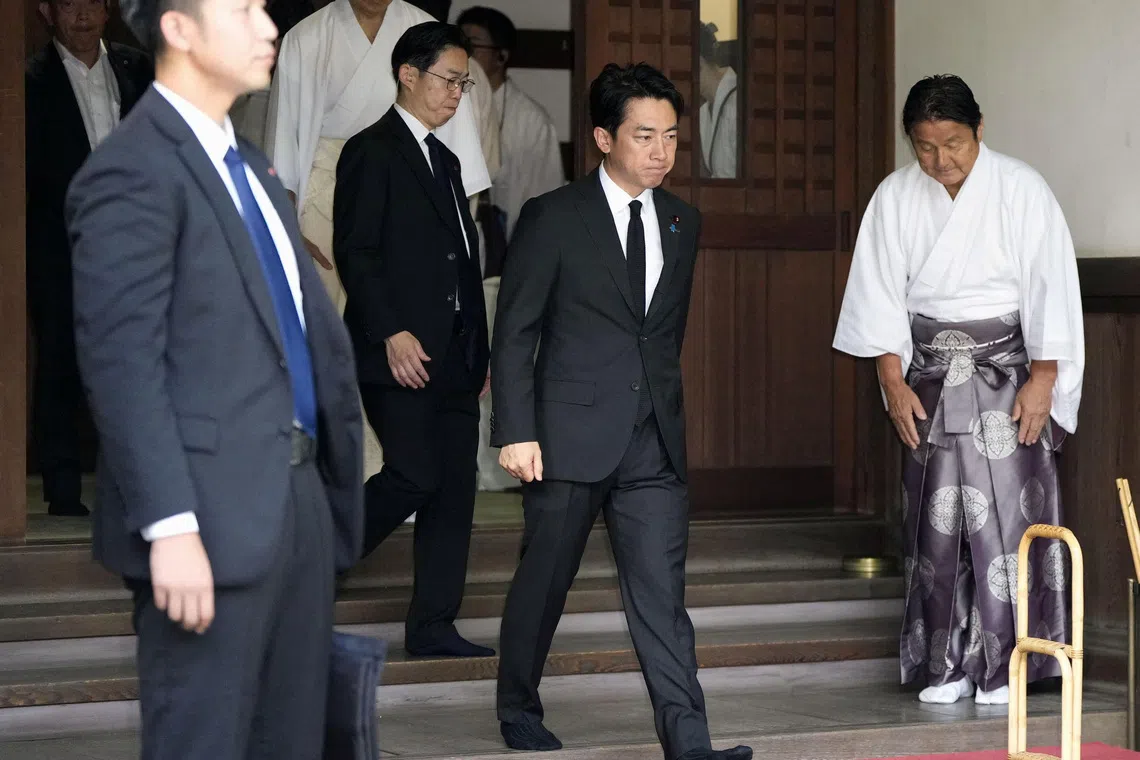
- Shinjiro Koizumi visited Yasukuni Shrine on Saturday, on the 81st anniversary of Japan's surrender in WWII, drawing condemnation from China and South Korea.
- Yasukuni Shrine commemorates 2.5 million war dead, including 14 wartime leaders convicted of the most serious war crimes and at least 1,000 others found guilty by Allied tribunals after Japan's 1945 defeat.
- China's Ministry of Foreign Affairs said it "strongly condemns" both Koizumi's visit and Prime Minister Takaichi's offering to the shrine, and lodged "strong protests" with the Japanese side.
- South Korea's Ministry of Foreign Affairs expressed "deep regret" over the "anachronistic" actions of Japanese leaders who sent offerings or visited the shrine, urging "humble reflection and sincere remorse."
- Prime Minister Sanae Takaichi did not make the visit but reportedly sent an offering — a practice previous Japanese PMs have followed — with local media reporting the gesture.
- On Instagram, Koizumi said he visited to offer "sincere condolences to the heroic spirits who sacrificed their precious lives for the nation" and reaffirmed Japan's "postwar path as a peaceful nation."
- The last sitting Japanese prime minister to visit Yasukuni was Shinzo Abe in December 2013, which drew an expression of disappointment from the Obama administration; the last defence minister to visit was Minoru Kihara in 2024.
Why it matters: Koizumi's visit and Takaichi's offering reignite a recurring bilateral flashpoint that Beijing and Seoul routinely exploit to press Japan on wartime history. Because 14 Class-A war criminals are among those commemorated, the 81st-anniversary timing guarantees another cycle of formal rebukes, complicating Tokyo's diplomatic posture across Northeast Asia.
Ask SkimNews