Artemis I Reveals Moon Radiation Less Extreme Than Expected — SkimNews
Get the Health newsletter
Daily health & science — research, biotech, public health, the studies worth knowing. Free.
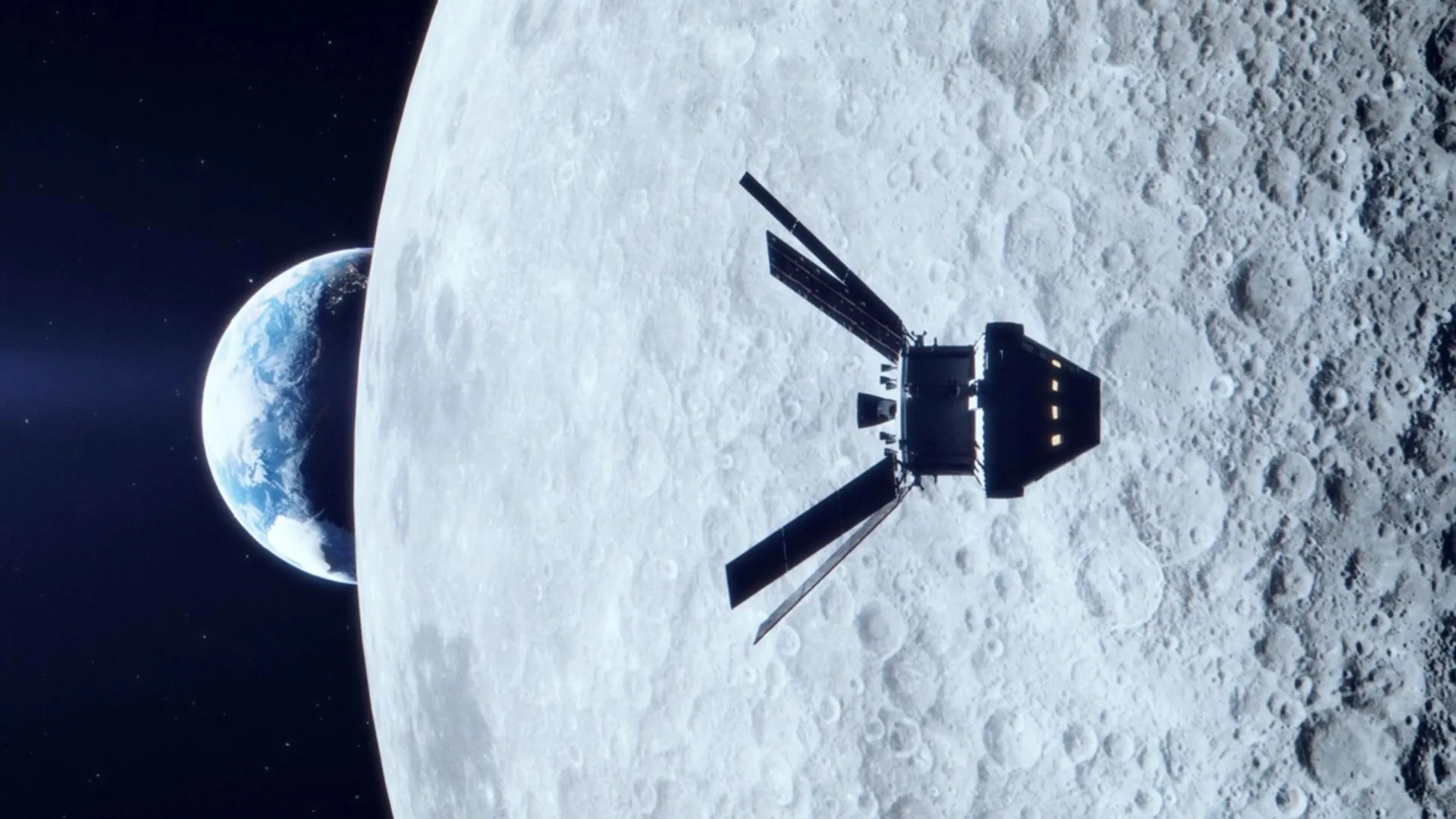
- NASA's Artemis I mission flew around the Moon in late November and early December 2022 carrying human-shaped mannequins equipped with over 10,000 tiny radiation detectors, including experimental lithium fluoride crystals developed by IFJ PAN.
- IFJ PAN researchers developed fluorescent lithium fluoride detectors that record cosmic radiation by capturing color center defects in crystals, which glow red under blue light and can be analyzed directly with a microscope without chemical etching.
- The MARE experiment recorded radiation exposure during Artemis I and found that doses near the Moon are higher than in low Earth orbit but not as dramatically different as expected, due to the absence of Van Allen belt protons in lunar space.
- Prof. Pawel Bilski noted that galactic cosmic rays near the Moon deposit energy more uniformly through the body compared to the uneven dose distribution seen in low Earth orbit from trapped protons.
- The IFJ PAN team developed new calibration software to correct for background fluorescence, achieving results within 15% of conventional detectors and detecting particle tracks below previous instruments' thresholds.
- Lithium fluoride detectors can identify neutron interactions when enriched with lithium-6 and offer high-resolution, multi-particle detection in a compact form, making them promising for future astronaut dosimetry.
Why it matters: Future lunar astronauts will face higher radiation exposure than in Earth orbit, but the smaller-than-expected difference suggests current shielding strategies may be more effective than assumed; the new detectors also enable precise, real-time monitoring of complex radiation fields, improving safety for deep space missions.
Ask SkimNews


