SpaceX’s debut: A win for crypto price discovery, a fail for tokenized access — SkimNews
Get the Finance newsletter
Daily finance — markets, central banks, M&A, the prints that move money. Free.
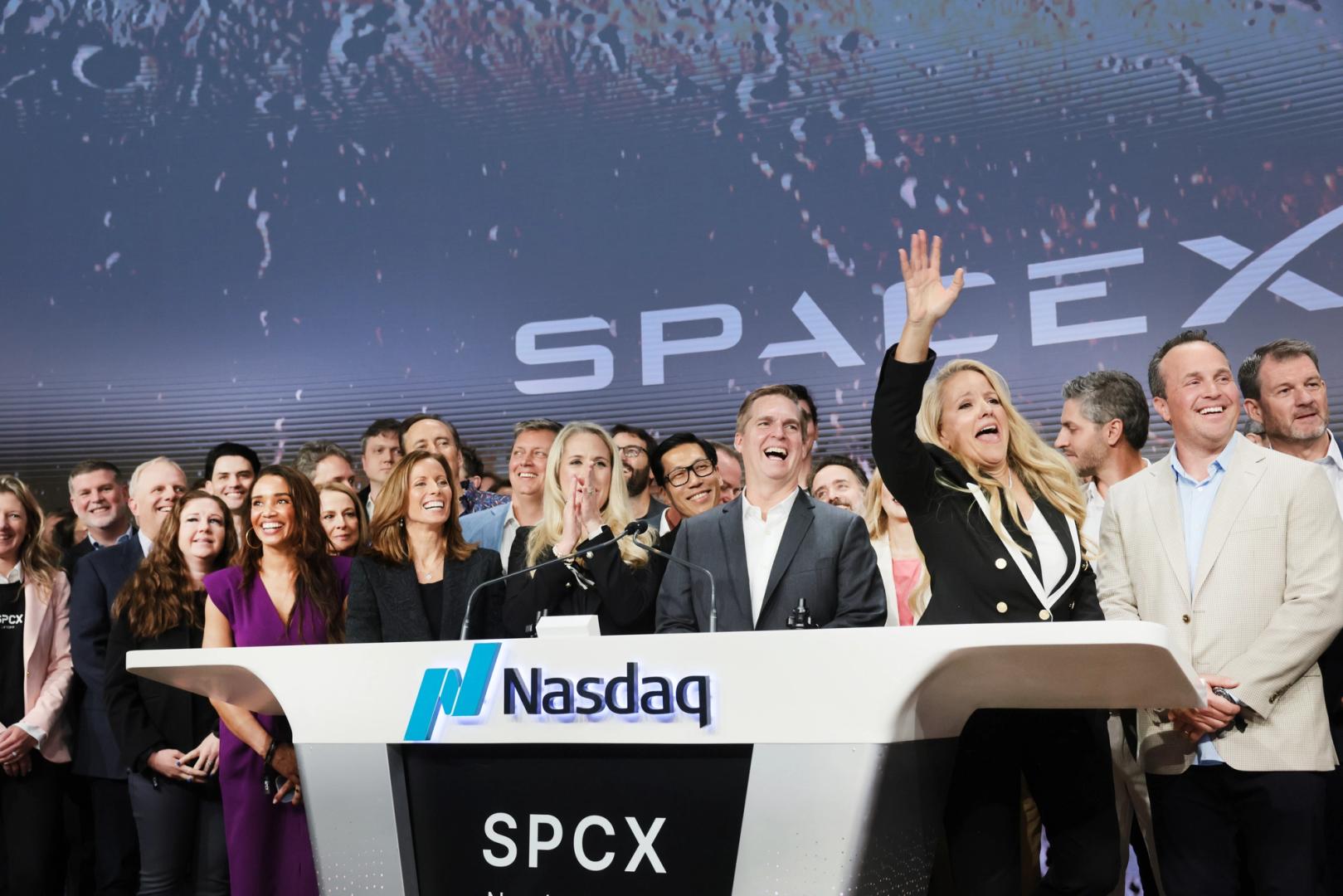
- Talos Research found SPCX perpetual markets recorded roughly $4.6 billion in trading volume on SpaceX's IPO day, with total open interest peaking near $500 million across eight venues including Hyperliquid, Binance, OKX and Kraken.
- Cerebras (CBRS) perpetuals on Hyperliquid generated $281 million in IPO-day volume, cited by Talos as a comparable signal that pre-IPO derivatives can produce deep liquidity ahead of a listing.
- Tokenized share campaigns on Binance, Bybit and Bitget Wallet were canceled and refunded after Kraken's xStocks could not secure enough underlying SpaceX allocations, with one user citing $557 million raised across the three exchanges and zero shares delivered.
- Bitget responded by switching to its Reality platform to offer 1:1 tokenized SpaceX shares (rSPCX) held with a broker, with CEO Gracy Chen framing the move as a shift away from third-party structures toward broker-backed tokens the exchange can stand behind.
- Dinari's tokenized $SPCX maintained continuous uptime throughout the allocation failure, with CEO Gabriel Otte arguing the path forward is regulated custody of real underlying securities, not synthetic substitutes.
- The SEC's January 2026 staff statement on tokenized securities stressed that tokenized stocks remain full securities subject to registration and disclosure rules, distinguishing issuer-sponsored tokenization from synthetic or third-party wrappers.
- Samar Sen, head of international markets at Talos, said the episode reinforces that pre-IPO derivatives should be treated as price signals rather than substitutes for the IPO allocation machinery itself.
Why it matters: The SpaceX debut exposed a structural gap that crypto platforms cannot engineer around: they can synthesize price exposure and run credible derivatives markets, but they cannot manufacture primary-market share allocations controlled by underwriters. Retail users who bet on tokenized IPO access were left holding refunded stablecoins while perpetuals traders captured both pre-IPO volatility and post-listing convergence, sharpening the conditions under which tokenized equities can credibly scale.
Ask SkimNews