Malaysia and Thailand ease shrimp, seabass trade row, reaffirm trade goal — SkimNews
Get the Geopolitics newsletter
Daily geopolitics — wars, elections, sanctions, the diplomatic moves that move markets. Free.
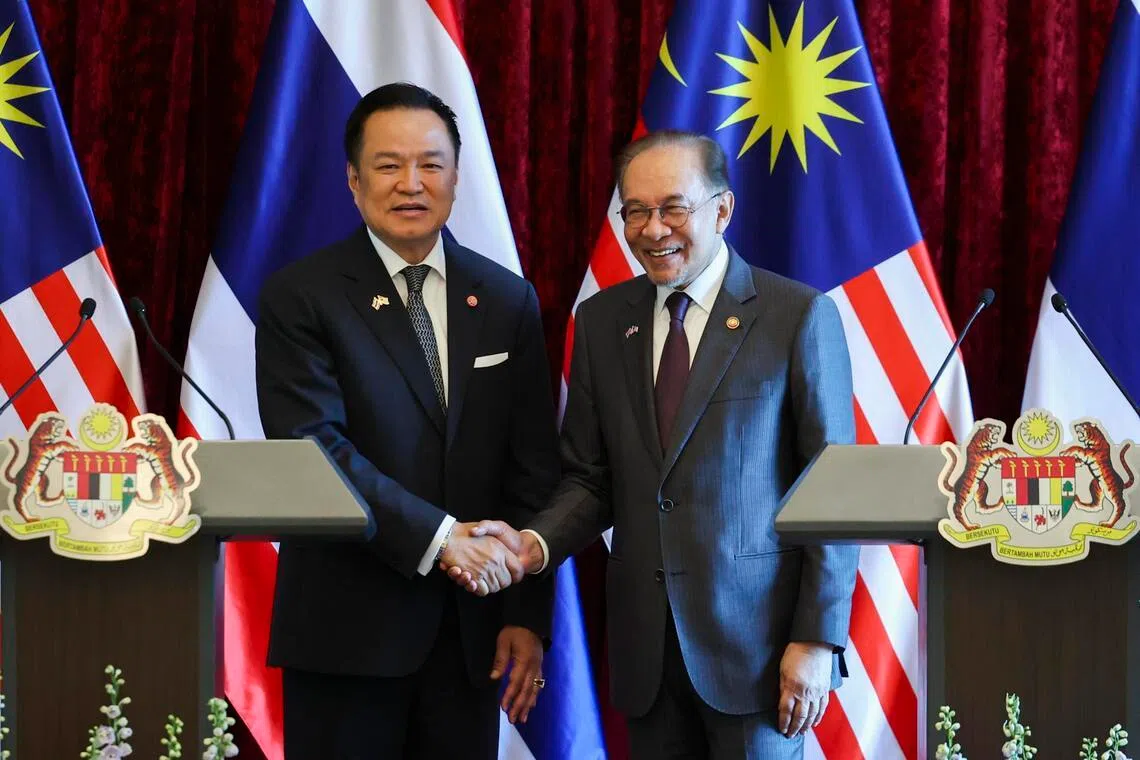
- Malaysia and Thailand resolved a fisheries trade dispute during PM Anwar Ibrahim's July 9 meeting with Thai counterpart Anutin Charnvirakul at the Perdana Putra complex in Putrajaya, addressing Malaysia's suspension of five Thai shrimp species and Thailand's tighter seabass import requirements.
- Anwar said the implementation memorandum would take effect within one week, a sharp acceleration from the 30-day assessment timeline Malaysia's Fisheries Department director-general Adnan Hussain had set out on July 5.
- Both leaders reaffirmed a target of US$30 billion in bilateral trade by 2027, up from US$27.7 billion in 2025, and agreed to establish a special border economic zone to expand cross-border commerce.
- The two governments will expedite a second bridge linking Rantau Panjang in Kelantan with Sungai Golok in Thailand and revive a railway connection between the two towns to ease congestion at one of the region's busiest land crossings.
- Anutin thanked Malaysia for facilitating renewed peace talks between Thailand and the Barisan Revolusi Nasional separatist group, and both sides agreed to set up a joint working group on border crime along the Sungai Golok River and a cross-border flood warning system.
- On July 10, the leaders will travel to Bukit Kayu Hitam in Kedah and Thailand's Sadao district to open a new road connecting the Sadao Customs House with the Bukit Kayu Hitam Customs House.
Why it matters: By settling the shrimp and seabass dispute in roughly a week instead of the Fisheries Department's proposed 30-day review, Anwar cleared the way for a US$30 billion bilateral trade push by 2027 — paired with concrete bridge, railway, customs, and security deliverables the two governments can showcase ahead of the 70th anniversary of Malaysia-Thailand relations in 2027.
Ask SkimNews