Pakistan urges restraint as US-Iran ceasefire collapses — SkimNews

Get the Geopolitics newsletter
Daily geopolitics — wars, elections, sanctions, the diplomatic moves that move markets. Free.
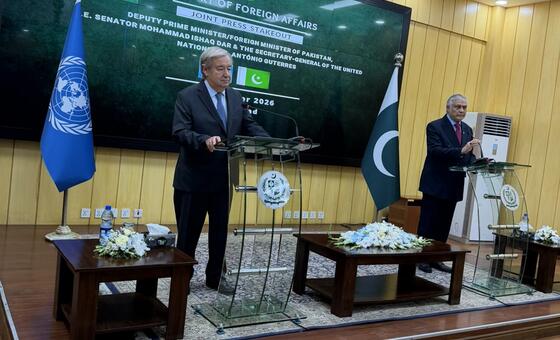
- Pakistan's Ministry of Foreign Affairs declared "a renewed conflict is in no one's interest" and urged both sides to honor the Islamabad Memorandum of Understanding, which it described as "an enduring foundation for understanding, mutual respect and shared prosperity"
- The United States struck approximately 90 Iranian sites in a second consecutive night of attacks, targeting coastal radar installations, missile and drone storage facilities, and naval assets
- Iran's Islamic Revolutionary Guard Corps retaliated with drone and missile strikes on US military bases in Kuwait and Bahrain—including Camp Arifjan and the Fifth Fleet headquarters in Juffair—and launched drones toward a site in Qatar
- Iranian state media reported nine personnel deaths: one soldier in Iranshahr and eight air force and navy members in Bandar Abbas and Bushehr
- Iran attacked three commercial vessels in the Strait of Hormuz over Monday and Tuesday, including a Qatari-owned tanker, prompting Washington to reimpose sanctions on Iranian oil exports and revoke the MoU waiver
- Trump, speaking at the NATO summit in Ankara, declared the ceasefire "over," called Iranian leaders "scum," and threatened to reinstate a US naval blockade and target Kharg Island
- Former Pakistani diplomat Jauhar Saleem told Al Jazeera the mediation process is "really stressed right now, very fragile" and said unimpeded shipping through the Strait of Hormuz is "non-negotiable"
- Qatar, Egypt, Kuwait, and the GCC all issued separate calls for de-escalation, with Kuwait calling the attacks on its territory a "flagrant violation of sovereignty"
Why it matters: Pakistan's mediation role—credited with brokering the April MoU—now faces its most serious test as the US reimposes oil sanctions and Iran retaliates across multiple Gulf states. The collapse of shipping safety in the Strait of Hormuz, through which a significant share of global oil flows, raises the stakes for both regional economies and energy markets beyond what either capital appears willing to absorb diplomatically.
Ask SkimNews