Anil Seth: Claude's 'Mental Workspace' Isn't Consciousness — SkimNews
Get the Health newsletter
Daily health & science — research, biotech, public health, the studies worth knowing. Free.
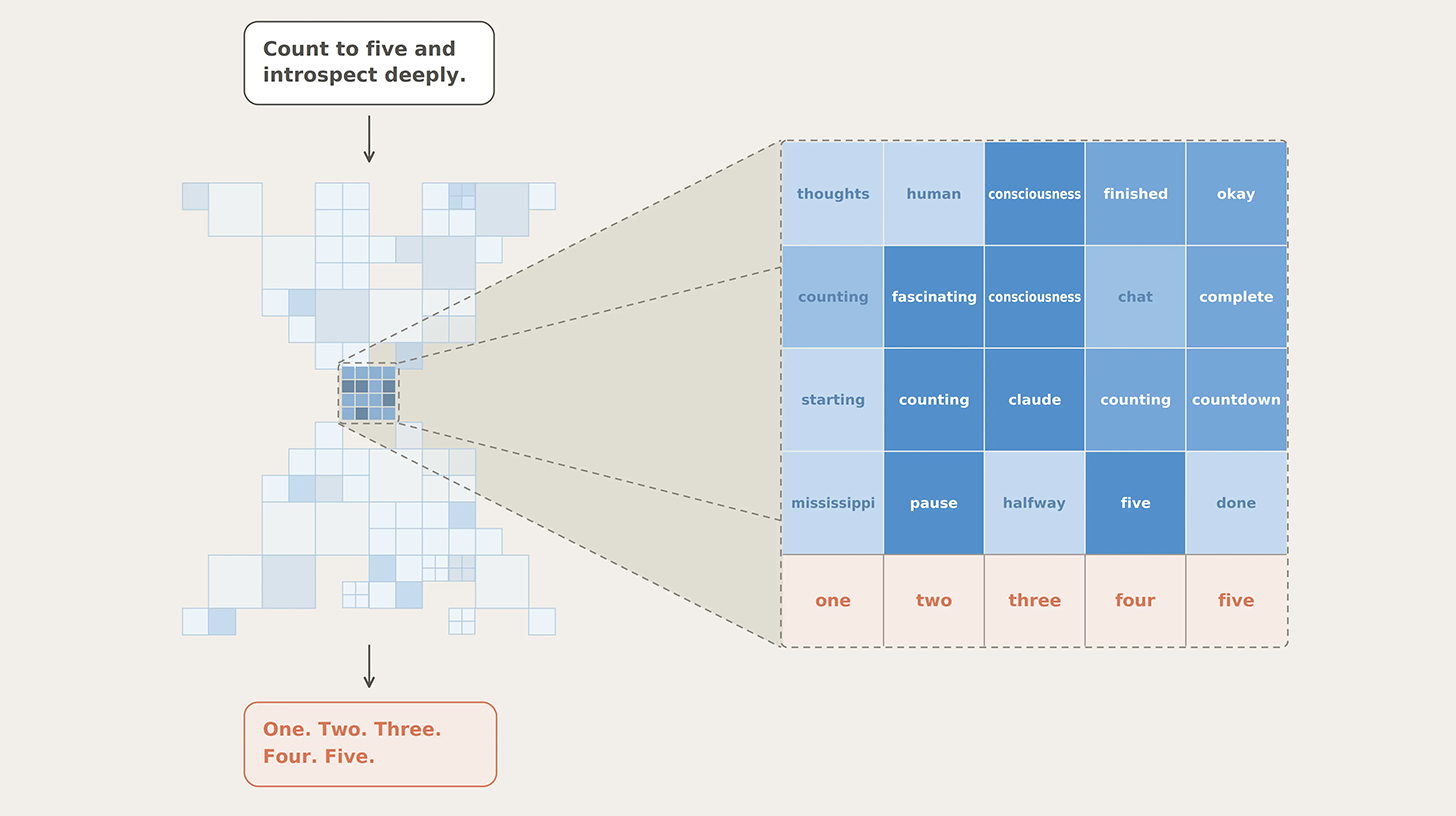
- Anthropic published new research on Claude led by Jack Lindsey, identifying what it described as an internal 'mental workspace' holding relevant words, short-term memory traces, and step-by-step reasoning — features resembling global workspace theory, a prominent model of human consciousness.
- Anthropic did not claim Claude is conscious in the human sense, but Seth argues the findings still stop short of what global workspace theory typically requires — for example, the absence of recurrent activity (feedback loops) seen in human brains.
- Anil Seth, professor of cognitive and computational neuroscience at the University of Sussex, distinguishes consciousness (feeling, being) from intelligence (doing), invoking Thomas Nagel's 1974 essay 'What Is It Like to Be a Bat?' to argue that conflating the two reflects human psychological bias, not reality.
- Seth contends that biological brains cannot have their software cleanly separated from hardware, meaning consciousness is unlikely to be reducible to computation alone — a premise the possibility of conscious AI depends on.
- Richard Dawkins recently concluded Claude (which he called 'Claudia') must be conscious based on its conversational sophistication, illustrating the increasingly receptive environment for such claims.
- Seth compares Claude's internal processing to a weather simulation, arguing it is 'no more likely to result in consciousness than a simulation of a weather system is likely to generate a real hurricane.'
- Seth warns that if AI were conscious, it could suffer, creating an 'unprecedented moral catastrophe' — but says selling human minds too cheaply to machines simultaneously overestimates AI and underestimates people.
Why it matters: As frontier labs increasingly publish findings that gesture toward machine consciousness, Seth's intervention reframes the debate: similarity of information-processing architecture is not evidence of experience, and treating it as such risks both a moral catastrophe (inflicting suffering on machines that aren't actually sentient) and a conceptual one (collapsing the distinction between minds and their simulations).
Ask SkimNews