BofA Reverses Rate Outlook, Now Expects Fed Hikes — SkimNews
Get the Finance newsletter
Daily finance — markets, central banks, M&A, the prints that move money. Free.
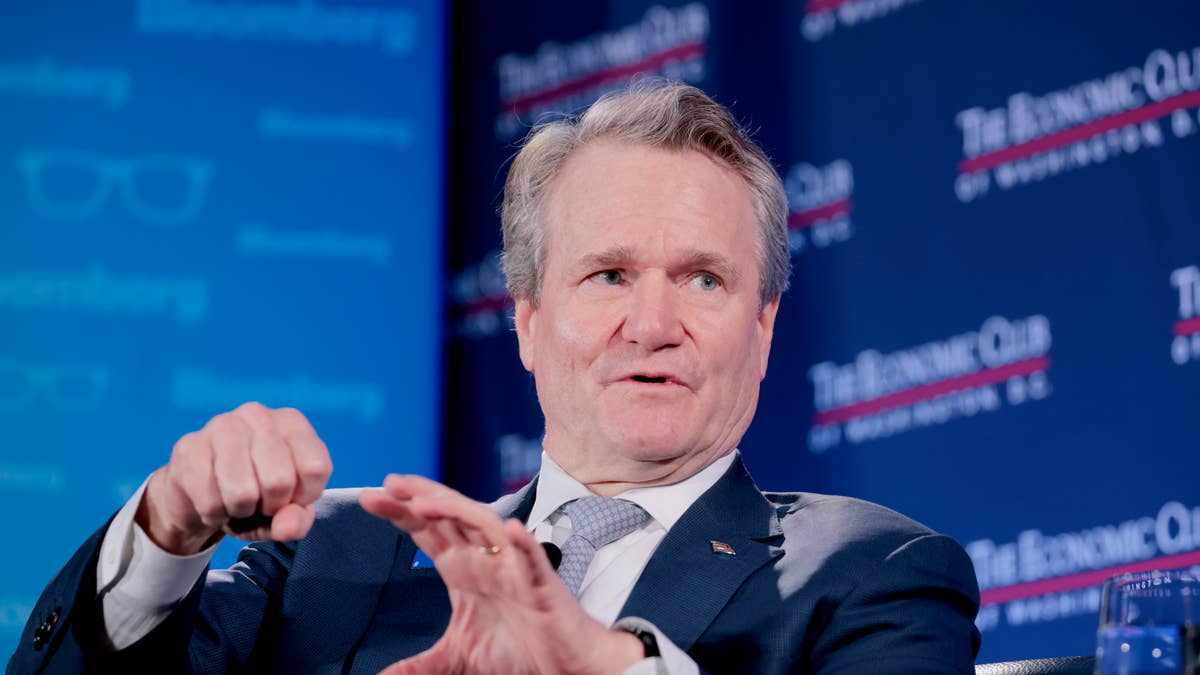
- Brian Moynihan said inflation is "drifting down slower than people would like," with pressure from housing, food, and fuel keeping it elevated through BofA's forecast horizon of 2027 and 2028.
- Bank of America reversed its rate outlook: from expecting Fed cuts six months ago to now forecasting three quarter-point hikes in September, October, and December 2026.
- Moynihan flagged second-round pipeline effects, noting businesses worry about "the cost of goods that's coming through" as higher energy costs feed into plastics, materials, manufacturing, and transportation.
- The Fed's own June 2026 projections show headline PCE at 3.6% and core PCE at 3.3% for 2026, while May BEA data already had headline PCE at 4.1% and core PCE at 3.4%.
- BofA's 70 million customers spent roughly 6% more in June year-over-year, but spending growth is sharply uneven—top 1% households up 9% versus 5.5% for lower-income groups.
- Moynihan said wage growth has recently "coalesced together around 3% to 4%" across income groups, even as affordability pressure from gas, food, and inflation persists for middle- and lower-income Americans.
- The EIA projects average gasoline prices falling from $3.64 per gallon in 2026 to $3.09 in 2027—a path that, if realized, would undercut BofA's higher-for-longer inflation thesis.
Why it matters: For households already stretched by housing, food, and fuel costs, BofA's flip from expecting rate cuts to forecasting three quarter-point Fed hikes through December 2026 means mortgage and credit rates likely climb higher rather than fall, deepening the K-shaped split where top earners spend 9% more while lower-income households manage only 5.5% growth.
Ask SkimNews


