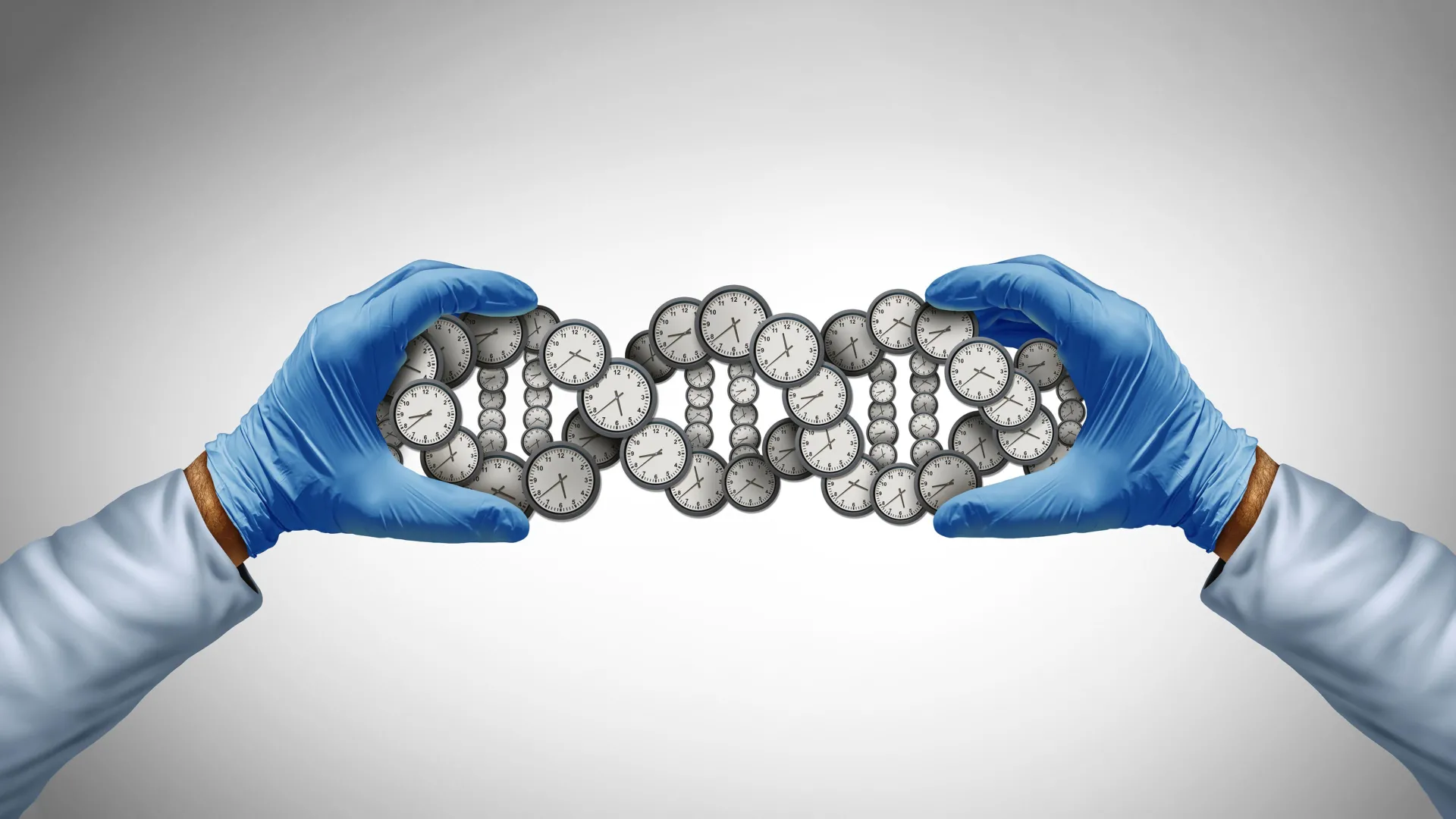
How long could we possibly live? A new estimate is mind-boggling — SkimNews

Get the Health newsletter
Daily health & science — research, biotech, public health, the studies worth knowing. Free.
- Jeanne Calment remains the official world longevity record holder at 122 years and 164 days (1875–1997), though some researchers suspect her daughter Yvonne — 23 years younger — fraudulently assumed her identity in 1934.
- Japan's Kane Tanaka is the second-longest-verified person at 119 years and 107 days; the oldest person alive today has just turned 117.
- A Skolkovo Institute of Science and Technology / AIRI Moscow thought experiment modeled a scenario where all curable causes of aging are eliminated and only DNA damage remains — yielding a theoretical upper limit of 194 years.
- A blood-cell-resilience computer model found the body typically breaks down around age 120, with a hard ceiling of 150 even for the most resilient individuals.
- Saul Newman's new book "Morbid: Debunking modern longevity science" documents that roughly 70% of Greek centenarians were already dead on paper — kept "alive" for pension fraud — with even higher rates found in Japan.
- Newman told Nature that given these data integrity issues, the debate over a maximum human lifespan is "in an absolute shambles," and a 2011 paper he cites found 98% of global claims past age 115 cannot be verified.
Why it matters: Longevity researchers cite a 'natural ceiling' somewhere between 115 and 150 years, but if the underlying supercentenarian data is corrupted by pension fraud and clerical errors as Newman argues, that benchmark — and the moral and financial case for an entire anti-aging research field — could be artificially inflated, meaning the true human lifespan ceiling may be lower, or simply unknowable with current records.
Ask SkimNews