AfD's Rise Threatens Germany's Ukraine Backing — SkimNews

Get the Geopolitics newsletter
Daily geopolitics — wars, elections, sanctions, the diplomatic moves that move markets. Free.
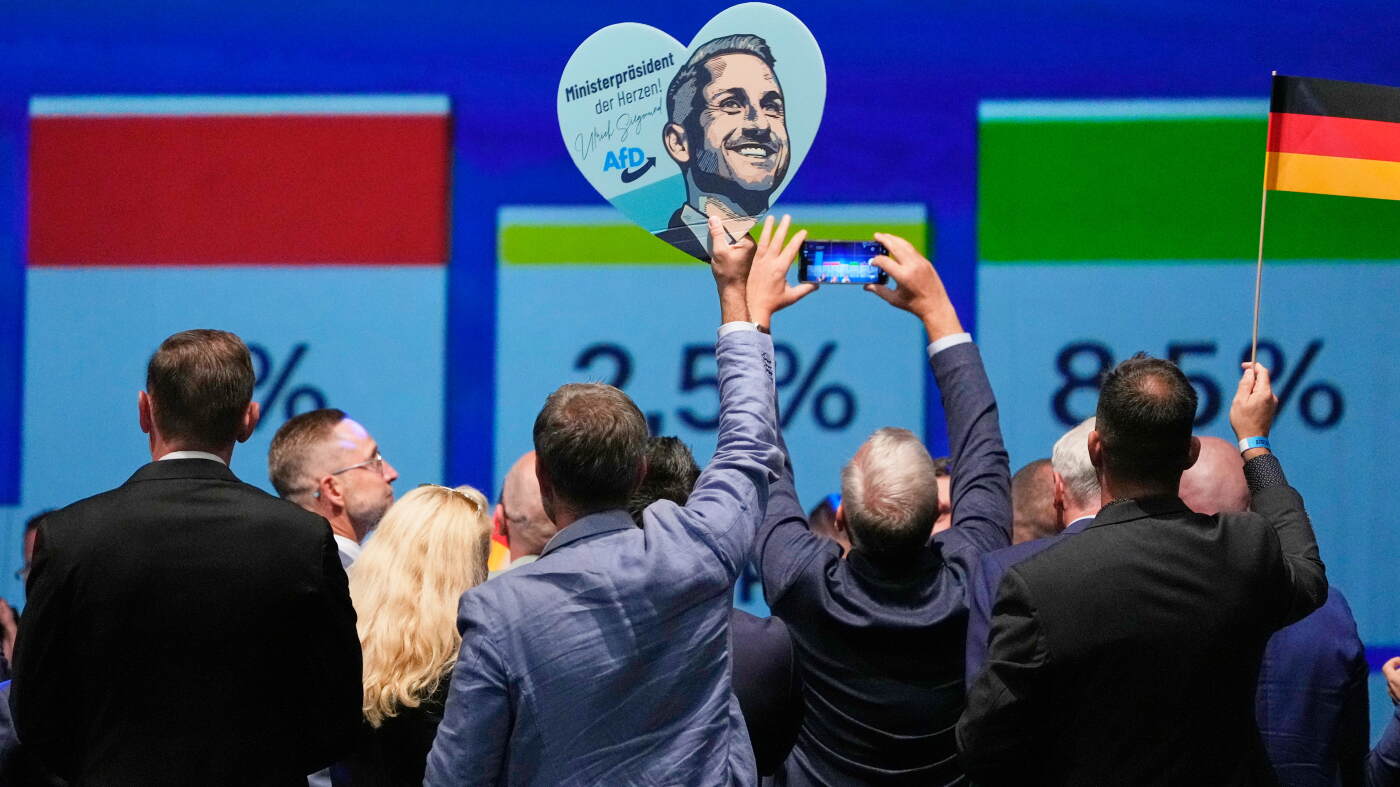
- AfD won 43.8% of the vote in Saxony-Anhalt on September 6, trouncing the CDU in a state election that brought the party closer than ever since World War II to ruling a German state.
- Two weeks later, AfD took more than 38% in Mecklenburg-Western Pomerania, where the CDU failed to clear the 5% threshold to enter the regional parliament — a result Chancellor Friedrich Merz called 'a disaster.'
- Die Linke captured 25.3% in a separate Berlin by-election the same weekend, illustrating how German voters are being pulled by both ends of the political spectrum.
- The AfD's platform includes halting all military and financial support to Ukraine, blocking Ukraine's accession to the EU and NATO, restoring relations with Russia, and restarting Nord Stream.
- Kremlin spokesman Dmitry Peskov publicly praised the AfD as a political force worth 'establishing relations' with, and blamed Germany's economic decline on its decision to stop buying cheap Russian gas.
- Despite the wins, the AfD is unlikely to govern either state since other parties refuse coalitions with it; a national election is not due until early 2029.
- Chancellor Friedrich Merz's earlier pledge to send Taurus cruise missiles to Ukraine now appears highly unlikely, and the proposed €200bn ($230bn) loan to Kyiv from immobilized Russian funds has effectively stalled.
Why it matters: The AfD's twin state victories place acute political pressure on Chancellor Merz's fragile coalition, with concrete policy costs already visible: Taurus missiles for Kyiv are off the table and the €200bn reparations-style loan from immobilized Russian assets is stalled. Moscow is exploiting the opening in real time, publicly framing Germany's energy costs as punishment for distancing from Russia.
Ask SkimNews