BRICS Summit Tests Bloc Unity as Wars, US Tensions Divide Members — SkimNews

Get the Geopolitics newsletter
Daily geopolitics — wars, elections, sanctions, the diplomatic moves that move markets. Free.
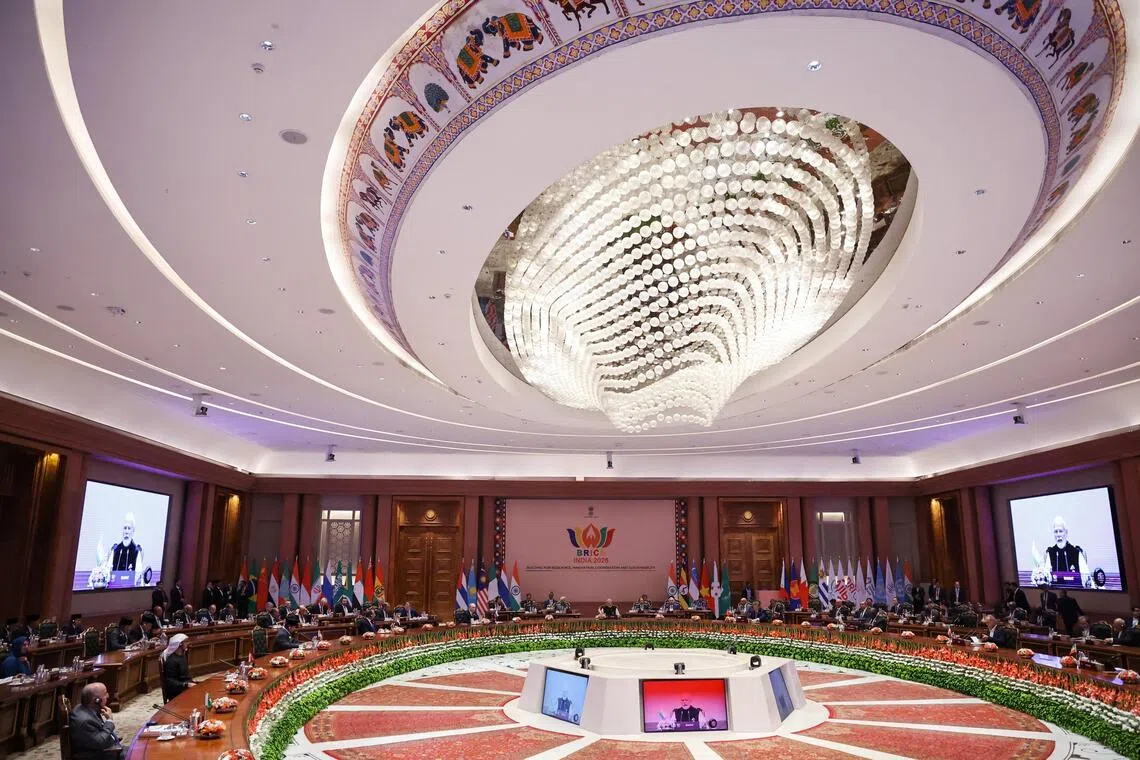
- BRICS leaders convened in New Delhi hosted by PM Modi, with Putin, Xi, and Iran's Pezeshkian attending; the bloc now has 11 members representing about half the world's population and a significant share of global economic output.
- The summit agenda spans trade, investment, energy, food security, technology, supply chains, and reforms to global institutions, with reducing US dollar reliance and promoting national currencies in trade a stated priority.
- Iran is pushing for mechanisms to reduce reliance on Western financial systems and shield members from economic pressure as Tehran faces sweeping sanctions and a US blockade; Pezeshkian backed expanding trade in national currencies among members.
- India is using the summit to balance longstanding partnerships with Moscow and Tehran against deepening economic, defense, and technology ties with Washington and other Western nations, while Modi and Xi are expected to hold talks Saturday to consolidate a thaw after 2020 border tensions.
- A key test for India will be securing a joint statement, after BRICS foreign ministers failed in May to agree on one over the Iran war, forcing India to issue a chair's summary instead — a division the article says the bloc's unity under pressure is expected to be tested on again.
- The summit convenes amid fears the Iran war — triggered by US-Israeli strikes on Feb. 28 — may expand amid escalating Saudi Arabia-Houthi rebel tensions.
Why it matters: Eleven nations representing half the world's population couldn't agree on a joint statement in May over the Iran war, and the same fault lines — competing positions on US wars and sanctions — are back on the table in New Delhi. India carries the hardest needle: hosting Putin and Iran's Pezeshkian while expanding defense and tech ties with Washington.
Ask SkimNews