Humanoid robot hype outpaces reality, researchers warn — SkimNews

Get the Tech newsletter
Daily tech — startups, AI labs, chips, the launches that shape the next decade. Free.
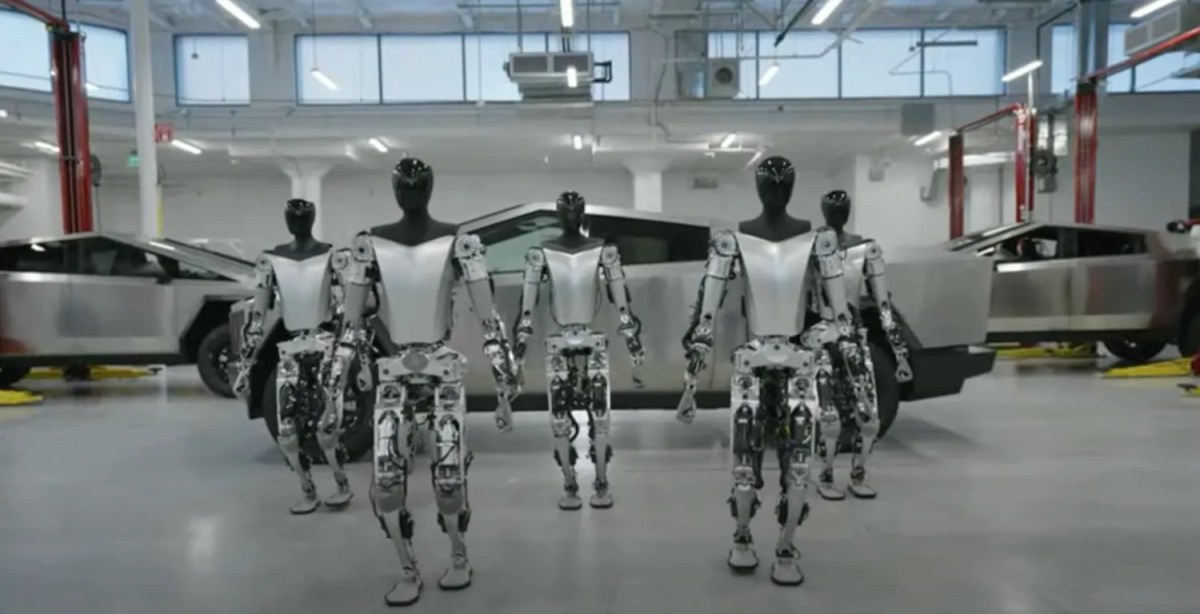
- Elon Musk told shareholders in July that Tesla's Optimus will be "probably the biggest product ever" and predicted in Davos the robots could go on sale to the public by end of 2027 for as little as $20,000 each, automating almost all human labor.
- Jensen Huang, CEO of Nvidia, said in January that humanoid robots would match human-level ability this year, while Marc Andreessen has called robotics potentially "the biggest industry in the history of the planet" and Morgan Stanley projects nearly 1 billion human-like robots by 2050 in a $5 trillion market.
- Yann LeCun, often called a godfather of AI, pushed back at Davos, stating that "absolutely none" of the companies building humanoid robots has "any idea how to make those robots smart enough to be useful."
- Google DeepMind's Gemini Robotics system, a vision-language-action (VLA) model run on the ALOHA 2 two-armed rig, can pack a lunchbox, do origami, and pick up snow peas with tongs — but Imperial College London's Edward Johns says current models can only do "a few things here and a few things there."
- The shift over the past few years from hard-coded robot policies to vision-language models (VLMs) and then VLAs trained on teleoperation data is the main technical source of current optimism, though such systems still fail when asked to perform tasks outside their training set.
- Agility Robotics cofounder and chief robot officer Jonathan Hurst called the "more data equals more generality" premise "fundamentally flawed," noting that real-world tasks like making coffee involve variables that quickly explode in complexity beyond what present training approaches can handle.
Why it matters: The gap between Musk's promised $20,000 Optimus by 2027 and the consensus among researchers like LeCun and Agility's Hurst that current AI is inadequate suggests that the projected $5 trillion humanoid robot market by 2050 may remain demos for years — a sobering reality check for investors and customers parsing optimistic Silicon Valley timelines against slow-but-real lab progress.
Ask SkimNews