Humanoid robot hype outpaces the AI needed to power them — SkimNews

Get the Tech newsletter
Daily tech — startups, AI labs, chips, the launches that shape the next decade. Free.
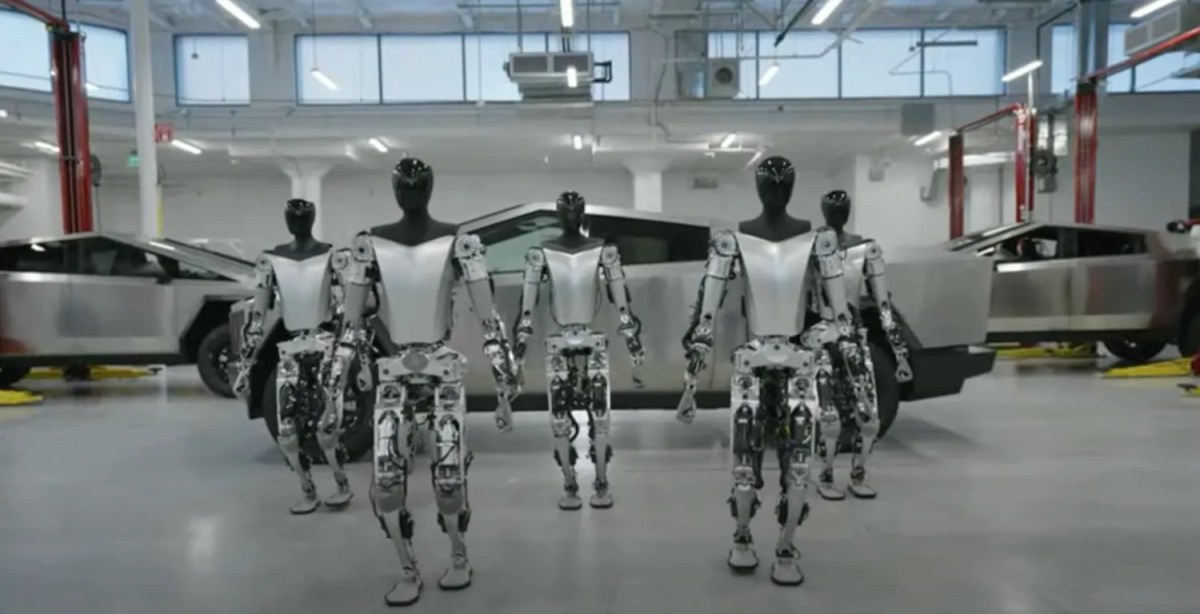
- Elon Musk told shareholders in July that Tesla's Optimus could be on sale to the public by the end of 2027 at roughly $20,000 per unit, calling it potentially 'the biggest product ever'
- Jensen Huang said at the start of 2025 that humanoid robots would match human-level ability this year, while Marc Andreessen has called robotics potentially 'the biggest industry in the history of the planet'
- Morgan Stanley projects the number of human-like robots will reach nearly 1 billion by 2050, creating a market worth over $5 trillion
- Yann LeCun said at Davos that 'absolutely none' of the companies building humanoid robots has any idea how to make them smart enough to be useful
- Google DeepMind's Gemini Robotics, a vision-language-action model tested on the ALOHA 2 dual-arm rig, can pack a lunchbox and fold origami but reliably fails on any task outside its training set
- Agility Robotics' Jonathan Hurst called the premise that more training data alone will unlock general-purpose robots 'a fundamentally flawed premise' because real-world task complexity explodes exponentially
- Researchers face a robotics data crunch: teleoperation is costly and slow, video-of-humans data is low quality, and deploying robots in uncontrolled environments to collect their own data remains unsafe and unreliable
Why it matters: The gap between Musk's 2027 public-sales timeline, Huang's 2025 human-level claim, and Morgan Stanley's $5 trillion 2050 projection versus what current vision-language-action models can actually accomplish puts billions in projected humanoid robot investment at risk. With LeCun publicly stating the field has no working approach, the data-collection problem, and no demonstrated path to generalization, the credibility of these near-term forecasts—not the long-term vision—is what's immediately in question.
Ask SkimNews