Germany's far-right AfD says 'democracy demands' parties work with them after state election win — SkimNews

Get the Geopolitics newsletter
Daily geopolitics — wars, elections, sanctions, the diplomatic moves that move markets. Free.
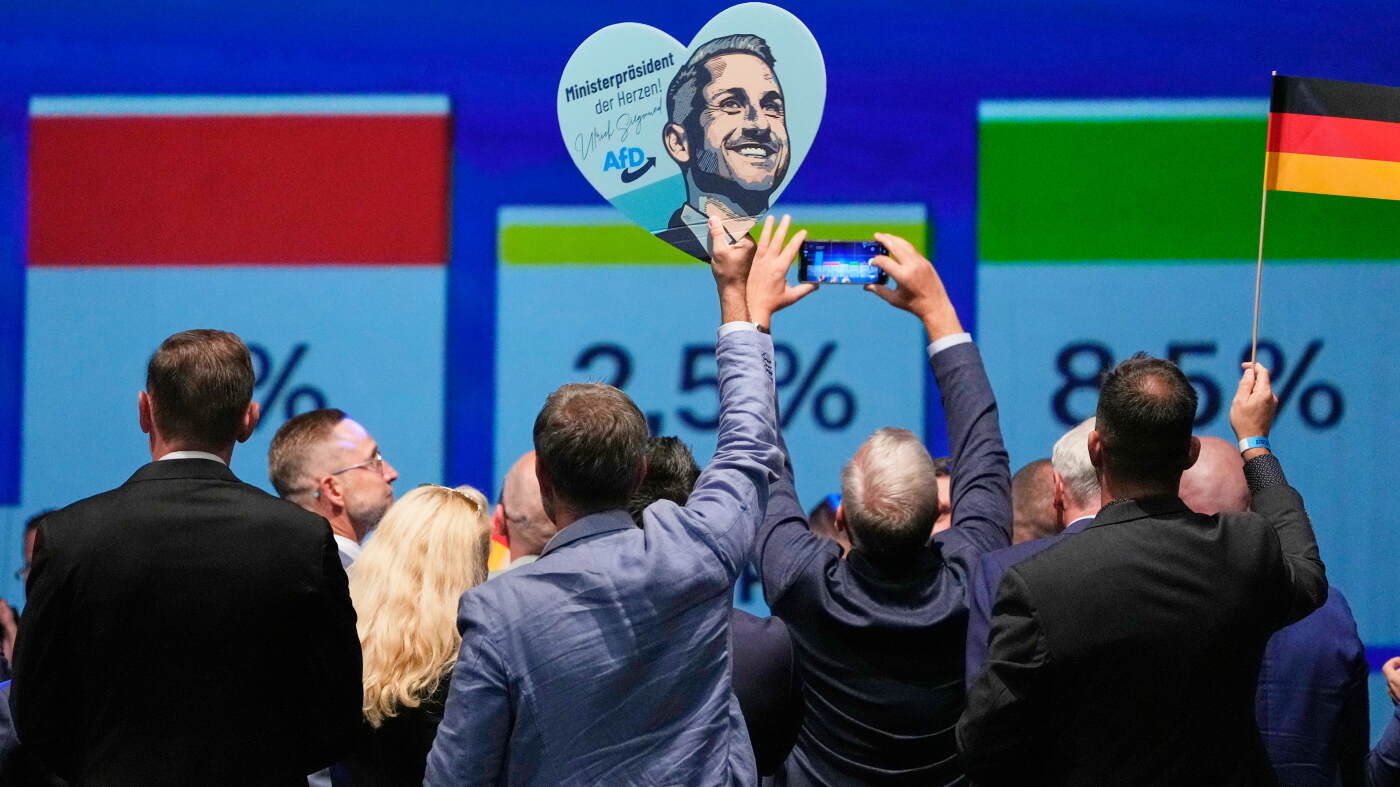
- AfD won 43.8% of the vote in Saxony-Anhalt on Sunday, taking 39 of 83 state parliament seats and falling three short of an outright majority — the strongest far-right result in a German state since World War Two
- Beatrix von Storch, AfD's deputy parliamentary leader, told the BBC "democracy demands" rivals enter talks and warned of "severe chaos" or a new election if they refuse; she said the party is already talking to individual CDU members "very, very unhappy with their own party"
- Chancellor Friedrich Merz called the result "seismic" and said the CDU, whose vote share nearly halved to 17.2%, could not return to "business as usual," while defeated state premier Sven Schulze (CDU) acknowledged the mandate to govern now lies with the AfD
- One path being floated: an informal deal with the left-wing populist BSW (set to win 5 seats, tough on immigration and pro-Russian gas) to tolerate an AfD minority government; AfD state leader Ulrich Siegmund said discussions began Sunday night
- AfD in Saxony-Anhalt is classified as "right-wing extremist" by domestic intelligence, a designation Siegmund rejects; the party's plans include segregating child refugees into special classes and setting up a task-force to detain and deport migrants
- Donald Trump posted the projected results on Truth Social, after which Russian presidential envoy Kirill Dmitriev praised a "historic win for the pragmatic AfD"; JD Vance had endorsed the party ahead of Germany's federal election last year
- Merz warned that upcoming regional elections in Mecklenburg–Western Pomerania and Berlin could carry "increasing significance" — the AfD leads national opinion polls, ahead of both his conservatives and the Social Democrats
Why it matters: Merz's CDU hemorrhaged nearly half its vote share in a state it once governed, and the defeated premier publicly conceded the governing mandate now belongs to the AfD — the first time a mainstream German leader has effectively handed political legitimacy to a far-right party classified as extremist by domestic intelligence, with coalition talks now actively underway.
Ask SkimNews