US Economy Loses 23,000 Jobs in July, Unemployment Falls on Worker

Get the Finance newsletter
Daily finance — markets, central banks, M&A, the prints that move money. Free.
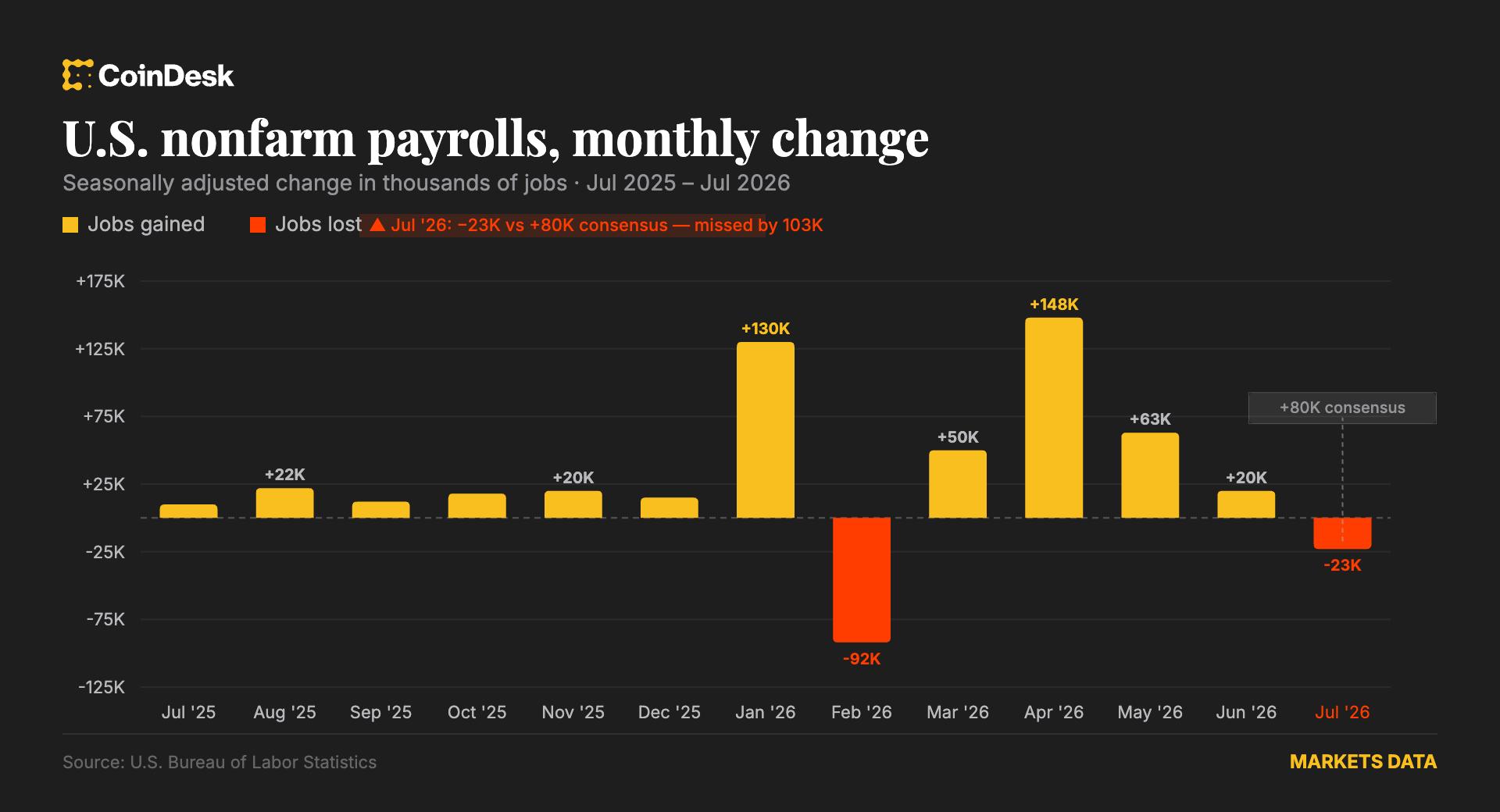
- The Bureau of Labor Statistics reported nonfarm payrolls fell by a seasonally adjusted 23,000 in July, far below the Dow Jones consensus forecast of +83,000, with June revised down to -20,000 and May cut by 66,000 to just 63,000
- The unemployment rate slipped to 4.1%, but only because the labor force shrank by 264,000; the participation rate dropped to 61.4%, its lowest in more than five years and outside of Covid, the lowest since 1976
- Average hourly earnings rose just 2 cents in July, bringing the 12-month average to 3.2%, below the 3.5% forecast and the weakest since May 2021
- The Federal Reserve's FOMC voted 9-3 to hold rates at its last meeting; after Friday's report, odds of a September hike fell to 44% and October to 58.3% per CME Group's FedWatch gauge
- Stock market futures climbed, with Dow futures up nearly 200 points and Treasury yields plummeting as traders priced in a more dovish Fed path
- Job losses were concentrated in local government education (-50,000), leisure and hospitality (-40,000, potentially tied to the World Cup ending), retail (-19,000), and financial activities (-14,000), while healthcare added 22,000, well below its 36,000 12-month average
- Bill Adams of Fifth Third Commercial Bank argued the falling unemployment rate is driven by "not enough workers," writing that immigration is no longer offsetting workforce aging as it did in the early post-pandemic years
Why it matters: The report undermines the Fed's case for raising rates to fight inflation: the FOMC's 9-3 split last week and the prior expectation that a strong labor market justified tightening now have weaker footing, as trader odds for a September hike dropped from implicit to 44% within hours. With the 12-month payroll average at just 34,000 and household employment falling 87,000, the labor market is softening from a position that wasn't initially recognized, giving the Fed room to prioritize inflation over employment risk.