NATO | Towards a more European alliance — SkimNews

Get the Geopolitics newsletter
Daily geopolitics — wars, elections, sanctions, the diplomatic moves that move markets. Free.
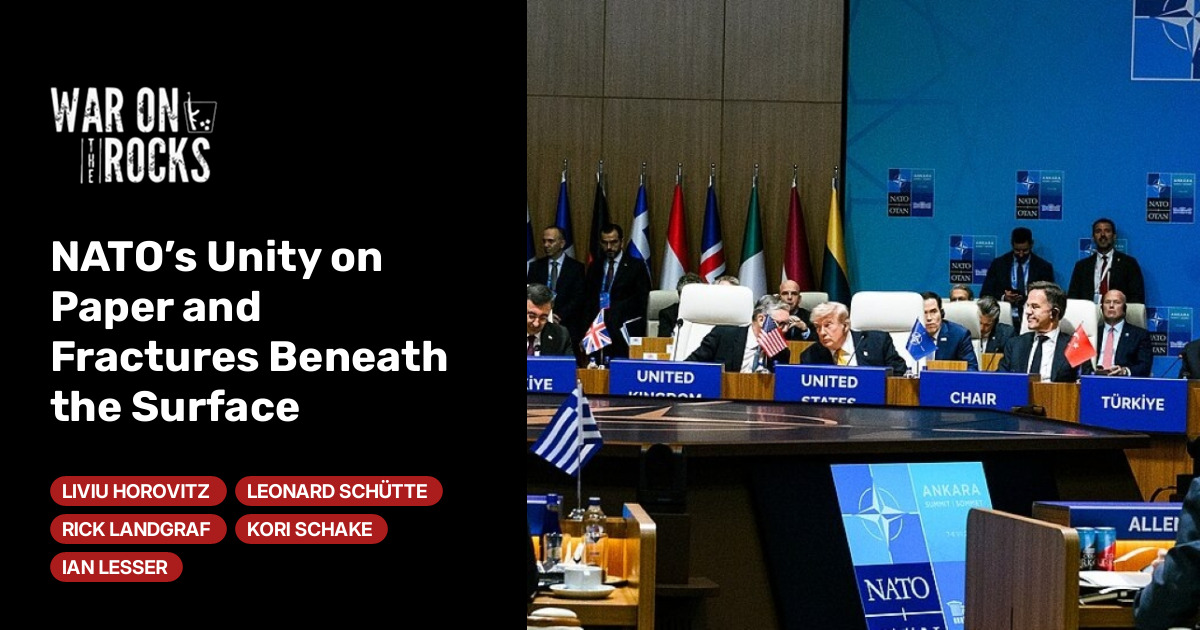
- NATO summit in Ankara (July 7-8) produced European pledges of $50 billion in new US defense procurements and €70 billion in military assistance to Ukraine, in exchange for Trump's "ironclad commitment" to Article 5.
- Trump in April branded NATO a "paper tiger" after Spain and the UK (initially) refused US access to their military bases and France refused overflight rights for the war against Iran.
- Trump administration plans leaked in June would pull one-third of US fighter jets from NATO's Europe operations and reallocate a missile-launching submarine, an aircraft carrier and several warships, per a New York Times report.
- Trump is pushing NATO members to spend 5% of GDP on defense (3.5% core military + 1.5% critical infrastructure), but only 5 of the alliance's 32 members are on track to hit that target by 2026.
- European NATO members now openly recognize the US can no longer be NATO's sole pillar and are pursuing autonomous defense capabilities — an expensive transition that still requires interim US engagement.
- Russia remains NATO's foremost external threat, with the Ukraine war in its fifth year driving the alliance's foundational mandate of European security, per the source.
Why it matters: European NATO members are openly building toward military autonomy after recognizing the US can no longer be NATO's sole pillar — but the transition requires years of investment while Trump's view of NATO as a globally deployable US tool, not a regional defensive force, remains a fundamental, unresolved divergence from Europe's vision that the Ankara $50 billion arms buy only papered over.
Ask SkimNews