Google, Amazon ship PyTorch tools to pry apps off Nvidia — SkimNews

Get the Tech newsletter
Daily tech — startups, AI labs, chips, the launches that shape the next decade. Free.
- Google released TorchTPU as an open-source project on Tuesday, letting AI apps run on Google's Tensor Processing Units (TPUs) and migrate existing PyTorch apps with a simple configuration change and no code rewriting.
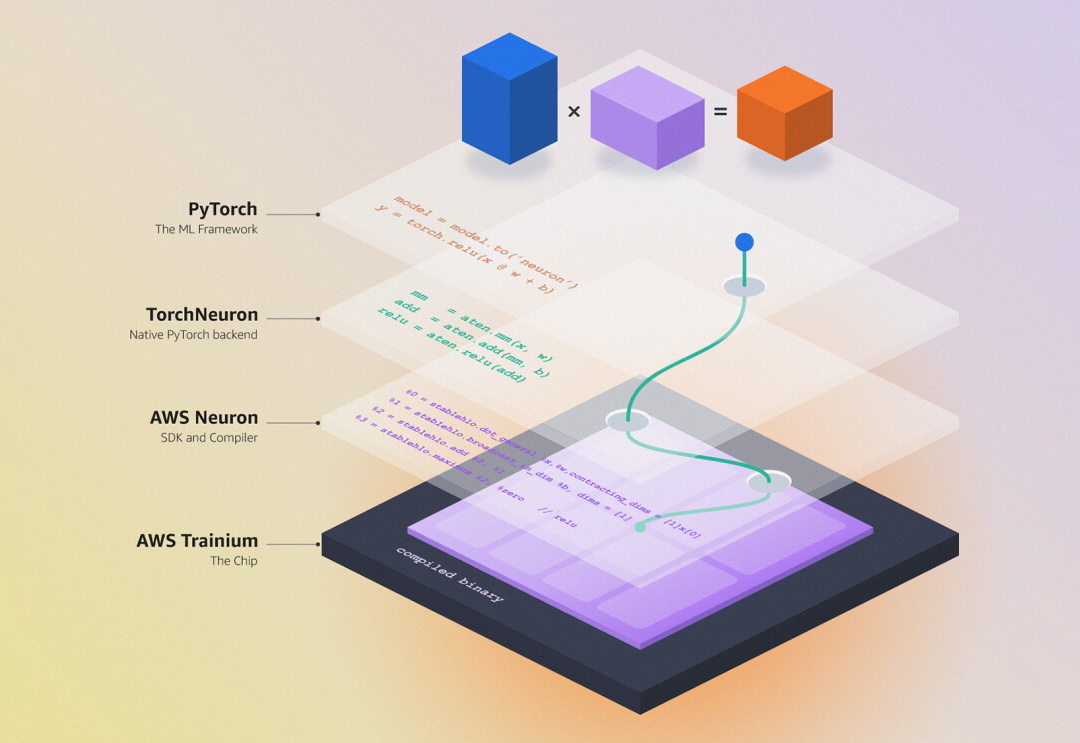
- Amazon released its own PyTorch fork, TorchNeuron, on Monday for Amazon's Trainium chip and AWS, and is submitting upstream code to the main PyTorch project that decouples features from Nvidia's hardware.
- PyTorch, used by roughly 85% of AI apps according to the source, was originally developed by Meta in 2016 and transferred to the Linux Foundation in 2022; the article frames its Nvidia-tuned origins as the core lock-in Google and Amazon are attacking.
- Google worked directly with Meta, Hugging Face, Inferact (maker of vLLM), and RadixArk (maker of SGLang) to ensure TorchTPU's libraries interoperate with the most popular AI development toolchains.
- Google also launched a dedicated TPU agent suite to help developers port apps and debug errors, and updated its LiteRT on-device runtime to work better with PyTorch models — moves the source suggests could give Google an edge over Amazon's offering.
- The source is explicit that AI developers will not automatically abandon Nvidia's hardware just because porting is now easy, framing the launches as the beginning of a longer effort rather than an immediate switch.
Why it matters: If roughly 85% of AI apps run on PyTorch — and PyTorch was built around Nvidia's CUDA stack — then a one-config-change migration tool is the closest thing yet to a direct assault on Nvidia's chip-level moat from cloud rivals with their own silicon. Amazon is even pushing code upstream into the main PyTorch project, meaning the decoupling could outlive either company's own fork.
Ask SkimNews