Bitcoin bounces off new 2026 price lows: Will US stock weakness push BTC lower? — SkimNews

SkimNews Take
A put-heavy expiry clearing over $1 billion in leveraged longs is mechanical deleveraging, not organic selling — these forced liquidations typically reset positioning and reset Bitcoin's near-term floor once overhang is absorbed.
Get the Finance newsletter
Daily finance — markets, central banks, M&A, the prints that move money. Free.
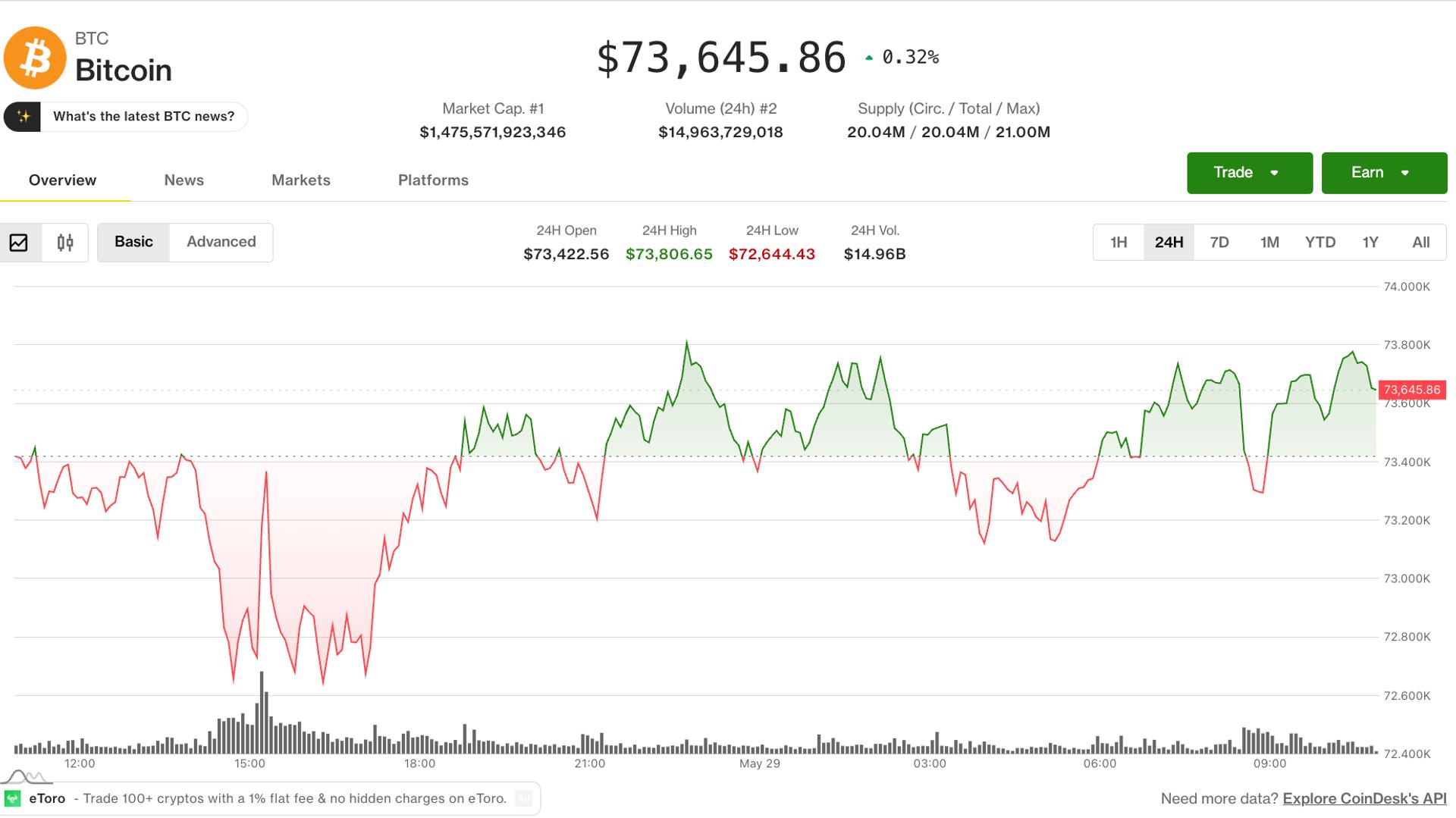
- Bitcoin fell 9% in three days to roughly $58,000 — its weakest print since September 2024 — and the retest of that level triggered over $1 billion in liquidations of bullish leveraged positions.
- Spot Bitcoin ETFs saw $469 million in net outflows on Wednesday, a key institutional-demand proxy that deepened the sell-off.
- Friday's $13 billion options expiry is heavily put-skewed: 78% of call options are struck at $72,000 or above, and Deribit put open interest exceeds calls by $3.4 billion.
- Strategy (MSTR) is sitting on large unrealized losses after accumulating $64.1 billion in Bitcoin since 2020, adding to sentiment pressure.
- Tech stocks absorbed the redirected risk: Micron jumped 16%, Sandisk gained 18%, and Applied Materials rose 10% after earnings, while US government moves — a 9.9% Intel stake, $2 billion proposed for quantum computing, and federal land opened for data centers — reinforced the sector rotation away from crypto.
- 5-year US Treasuries now yield 4.15%, and the CME FedWatch Tool prices an 80% chance of interest rate hikes by December (up from 68% a month ago), reducing the appeal of non-yielding Bitcoin.
Why it matters: Bitcoin's 9% slide to $58,000 and $1 billion in long liquidations show institutional capital rotating decisively into AI-linked tech and fixed income, with the CME FedWatch tool now pricing an 80% chance of rate hikes by December. With a put-heavy $13 billion options expiry on Friday and Strategy sitting on heavy unrealized losses, Bitcoin traders lack a near-term catalyst unless institutional ETF demand reappears.
Ask SkimNews