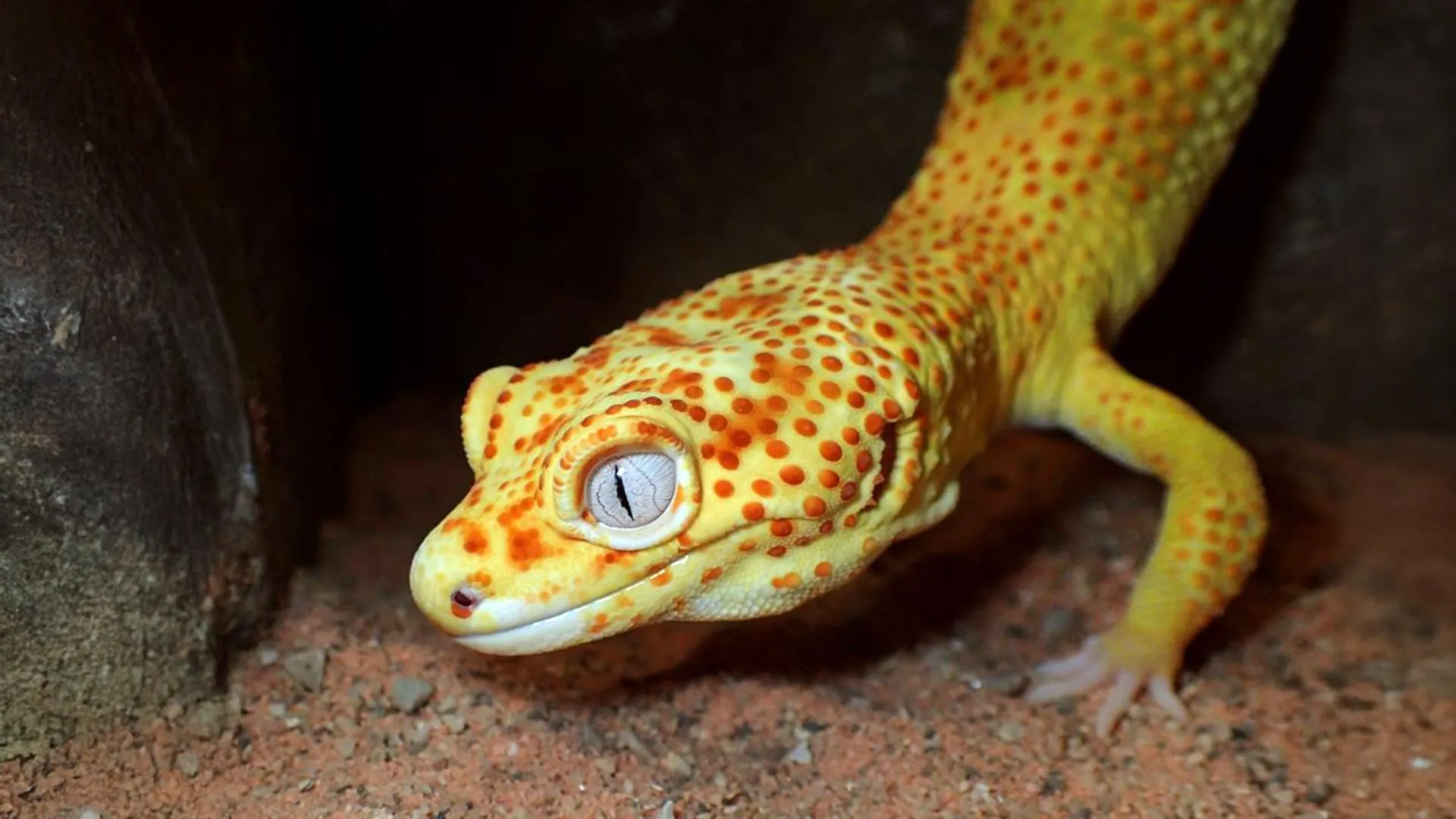
'Lemon frost' geckos naturally develop human-like cancers
Get the Health newsletter
Daily health & science — research, biotech, public health, the studies worth knowing. Free.
- University of Nottingham researchers identified genetic changes in tumors of "lemon frost" leopard geckos that mirror those found in human cancers, according to a study published in BMC Biology.
- About 80% of lemon frost geckos develop aggressive tumors naturally — and at a relatively early age — unlike lab mice, where cancer must be artificially induced.
- Dr. Ylenia Chiari of Nottingham's School of Life Sciences led the study, with an international team including researchers from the University of Birmingham, Marquette University, the University of Florida, and the University of Trieste.
- The lemon frost morph originated from a spontaneous genetic mutation during selective breeding in the pet trade, and its tumors frequently metastasize to other parts of the body.
- Whole genome sequencing revealed a recurring set of genetic alterations across tumors that overlap with known cancer pathways in humans and other animals.
- The researchers argue the gecko could complement traditional lab models, offering scientists a rare chance to observe how cancer begins, evolves, and spreads under natural conditions.
Why it matters: For cancer researchers, the lemon frost gecko offers a rare naturally-occurring cancer model — 80% of individuals develop aggressive, metastatic tumors — that could reveal how cancer initiates and spreads without the artificial manipulation required in mouse studies. That makes it a potentially complementary tool in a field where naturally-occurring animal cancer models are scarce.