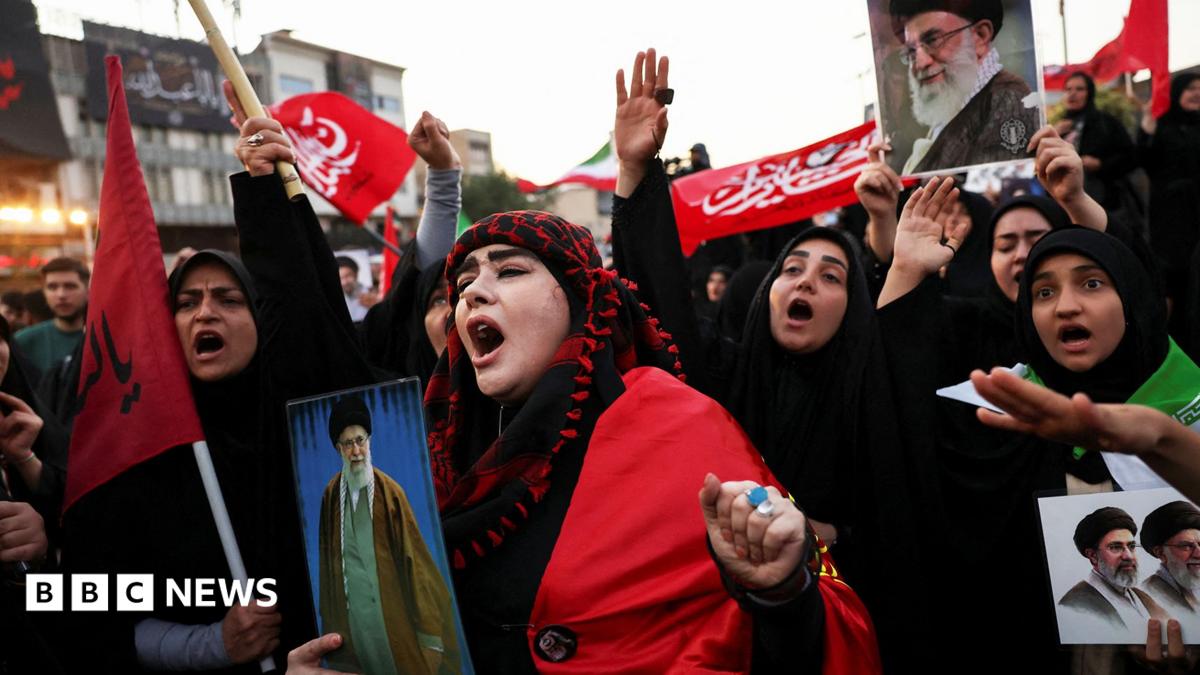
Khamenei Funeral Draws Enormous Crowds in Tehran — SkimNews

Get the Geopolitics newsletter
Daily geopolitics — wars, elections, sanctions, the diplomatic moves that move markets. Free.
- Ali Khamenei, 86, was killed in a February 28 air strike on the first day of the US-Israel war after ruling Iran for nearly 37 years; his daughter, son-in-law, daughter-in-law, and 14-month-old granddaughter died in the same strike.
- Iranian authorities are using the weeklong funeral ceremonies to project national unity and call for revenge — parliament speaker Mohammad Bagher Ghalibaf hailed the "proud and invincible nation of Islamic Iran" and army chief Major General Amir Hatami vowed to "never cease" the pursuit of justice.
- Mourners hanged an effigy of President Trump in Imam Hussein Square and carried placards showing VP Vance, Defense Secretary Pete Hegseth, and PM Netanyahu alongside the words "There will be blood."
- The funeral procession is a 12-hour journey through Tehran on Monday, with ceremonies continuing in Qom on Tuesday, Iraq's Najaf and Karbala on Wednesday, and burial in Khamenei's hometown of Mashhad on Thursday.
- Mojtaba Khamenei, named supreme leader shortly after his father's killing, has not appeared publicly; officials say he was wounded in the air strikes but have not disclosed the severity of his injuries.
- Hamas and Hezbollah sent delegations to the ceremonies, reflecting Khamenei's decades of support for anti-US and anti-Israel armed groups across the Middle East.
- The official "united front" messaging is undercut by the absence of President Pezeshkian's surviving predecessors, who had tense relations with Khamenei — and the NYT's coverage frames the funeral site as a symbol of "His Failures," surfacing dissent the official mourning narrative downplays.
Why it matters: Both Washington and Tehran have warned they are ready to resume military action even with a ceasefire in place, and army chief Hatami's vow to "never cease" pursuing justice signals the official posture is retaliation, not reconciliation. The NYT's "symbol of his failures" framing and the absence of Pezeshkian's predecessors show the projected unity is contested.
Ask SkimNews