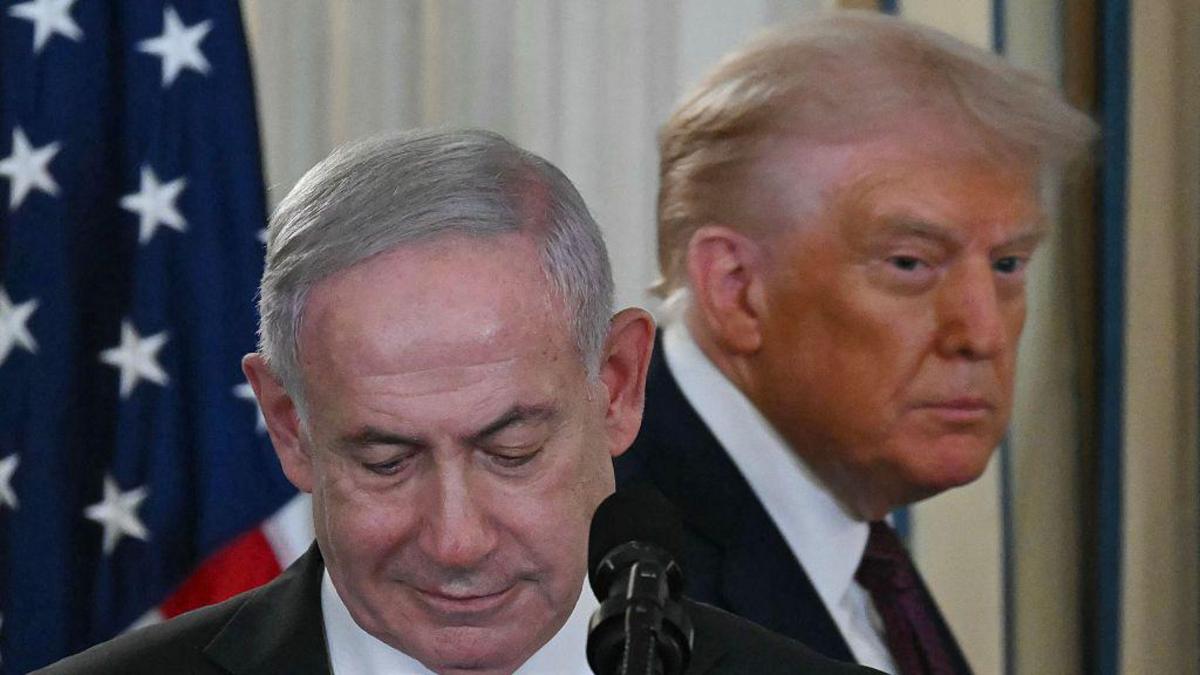
Trump-Netanyahu tensions: Have Israeli and US leaders clashed before?

Get the Geopolitics newsletter
Daily geopolitics — wars, elections, sanctions, the diplomatic moves that move markets. Free.
- Trump publicly lectured Netanyahu at the G7 summit over Israeli strikes on Lebanon, saying the PM "has to be more responsible" and "I'm not happy" with Israel's invasion and handling of Hezbollah.
- Netanyahu has vowed Israeli forces will not withdraw from Lebanon, where Israel now controls about 20% of territory and its campaign has killed nearly 4,000 people and displaced 1.2 million, according to the article.
- Axios reported on June 2 that Trump called Netanyahu "f*ing crazy" and berated him over Israel's escalation in Lebanon, per US media citing anonymous sources.
- Eisenhower during the 1956-57 Suez Crisis is cited by Middle East analysts as having exerted the strongest successful pressure on an Israeli leader, publicly demanding Ben-Gurion withdraw Israeli forces from Egypt.
- George H.W. Bush delayed $10 billion in loan guarantees to PM Yitzhak Shamir in 1991-92 over settlement expansion but ultimately did not reduce military ties, with the relationship expanding under subsequent administrations.
- Obama signed a record $38 billion military aid package to Israel in 2016 despite the bitter 2015 Netanyahu address to Congress opposing the Iran nuclear deal, declaring America's commitment to Israel's security "unshakeable."
- Chatham House analyst Yossi Mekelberg tells Al Jazeera that bipartisan US support for Israel is "waning" and the country has become a "burden" rather than the strategic asset it once was under Netanyahu.
Why it matters: Across decades of US-Israel clashes — Eisenhower, Bush, Clinton, Obama — US military backing consistently expanded, with Obama signing a record $38bn after the 2015 fight. Chatham House's Yossi Mekelberg tells Al Jazeera bipartisan support is now "waning" and Israel is a "burden" — a shift that distinguishes Trump's Lebanon rebuke from every prior spat and could test whether the historic pattern of "clash then bigger check" still holds.