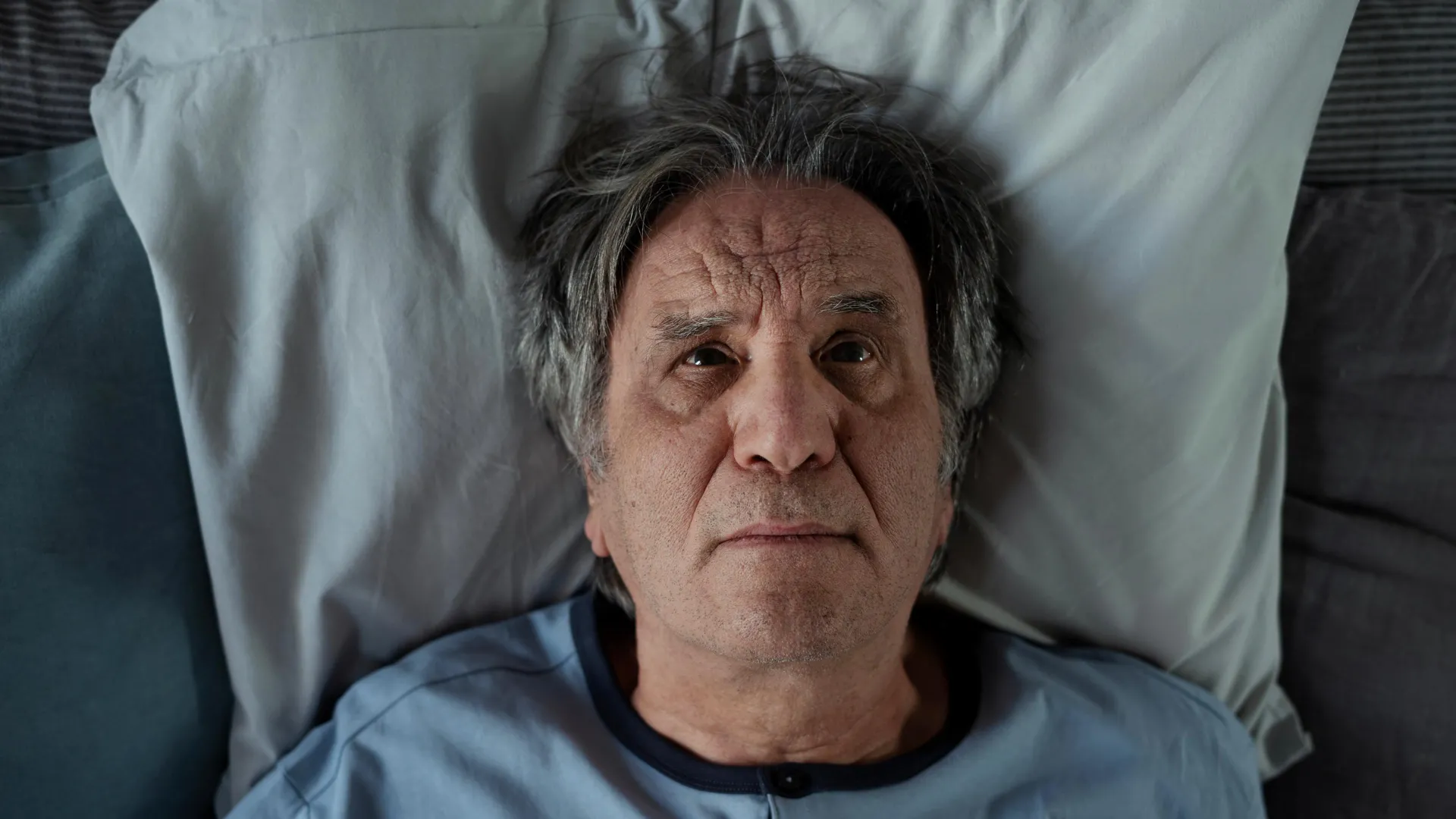
Study: Sleep Loss Locks Brain in Threat Mode

Get the Health newsletter
Daily health & science — research, biotech, public health, the studies worth knowing. Free.
- Emma Sullivan of the University of Melbourne led a study of 54 healthy adults aged 18-30, in which half stayed awake overnight and half slept 8 hours in a lab before navigating a 10-minute VR basement filled with ominous sounds and threatening rooms.
- Well-rested participants showed declining heart rate and skin-conductance stress on re-entering the threatening rooms, while sleep-deprived participants' stress levels stayed flat—suggesting a good night's sleep enables emotional adaptation to ongoing threats, not just first reactions.
- Eti Ben Simon of the University of Texas at Dallas, who was not involved in the research, framed the response as an evolutionary "better safe than sorry" emergency mode useful for ancestral humans facing predators but maladaptive in modern life.
- Heart rate variability emerged as a buffer among the sleep-deprived: those with more naturally varied heartbeats reported low anxiety despite strong physiological stress responses, while those with less varied heartbeats reported feeling far more anxious—pointing to moderate-to-vigorous exercise, a known HRV booster, as a potential intervention.
- Sullivan argued that treating sleep problems could ease anxiety since the two feed off each other, and cited cognitive behavioral therapy as one approach shown to improve both, while noting that napping or scheduled recovery sleep could partially offset threat-adaptation deficits when full sleep is impossible (shift work, new parenthood).
- Prior lab studies exposing participants to negative images for a few seconds had already shown amygdala activity more than 60% higher after 35 hours awake; the new VR design more closely mimics how real-world threats actually unfold, Sullivan said.
Why it matters: The study reframes sleep loss not just as causing anxiety in the moment, but as blocking the brain's ability to learn that a threat has passed—a mechanism that could fuel chronic anxiety. For the roughly one-third of Western adults with weekly sleep problems, it identifies heart rate variability as a measurable, exercise-modifiable factor that may protect emotional function when sleep can't be fully recovered.
Ask SkimNews