Samsung Averts Historic Strike With Tentative Pay Deal — SkimNews

Get the Tech newsletter
Daily tech — startups, AI labs, chips, the launches that shape the next decade. Free.
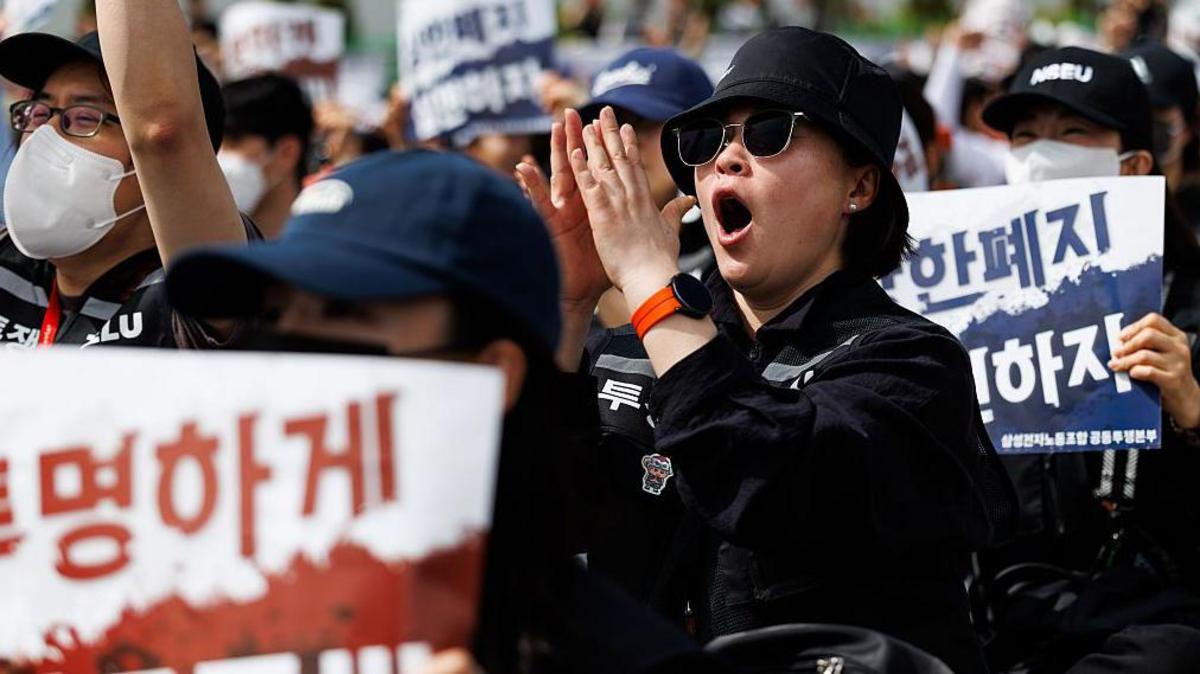
- Samsung Electronics and its labor union reached a tentative pay deal hours before a planned 18-day strike by more than 48,000 employees — nearly 40% of its Korean workforce — averting what would have been the company's largest-ever walkout
- Samsung became a $1 trillion company this year as AI-driven demand for memory chips transformed Seoul's stock market into the world's sixth-largest, with Samsung's revenue accounting for more than 12% of South Korea's GDP last year
- The tentative agreement scraps Samsung's existing bonus cap and allocates 10.5% of business performance profits to bonuses for the semiconductor division, though it still requires a ratification vote by union members
- Samsung's quarterly profits surged more than 8.5 times higher than the same period one year ago, surpassing the company's operating profit for all of 2025
- Workers were galvanized by a bonus gap with rival SK Hynix, whose employees secured bonuses averaging 700 million won ($465,000) per person in 2025 under a structure that scrapped a cap and allocates 10% of operating profit to bonuses — with some entitled to payouts near 3,000% of base salary
- Samsung holds a 22% share of the global AI memory chip market, trailing SK Hynix at 57% and ahead of US-based Micron at 21%, according to fourth-quarter Counterpoint data cited in the report
- South Korea's Prime Minister Kim Min-seok publicly warned that any disruption to Samsung's semiconductor production would 'leave deep scars across the national economy,' underscoring the stakes as a global memory chip shortage could persist into 2028
Why it matters: The tentative deal averts a production halt at one of the world's three dominant memory chip makers during an acute AI-driven supply shortage, but it also sets a new compensation benchmark in South Korea's semiconductor sector — Samsung now roughly matches SK Hynix's bonus structure after workers threatened to strike for 18 days. With ~48,000 employees representing nearly 40% of Samsung's Korean workforce on the line, the outcome could pressure other Korean conglomerates facing similar labor demands as AI profits surge.
Ask SkimNews