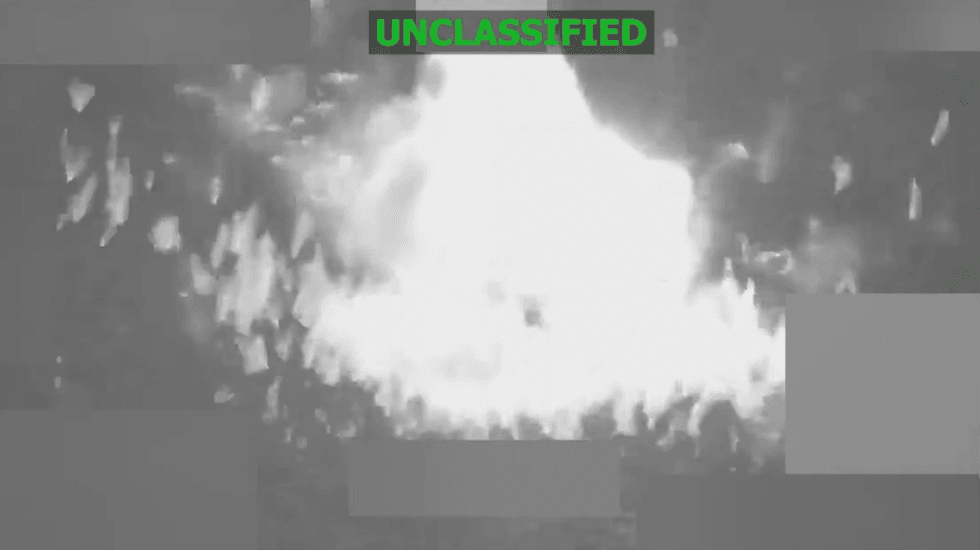
US strike on an alleged drug boat kills 1, leaves 2 survivors in the eastern Pacific Ocean — SkimNews
Get the Geopolitics newsletter
Daily geopolitics — wars, elections, sanctions, the diplomatic moves that move markets. Free.
- U.S. Southern Command struck a vessel in the eastern Pacific on Tuesday, killing 1 person and leaving 2 survivors; the command notified the Coast Guard to activate Search and Rescue for the survivors.
- The Trump administration's boat-strike campaign has now killed at least 208 people since early September, and the military provided no evidence that this week's targeted vessel was carrying drugs.
- President Trump has declared the U.S. is in an "armed conflict" with cartels and justified the strikes as a necessary escalation to stop fatal overdoses, but the administration has offered little evidence of killing "narcoterrorists."
- The Pentagon inspector general said in May it will review whether the military followed its six-phase Joint Targeting Cycle in carrying out the strikes — but the review is explicitly limited to targeting procedures, not the legality of the operations.
- Legal scholars flagged a separate incident in which two survivors clinging to wreckage were killed by a follow-up strike that the White House called "self-defense," with some scholars calling a second strike on survivors potentially illegal under any framework.
- Critics have questioned the strikes' effectiveness, noting that the fentanyl behind most U.S. overdoses is typically trafficked overland from Mexico, where it is produced with chemicals imported from China and India.
Why it matters: The campaign has killed 208 people without the military producing evidence that individual vessels carried drugs, and the only formal oversight underway — the Pentagon inspector general's review — is narrowly scoped to targeting procedures rather than the strikes' legality, leaving the central legal questions unanswered as operations continue.
Ask SkimNews