Rivian R2 uses 18-26% more energy than Model Y in real-world test — SkimNews
Get the Energy newsletter
Daily energy & climate — solar, EVs, oil, the policy fights and tech bets shaping the transition. Free.
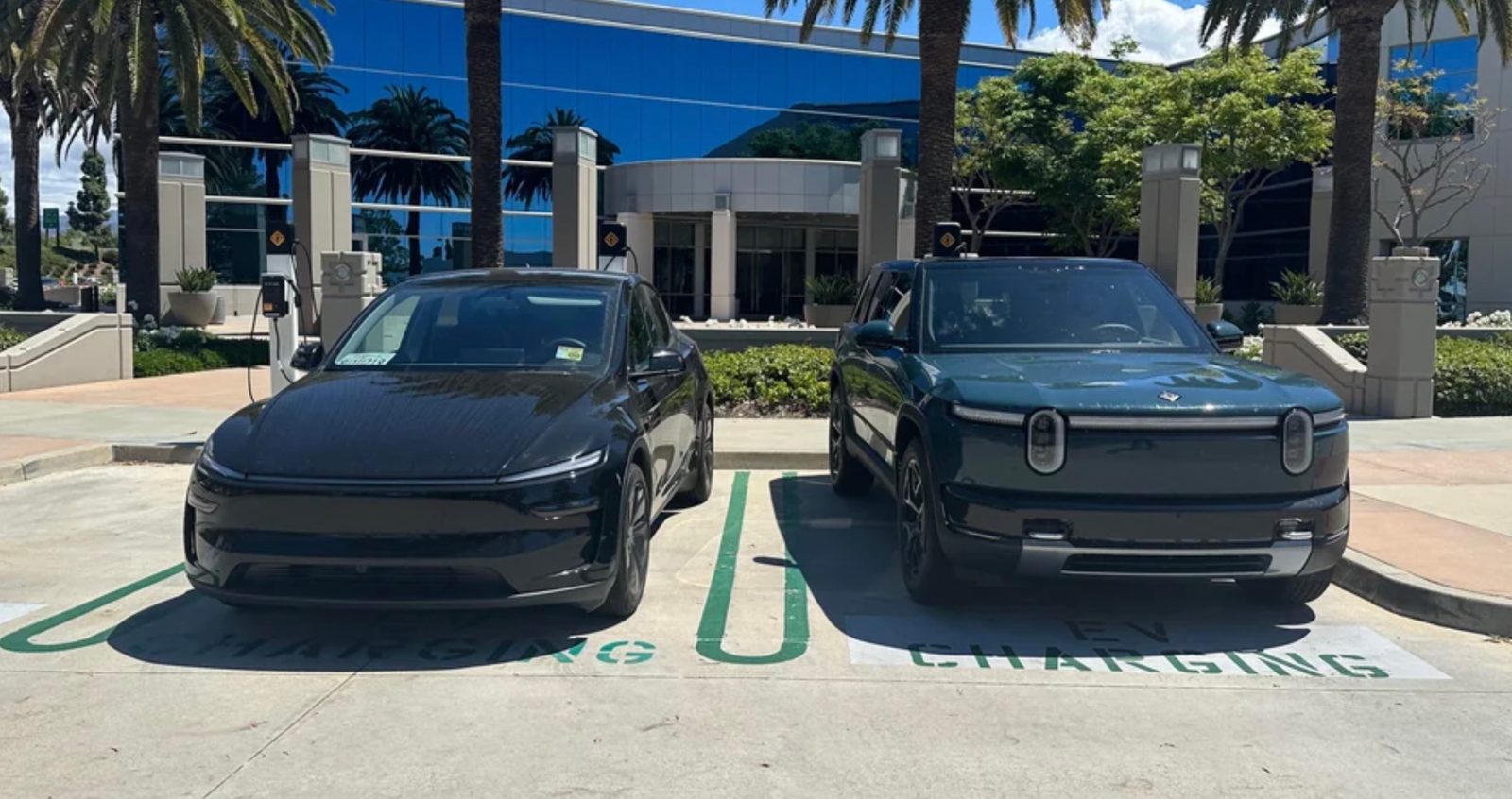
- Out of Spec Reviews ran a Rivian R2 Performance and Tesla Model Y Performance on the same roads the same afternoon, finding the R2 used 18% to 26% more energy at every speed tested — 18.4% more at 50 mph (4.00 mi/kWh), ~26% more at 60 mph (3.15 mi/kWh), ~20% more at 70 mph (3.06 mi/kWh), and 26.5% more at 80 mph (2.46 mi/kWh).
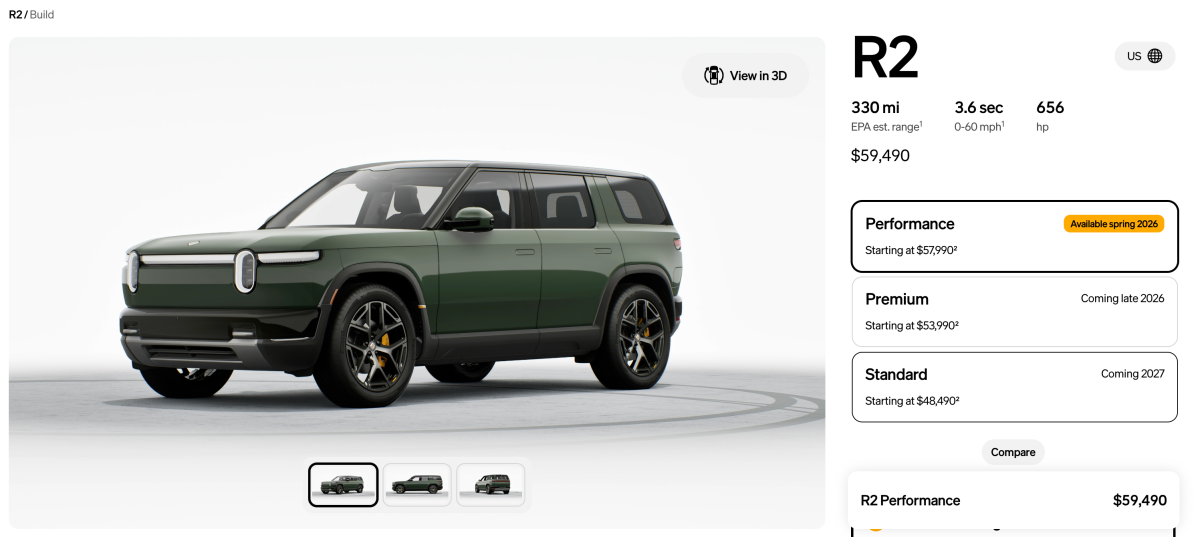
- Both SUVs carry identical EPA efficiency ratings of 105 MPGe combined and 32 kWh per 100 miles, even though the R2 weighs roughly 800 lbs more and has a boxier aerodynamic profile than the Model Y.
- At 80 mph the R2 landed at 2.46 mi/kWh while the Model Y Performance managed 3.1 to 3.3 mi/kWh in the same test — a gap the article attributes to aerodynamics, not drivetrain inefficiency.
- In a 20-minute low-speed city simulation built to favor the R2's front-motor disconnect feature, the Model Y used 1.6 kWh versus the R2's 1.9 kWh — about 19% better for the Tesla even in the scenario designed to showcase Rivian's hardware.
- Rivian CEO RJ Scaringe had told assembled media at the R2 launch that the vehicle is 'as efficient on a Wh per mile or miles per Wh basis' as the Model Y despite its heavier, less aerodynamic form factor — a claim the real-world testing contradicts.
- The R2 redeemed itself in charging: at an IONNA Rechargery in Wilson, North Carolina, it held a flat 600 amps (peaking ~229 kW) and added 48.3 kWh in 15 minutes, jumping from 10% to 59% state of charge at a 193 kW average, hitting the charger's ceiling rather than the battery's.
- The article flags a rating-system loophole: EPA lets automakers choose between a cheaper single-cycle test (multiplied by 0.7) or a more rigorous multi-cycle procedure, and host Kyle Conner suspects Rivian ran the full battery while Tesla submitted derived numbers — a gap neither EPA nor automakers publicly disclose.
- Even after the efficiency gap, the R2 drove 92.8 miles in the 10% Challenge versus the Model Y's ~103 miles from less added energy, because the Model Y's superior cruising efficiency outweighed the R2's superior charging curve in that specific test.
Why it matters: If real-world results hold, R2 buyers face meaningfully more charging stops on road trips than the EPA label implies — at 80 mph the R2 sits at 2.46 mi/kWh versus the Model Y's 3.1-3.3 mi/kWh, a roughly 26% deficit. The article's deeper sting is for Rivian's CEO, who publicly claimed parity on a Wh-per-mile basis, and for the EPA, whose optional multi-cycle test path may let two very different vehicles land on the same combined number.
Ask SkimNews