Was Tarique Rahman’s Youth Outreach More Than an Election Strategy?

Get the Geopolitics newsletter
Daily geopolitics — wars, elections, sanctions, the diplomatic moves that move markets. Free.
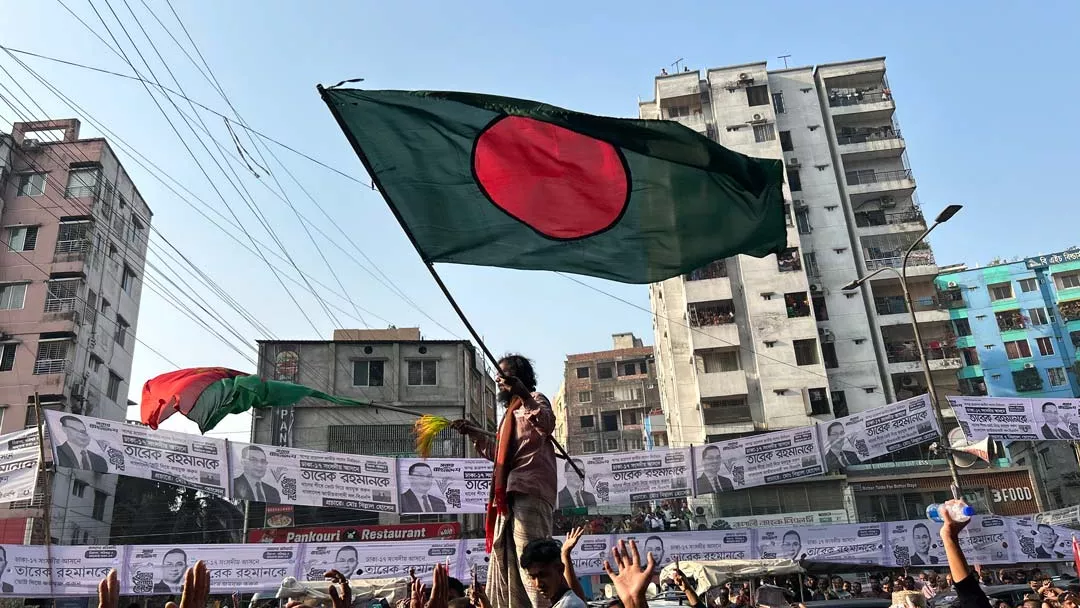
- Tarique Rahman returned to Dhaka on December 25, 2025, after 17 years in exile as acting BNP chairman, opening his January 22 campaign in Sylhet with "The Plan: Youth Policy Talk with Tarique Rahman" attended by several hundred students, followed by a similar event in Chattogram.
- The BNP's election manifesto pledged 10 million new jobs within five years, sending 10 million workers abroad, unemployment benefits, freelancing and outsourcing training at higher education institutions, and small office spaces for young entrepreneurs in IT parks.
- Nearly 50 million of Bangladesh's 127,711,793 registered voters — more than one-third of the electorate — were aged 18-35 under the National Youth Policy, with youth credited as decisive in the BNP's February 17 electoral victory.
- Since assuming office, Rahman has hosted roughly a dozen meetings with content creators, athletes, and entrepreneurs, launched the nationwide Notun Kuri Sports talent program, opened the parliament complex as a civic education platform for students, and allocated 5 billion taka for a startup fund.
- The job-creation pledge faces structural constraints: Bangladesh's unreliable energy supply has prevented hundreds of completed industrial units from beginning production, even after other preparations were finished.
- Gen Z students sitting for Higher Secondary Certificate exams recently blocked roads across Dhaka for several days, prompting fresh questions about whether the BNP's youth engagement is translating into meaningful participation and opportunity.
Why it matters: With youth (18-35) making up more than one-third of Bangladesh's 127.7 million voters and credited with delivering the BNP's February 17 victory, the government's credibility with its youngest supporters now depends on executing the 10-million-jobs-in-five-years pledge — a target already undermined by an energy bottleneck that has idled hundreds of finished factories and that Rahman addressed during investment trips to Malaysia and China.