AI Chip Boom Masks K-Shaped Divide in South Korea — SkimNews

Get the Finance newsletter
Daily finance — markets, central banks, M&A, the prints that move money. Free.
- South Korea and Taiwan are seeing record exports and soaring stock markets fueled by AI chip demand, with seniors opening brokerage accounts for semiconductor stocks and young people questioning the point of their jobs in favor of trading.
- The chip sector employs only a sliver of the population, while industries outside chip making struggle with energy and tariff shocks, and household debt and real estate prices keep rising across both economies.
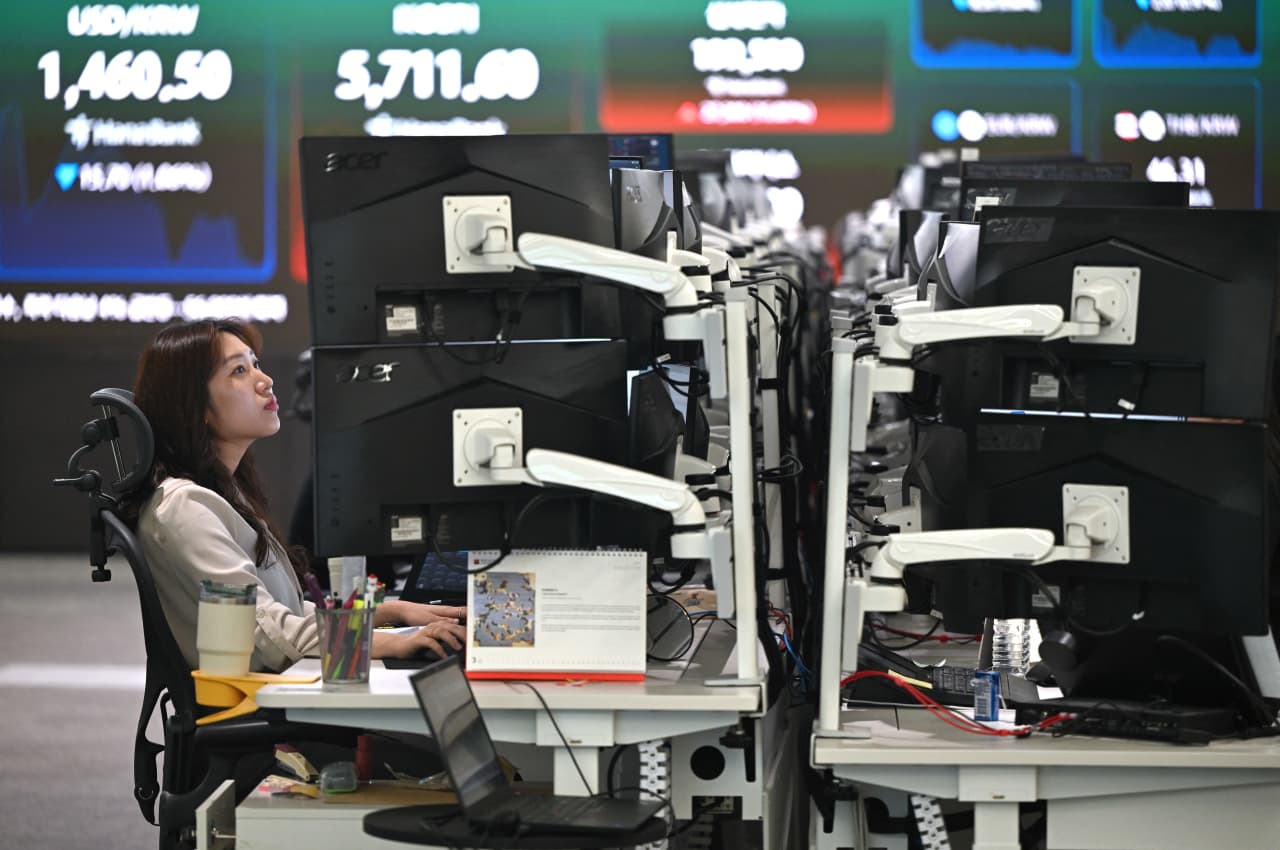
- Korean stocks plunged 10% on Tuesday, setting off a global tech sell-off, then rebounded over 3% the next day, illustrating the extreme volatility tied to AI-chip speculation.
- Both currencies remain weak despite repeated government interventions to prop them up, underscoring how the headline boom is not translating into broad economic strength.
- Economists describe the phenomenon as a "K-shaped" divide, a pattern that has widened globally including in the United States since the Covid-19 pandemic and that the AI boom now threatens to deepen further.
Why it matters: South Korea and Taiwan's record-setting growth is concentrated in chip making, which employs only a sliver of workers — meaning the headline boom is leaving most households exposed to rising debt, weakening currencies, and non-chip industries under pressure. The 10% single-day Korean stock plunge also shows that the AI trade now has the power to rattle global tech markets, amplifying risk for investors far beyond these two economies.
Ask SkimNews