Bessent's Big Yen Talk Meets a Bond Market He Can't Move — SkimNews
Get the Finance newsletter
Daily finance — markets, central banks, M&A, the prints that move money. Free.
- Scott Bessent declared "I am the house now" and invited traders to bet against his yen support operations, echoing the 1992 British pound crisis where officials who made similar boasts suffered humiliating credibility losses.
- Bessent previously worked for George Soros during the 1992 pound attack, which Krugman argues should have made him more cautious about bold rhetoric from a Treasury secretary.
- Long-term interest rates rose 45–79 basis points across the U.S., Germany, France, Italy, the UK, and Japan in the six months to August 28, with the U.S. in the middle at 58bp — undermining claims that U.S. institutional breakdown is driving the yield spike.
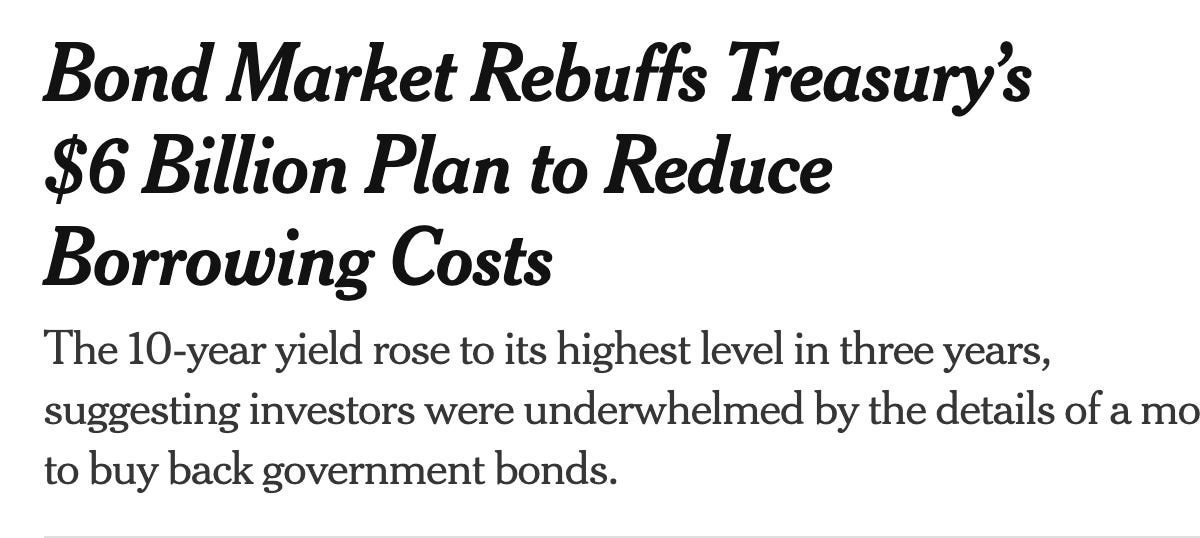
- Bessent's efforts to push down U.S. interest rates have failed, with Krugman attributing rising yields to an AI-driven investment surge that may rival or exceed the late-1990s tech boom.
- Late-1990s parallel: Long-term rates were higher then despite low inflation and a federal budget surplus, suggesting current rate pressures are structural rather than a product of Trump's governance.
- Bruegel, the European think tank, documented the cross-national yield rises, supporting Krugman's argument that this is a global phenomenon, not a U.S.-specific punishment.
- Krugman's verdict: Bessent is "further draining his rapidly diminishing reserves of credibility" by talking big while wielding a "tiny, tiny stick" against market forces.
Why it matters: A sitting Treasury secretary staking personal credibility on currency markets while simultaneously losing the bond fight is a rare double exposure — and the bond market is the bigger one. With the U.S. sitting in the middle of a global 45–79 bp yield surge, Bessent has no clear policy lever to pull, and each defiant quote further erodes the institutional authority the Treasury relies on during future crises.
Ask SkimNews