Russia’s Donbas Campaign Shows Ground Forces Matter
Get the Geopolitics newsletter
Daily geopolitics — wars, elections, sanctions, the diplomatic moves that move markets. Free.
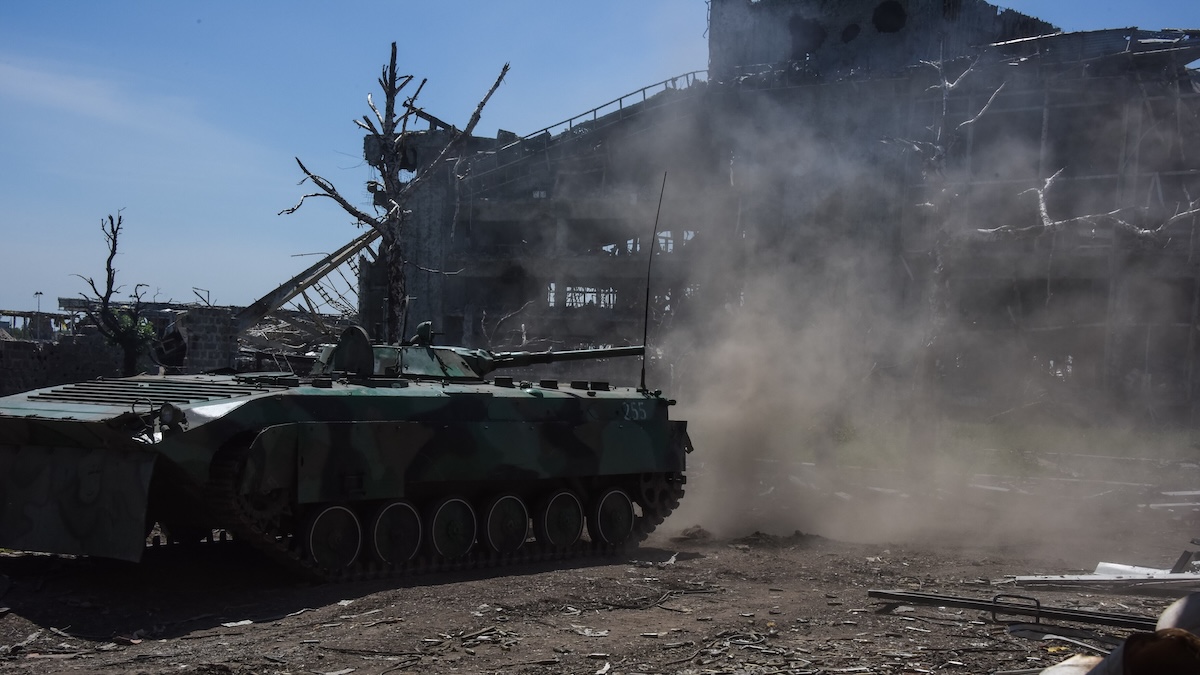
- Russia’s Donbas campaign (2014‑15) combined the sieges of Ilovaisk, Donetsk Airport, and Debaltseve into a coherent operation that proved a land force must defeat a land force to achieve politically decisive outcomes.
- Ilovaisk fell to the Donetsk People’s Army in July 2014; after Ukrainian counter‑attacks in August, Russian mechanized forces linked up and encircled the city, causing 366 Ukrainian soldiers killed, 429 wounded, 300 captured, and 36 civilian deaths.
- Donetsk Airport was seized by Russian forces and the Donetsk People’s Army by early October 2014; a prolonged siege ended in late January 2015 when Russian special‑operations forces collapsed the terminal’s upper floors onto Ukrainian defenders, killing over 50.
- Minsk Protocol was negotiated on Sept 5 2014 after the Ilovaisk battle, but the ceasefire never held, while the later Minsk II agreement formalized Russia’s strategic gains from the campaign.
- U.S.-Israeli decapitation campaign has been deemed insufficient to achieve strategic goals against resilient adversaries like Iran, prompting debate over the continued relevance of large‑scale ground forces.
- Multidomain Task Force was created by the U.S. Army to replace traditional land forces with high‑tech strike capabilities, reflecting the belief that massed armies are no longer viable.
- Mobile Brigade Combat Team similarly aims to integrate technology and mobility, further illustrating the shift away from large, massed ground formations.
Why it matters: Russia’s success in the Donbas gave it political leverage via Minsk II, while Ukraine suffered heavy casualties and loss of territory; the analysis warns that U.S. planners who downplay large‑scale ground combat risk losing strategic advantage in future wars against resilient foes like Iran.
Ask SkimNews