A Return to Mass: Russian Force Expansion in the War with Ukraine — SkimNews
Get the Geopolitics newsletter
Daily geopolitics — wars, elections, sanctions, the diplomatic moves that move markets. Free.
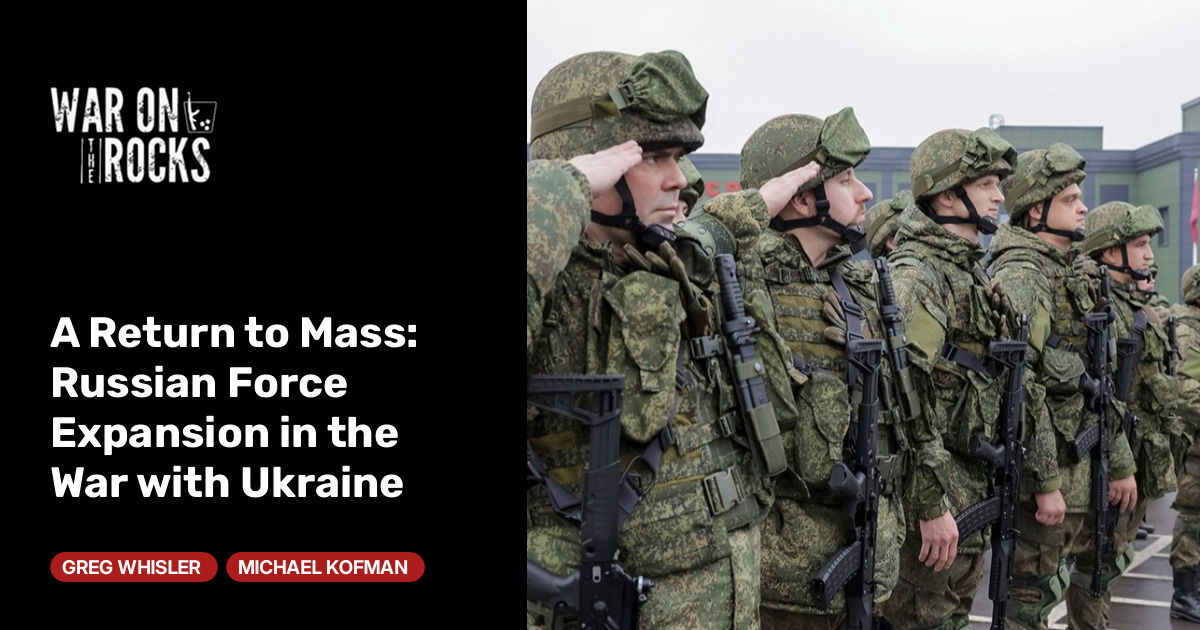
- Russia grew its deployed military to over 700,000 personnel — from one of its smallest armies in well over a century — despite casualties approaching 500,000 killed in action.
- The 2022 invasion committed more than 150 battalion tactical groups (nearly all of Russia's peacetime force) but lacked a reserve, with the Russian reservist system (BARS) chronically underfunded since 2006 and excluded from the initial force.
- After Ukraine's Kharkiv counteroffensive in September 2022, Russia formed the 3rd Army Corps from recruits and stored equipment to address dire personnel shortages.
- Russian mass was checked by Ukrainian dispersal, tactical drones, and Western systems including HIMARS, which disrupted Russian logistics and worsened ammunition shortfalls.
- The article frames the war as a return to a larger, more mobilization-dependent force structure after three decades of focusing on small, high-readiness ground forces.
- Post-war, Russia will deploy a significantly larger ground force on the borders of Latvia, Lithuania, Estonia, and Finland, equipped with expanded precision strike capabilities.
Why it matters: The analysis argues Russia's expanded force is durable rather than disposable: even though mass failed to break Ukraine, the 700,000-strong army will redeploy to NATO's eastern frontier with assimilated drone and deep-strike capabilities, presenting Baltic and Nordic states with a qualitatively different threat than the pre-2022 force.
Ask SkimNews