Iran War Burns Through One-Third of U.S. Tomahawk — SkimNews

Get the Geopolitics newsletter
Daily geopolitics — wars, elections, sanctions, the diplomatic moves that move markets. Free.
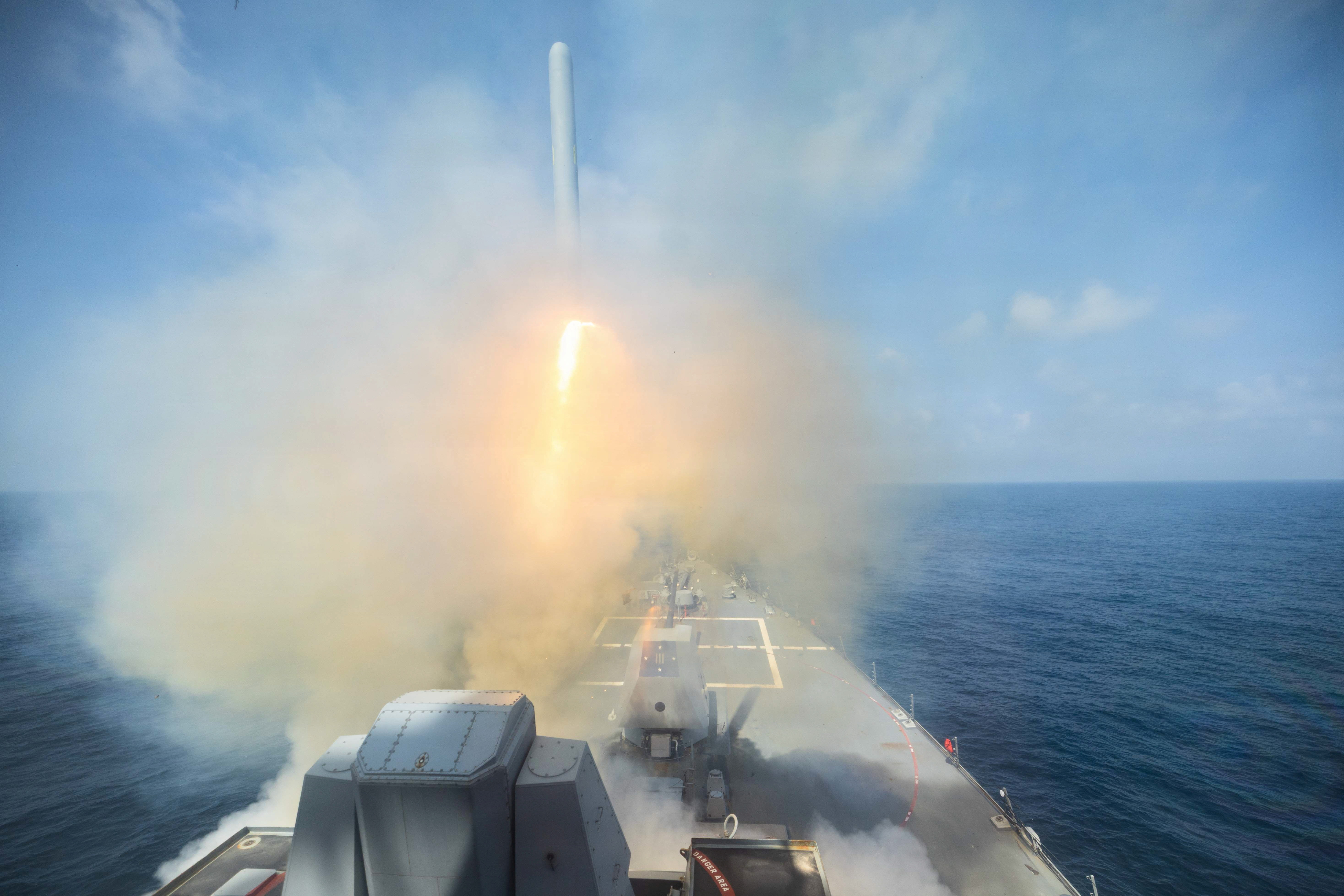
- The U.S.-Iran war consumed roughly one-third of America's entire Tomahawk cruise missile stockpile during intense fighting from late February to early April, according to Center for Strategic and International Studies estimates based on publicly available data.
- Operation Epic Fury killed dozens of senior Iranian officials in its opening hours, deployed nearly 5,200 munitions in the first 96 hours, and was labeled the "first AI war" by former Pentagon Defense Innovation Unit director Michael Brown.
- The Pentagon's overstretch stretches across multiple presidencies — Obama's Asia pivot returned to the Middle East, Trump's first term was consumed by North Korea and Iran, and Biden's China focus was derailed by Russia's 2022 invasion of Ukraine and the subsequent Middle East explosion.
- Trump's second term pursued what the article calls "omnidirectional" intervention — striking Houthis in early 2025, striking Iran's nuclear facilities in a June 2025 12-day war, blockading Venezuela and seizing Nicolás Maduro in December 2025–January 2026, and running counterterrorism raids in Nigeria and Somalia.
- The Iran war's strategic outcome was "notably ambiguous": Iran retained a hammerlock on the Strait of Hormuz, struck U.S. bases with drones and missiles, and was simultaneously pummeled militarily — a result the source describes as "pummeled and empowered all at once."
- Trump initially wanted to strike Iran in January 2025 but couldn't assemble resources in time — the USS Gerald R. Ford had to be pulled from Caribbean operations supporting Venezuela and rushed back to the Middle East, a logistics scramble the article uses as Exhibit A for U.S. overstretch.
Why it matters: Roughly one-third of America's Tomahawk stockpile has been consumed in a single Middle East conflict, and the same overstretched force is supposed to deter a relentlessly arming China in the Western Pacific. With U.S. defense spending stuck at 3-4% of GDP, Washington now faces the choice the article itself names: sustain Middle East commitments or prepare for the Pacific fight it has long called its priority theater — doing both is no longer credible at current resource levels.
Ask SkimNews