Tesla FSD v14 nearly hits ditch at 110 km/h — SkimNews
Get the Tech newsletter
Daily tech — startups, AI labs, chips, the launches that shape the next decade. Free.
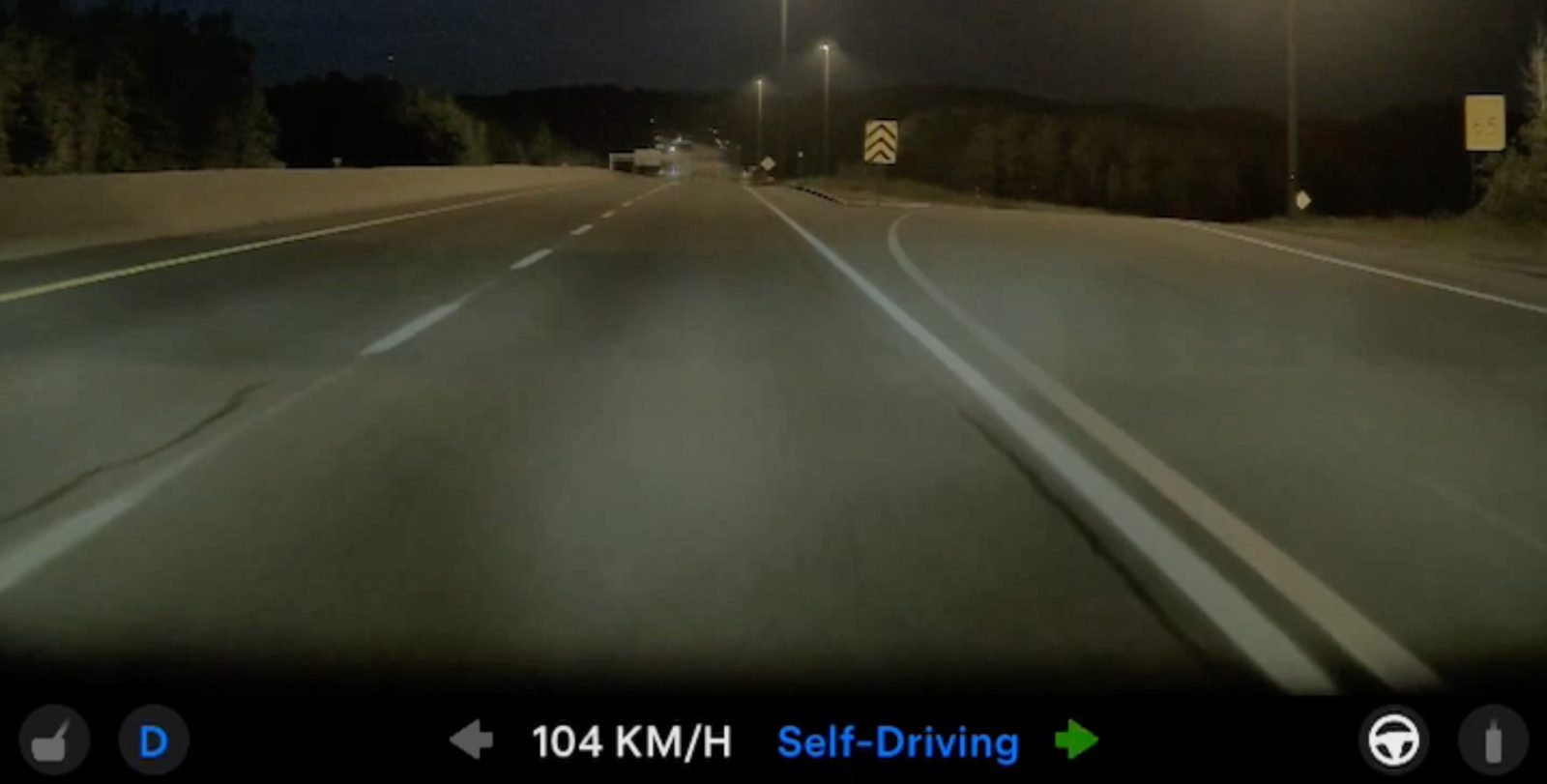
- Tesla FSD v14.3.6 activated its right turn signal and began pulling toward the shoulder for exit 217 on Autoroute 55 in Quebec's Mauricie region at 110 km/h, even though the ramp had already passed, committing to a maneuver that would have driven the car straight into a ditch
- The driver grabbed the wheel at approximately 102 km/h, with the speed readout dropping from 110 to 102 as the car committed to the turn while still displaying "Self-Driving" on the screen
- Tesla's v14.3.6 release notes cite an upgraded reinforcement learning training stage, a rewritten MLIR AI compiler delivering "20% faster reaction time," and improvements reducing unnecessary disengagements
- Tesla reported a record 207 Autopilot and FSD crashes to NHTSA in a single month, with narratives redacted on 99.9% of its 3,763 driver-assist crash reports since 2019
- Elon Musk continues telling investors unsupervised FSD will be widespread in the US by year-end, while Waymo's co-CEO argues camera-only self-driving falls short of what a true driverless system requires
- The Electrek author had warned in June that FSD v14's near-perfect reliability creates a complacency trap — drivers stop scanning, then the system fails critically — a pattern Sunday's incident on an ideal-condition, zero-traffic night highway appeared to confirm
Why it matters: The near-miss happened under conditions specifically cited as the system's strongest case — divided highway, night, zero traffic, fresh lane markings — yet FSD still committed to a turn that would have driven into a ditch at 110 km/h. For Tesla, the gap between Musk's year-end unsupervised-FSD promises and a car that cannot reliably distinguish a passed exit from an upcoming one is the credibility problem Electrek flags as probably the company's worst-ever strategic move.
Ask SkimNews