Trump, Iran's Ghalibaf Trade Threats at Switzerland — SkimNews
Get the Geopolitics newsletter
Daily geopolitics — wars, elections, sanctions, the diplomatic moves that move markets. Free.
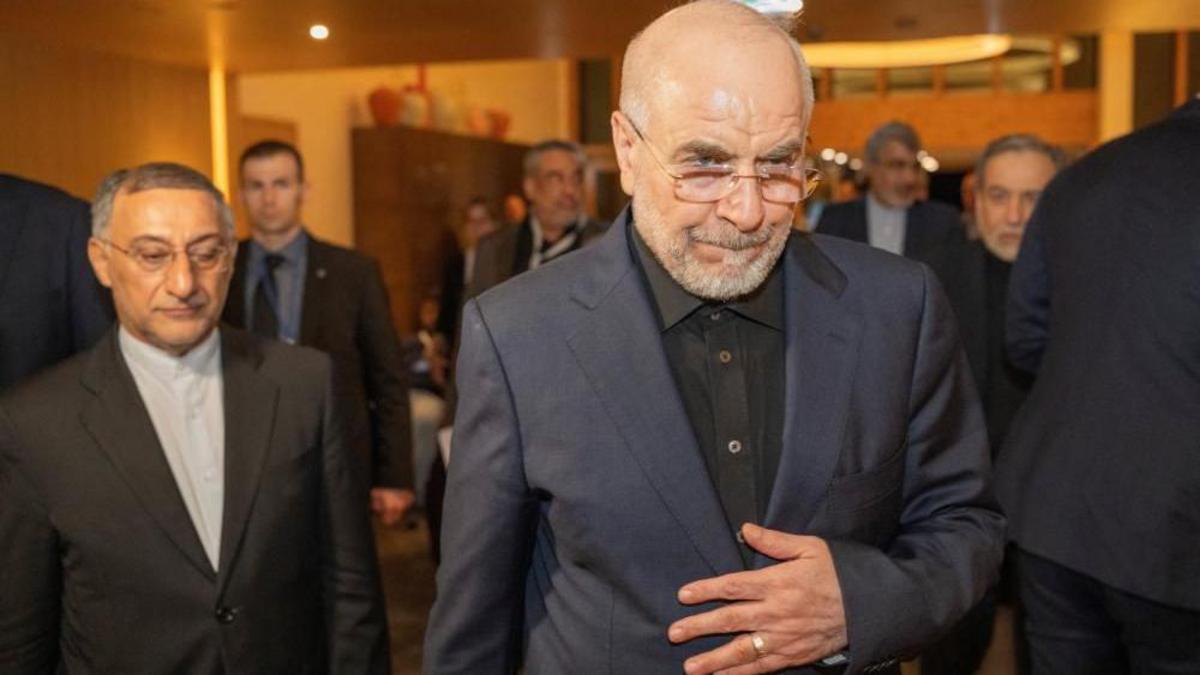
- Trump and Iran's lead negotiator Mohammad Bagher Ghalibaf exchanged threats as a first round of direct US-Iran talks opened in Lucerne, Switzerland, following the initial agreement to end the war signed earlier in the week.
- Trump threatened to "hit Iran very hard again" if Hezbollah did not stop clashing with Israeli troops in southern Lebanon; Ghalibaf dismissed the threat and said Iran's armed forces were prepared for confrontation.
- The initial agreement commits both sides to reach a final deal within 60 days, reopen the Strait of Hormuz (through which 20% of the world's oil and gas travels), end fighting on "all fronts" including Lebanon, and includes a $300bn (£224bn) reconstruction plan for Iran plus US termination of "all types of sanctions."
- Despite the deal, Israeli air strikes have killed at least 67 people in Lebanon and Hezbollah attacks killed 5 Israeli soldiers since the agreement; the US declared a new Israel-Hezbollah ceasefire on Friday, and Iran announced Saturday it had shut the Strait of Hormuz in response.
- Maritime tracking data contradicted Iran's claim: four tankers passed through the Strait of Hormuz by late afternoon Sunday, and additional vessels were transiting in both directions, though some ships may have trackers turned off.
- The US delegation was led by Vice-President JD Vance alongside Jared Kushner and special envoy Steve Witkoff; Iran's Ghalibaf was accompanied by Foreign Minister Abbas Araghchi, while Pakistan's PM and army chief and Qatar's prime minister attended as mediators.
- Vance said Trump asked negotiators to "turn over a new leaf" and the US is willing to "fundamentally transform" ties if Iran gives up "nuclear weapons ambitions for the longer term"; Iran insists its nuclear programme is peaceful, and the nuclear issue remains the central unresolved question.
Why it matters: The 60-day clock toward a final US-Iran deal is already under strain because the 'all fronts' ceasefire condition is breaking in Lebanon, where Israeli strikes killed at least 67 people post-agreement. Iran is holding the Strait of Hormuz — 20% of global oil and gas — as leverage, while the $300bn reconstruction package and full sanctions termination form its core incentive. With Trump and Ghalibaf trading threats on day one, Lebanon is the immediate tripwire that could collapse the talks.
Ask SkimNews


