White House asks Congress for $87.6 billion, mostly for Iran war — SkimNews
Get the Geopolitics newsletter
Daily geopolitics — wars, elections, sanctions, the diplomatic moves that move markets. Free.
- White House requested $87.6 billion in supplemental funding from Congress on Wednesday, with $67.15 billion directed to the military for Iran war operations including munitions procurement, weapons-stock rebuilding, and classified programs.
- $21 billion of the military request is specifically earmarked to procure munitions, strengthen the U.S. industrial base, and support critical capabilities.
- U.S. Senate passed a war powers resolution on Tuesday directing Trump to halt military action against Iran — weeks after the House passed an identical measure — with a handful of Republicans joining nearly all Democrats in the rebuke.
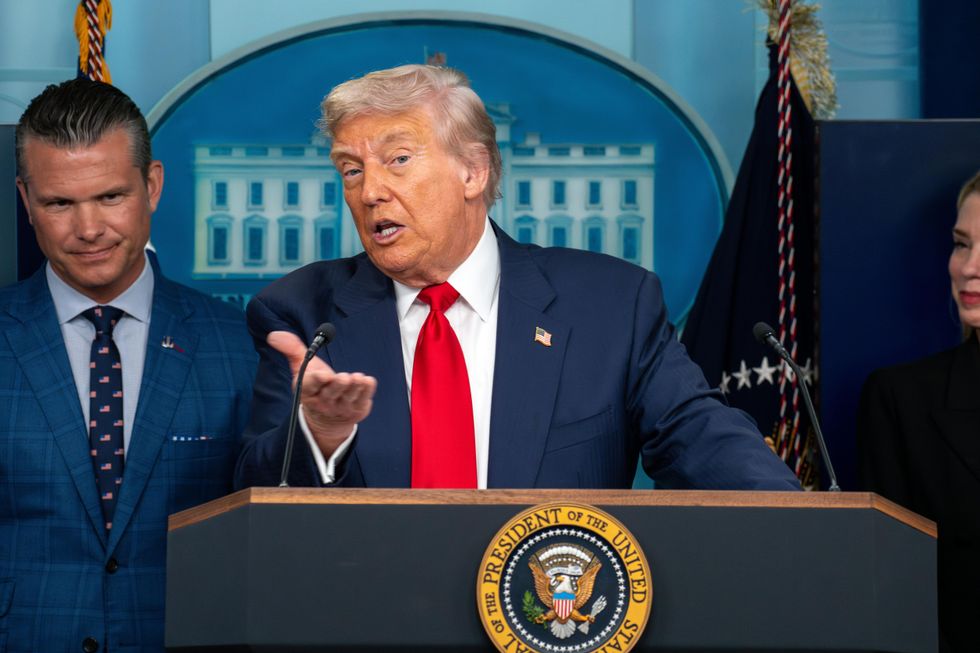
- Trump got into a shouting match with Senator Bill Cassidy (R-Louisiana), one of the Republicans who voted for the war powers resolution, at a Capitol lunch on Wednesday.
- Chuck Schumer and top Appropriations Democrat Patty Murray publicly rejected the request, with Murray saying she "will not rubber-stamp tens of billions more for this disastrous war of choice" and Schumer arguing Congress should be "lowering costs for the American people, not writing another blank check for Trump."
- The request also includes $1.4 billion for Africa's Ebola outbreak — $800 million in humanitarian aid and $500 million for global health security — notable because the administration made "steep cuts to USAID and African public health efforts" prior to the outbreak.
- Non-Iran items in the package total roughly $13.6 billion: $11.1 billion for U.S. farmers, $1 billion for Delphi pensioners, $500 million for Washington-area construction, and $1 billion for Penn Station reconstruction.
Why it matters: With Republicans holding razor-thin margins and the war deeply unpopular ahead of November midterms, this $87.6 billion request faces a steep uphill climb — both parties have accused the administration of bypassing Congress since the February 28 bombing began. The $1.4 billion Ebola ask exposes an awkward pivot: the same White House cut USAID and African health programs before the outbreak, now requesting emergency funds to contain it.
Ask SkimNews