China Frames Taiwan Force as Last Resort, Not Opportunity — SkimNews

Get the Geopolitics newsletter
Daily geopolitics — wars, elections, sanctions, the diplomatic moves that move markets. Free.
- Zichen Wang and Peking University professor Jie Dalei argued at a closed-door Hawaii workshop in March that Beijing frames the Taiwan issue around "every possible way" to avoid force, directly contesting the Washington assumption that China is a "tactical predator" waiting for U.S. distraction.
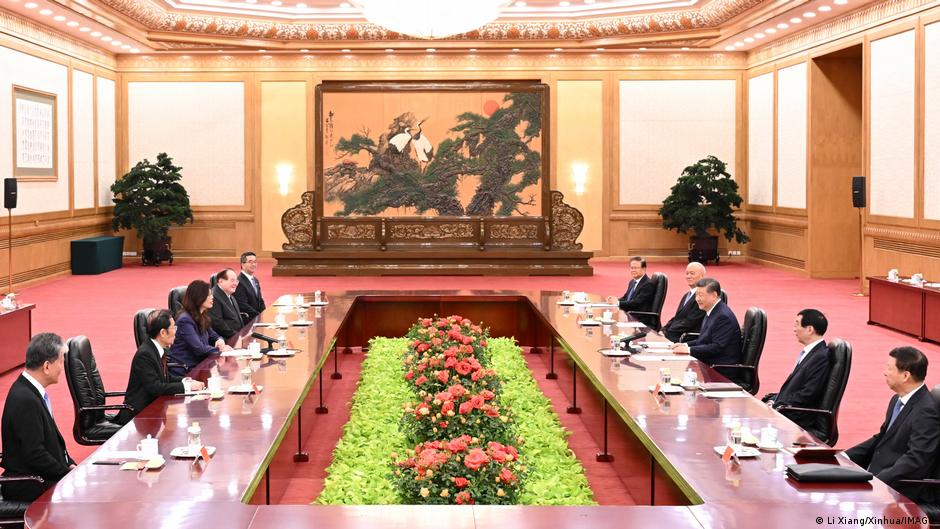
- KMT chair Cheng Li-wun is visiting the mainland April 7–12 at the invitation of Xi Jinping and the CPC Central Committee; a direct meeting with Xi would be the first KMT–CCP leader sit-down in a decade.
- China's 2005 Anti-Secession Law restricts "non-peaceful means" to cases where Taiwan's secession becomes factual or possibilities for peaceful reunification are "completely exhausted," a clause the author says is read in the West as a war blueprint but functions in Beijing as a restraint.
- Cheng Li-wun was a former DPP member who supported Taiwanese independence before joining the KMT in 2005 and serving as spokesperson for then-Chairman Lien Chan's historic "ice-breaking journey" to the mainland — a path her current trip is seen as attempting to replicate.
- Taiwan's DPP commands at most 40% public support and does not hold a legislative majority, a structural fact the author says underwrites Beijing's willingness to be "strategically patient" in hoping for political attitude shifts on the island.
- A 2024 Chicago Council survey found 51% of Americans want the U.S. to encourage Taiwan to maintain the status quo, with only 36% supporting sending U.S. troops in a contingency and 58% opposed to positioning troops where they could enter war with China.
- Donald Trump has said he will visit China in mid-May, and Beijing is hoping he will explicitly express opposition to Taiwanese independence and adopt a more positive posture toward peaceful reunification.
Why it matters: The piece directly challenges Washington's dominant "tactical predator" framing of Beijing, arguing instead that China treats Taiwan force as a reluctant last resort rooted in the Anti-Secession Law's restraint clause. With Trump set to visit China in mid-May and only 36% of Americans backing troop deployment to Taiwan, the widening gap between elite hawkishness and public caution could reshape both the 2028 election debate and U.S. policy calibration toward the strait.
Ask SkimNews