Gene Circuit Controls Bee Job Roles — SkimNews
Get the Health newsletter
Daily health & science — research, biotech, public health, the studies worth knowing. Free.
- Heinrich Heine University Düsseldorf researchers identified brain circuits linked to age-related task changes in worker bees, showing that deactivating them alters natural behavioral progression
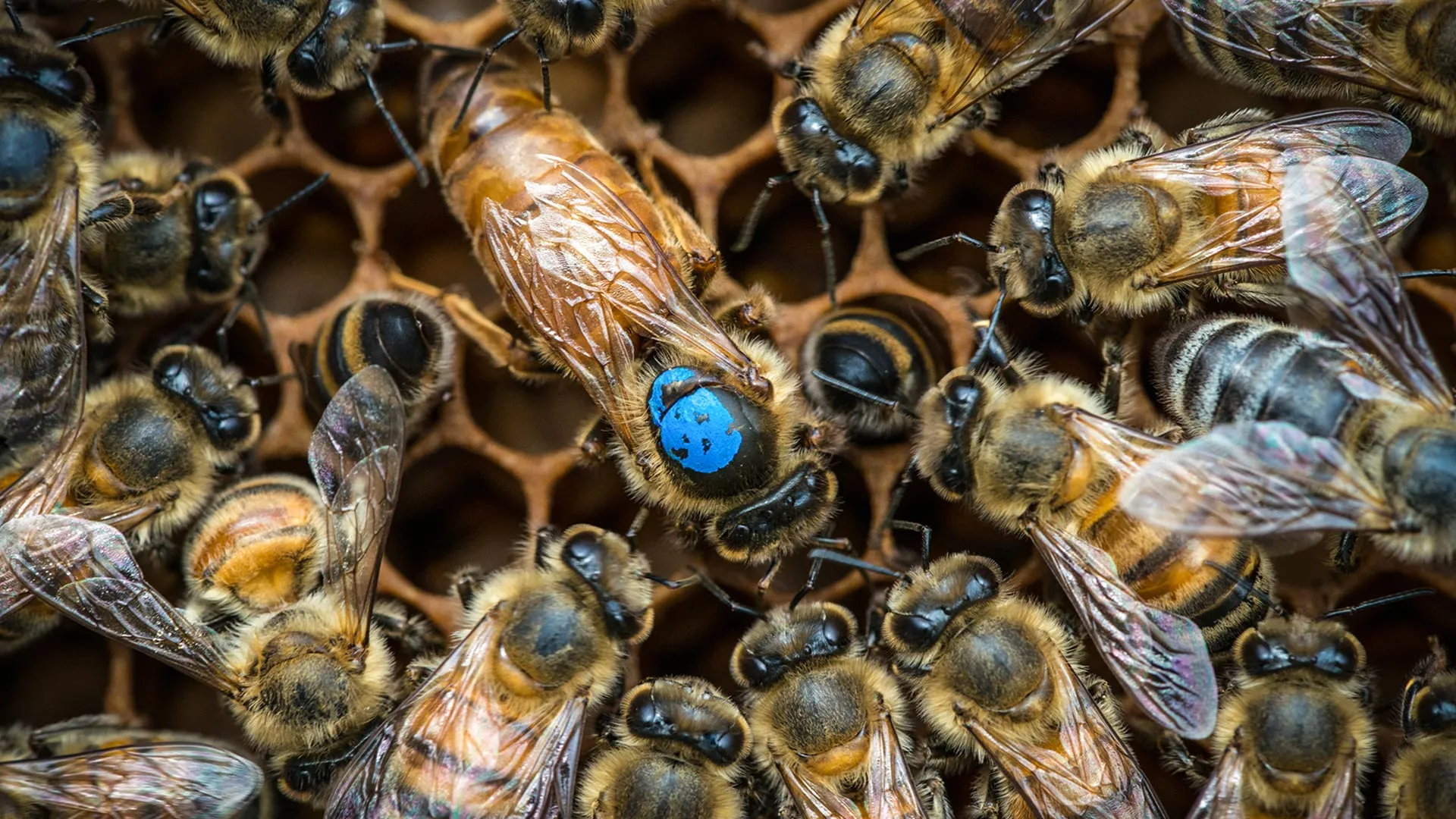
- doublesex gene manipulation in older worker bees caused them to resume queen care—a role normally limited to younger bees—demonstrating its role in regulating social behavior
- Dr. Jana Seiler led the PNAS study showing that inhibiting dsx-expressing neural circuits overrides typical age-dependent duties in honeybees
- Professor Martin Beye's team used targeted gene expression to suppress neural activity, proving that specific brain regions control task allocation in bee colonies
- Proceedings of the National Academy of Sciences published findings revealing that innate neural communication, not just age, governs division of labor in honeybee societies
Why it matters: This discovery shifts understanding of how complex social systems self-organize without central control, showing that a single gene and its neural circuits can override age-based roles in a colony. It offers a model for studying hardwired behavioral plasticity in other species, including humans.
Ask SkimNews