Munch's Chocolate Factory Frieze Goes on Display in Oslo — SkimNews
Get the Culture newsletter
Daily culture — film, music, books, the trends and ideas worth your attention. Free.
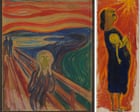
- The Munch Museum in Oslo is exhibiting Edvard Munch's 12-canvas Freia frieze — commissioned in 1922 as public art for the women's canteen at Norwegian chocolate company Freia's factory, on loan while the canteen undergoes renovations.
- Curator Ana María Bresciani frames the exhibition (running until October 11, 2026) around workers' rights, gender equality, and Freia's history of exploitative cacao sourcing from South America, the Caribbean, and later British colonial Ghana.
- Chocolate mogul Johan Throne Holst paid Munch 80,000 Norwegian kroner (equivalent to about £192,000 today), while the female "chocolate girls" survived on starvation wages — a gulf flagged by Oslo newspaper Arbeiderbladet on October 15, 1923.
- The frieze arrived at the factory in 1923 just as Norwegian workers won the eight-hour day and summer holidays, though Bresciani notes the depicted leisure scenes (summer cottages, swimming) were largely inaccessible to the women Munch painted them for.
- Freia is now owned by US food giant Mondelēz International, and the frieze's display marks the first time it has been exhibited outside the factory in Norway (it previously appeared in Stockholm in 1968).
Why it matters: The exhibition reframes Munch's factory paintings as a study in corporate paternalism — contrasting the £192,000 commission with the starvation wages of the women meant to live with the art, a gulf that Oslo's Arbeiderbladet flagged in 1923 and that Bresciani's curation now revisits through the lens of colonial cacao sourcing.
Ask SkimNews