Nikon Strips Ning Xu's Small World Win After AI Probe — SkimNews
Get the Tech newsletter
Daily tech — startups, AI labs, chips, the launches that shape the next decade. Free.
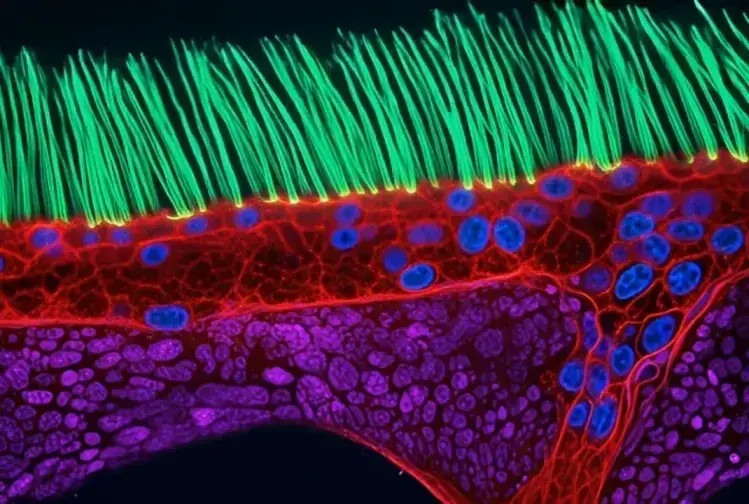
- Ning Xu, from Tsinghua University in China, won Nikon’s 16th annual Small World in Motion contest with a microscope video showing cilia beating in the airways of a child with primary ciliary dyskinesia, a rare respiratory disorder.
- University of Florida associate professor said structures in the winning clip “pop in and out of existence” and cilia “appear from nowhere,” describing the anomalies as classic indications of AI generation.
- Ian Donovan, a PhD student at UT Southwestern Medical Center, said the source image appeared to contain a distinctive watermark indicating AI generation; two former competition judges also raised concerns about the clip’s legitimacy.
- Ning Xu admitted in a now-deleted LinkedIn post that AI was used only to distinguish and visualize features in reconstructed grayscale super-resolution images during post-processing, denied that AI generated the video, cilia or their movement, and maintained that the allowed enhancement did not break the rules; scientists said sharing the RAW grayscale video could have removed their doubts.
- Nikon found after an investigation that Xu violated the competition rules and stripped him of the prize, then said it would revisit the rules and evaluation procedures for future entries.
- Nguyen Nam Nhat of Vietnam was awarded the top spot instead for a video featuring a tiny roundworm and a single-celled organism.
Why it matters: Xu’s defense turned on the difference between AI-assisted enhancement of reconstructed images and AI-generated cilia, but reported anomalies and the unshared RAW grayscale video left the scientific dispute unresolved. Nikon reassigned first place in its 16th annual contest and said it would revisit the rules and evaluation procedures for future entries.
Ask SkimNews


