Bitcoin Drops to $62K on Hormuz Tensions — SkimNews

SkimNews Take
Bitcoin's slide alongside the Nasdaq during an oil-supply shock undercuts the "digital gold" thesis: traders are treating it as a high-beta risk asset, not a geopolitical hedge, meaning geopolitical premiums flow to crude rather than crypto.
Get the Finance newsletter
Daily finance — markets, central banks, M&A, the prints that move money. Free.
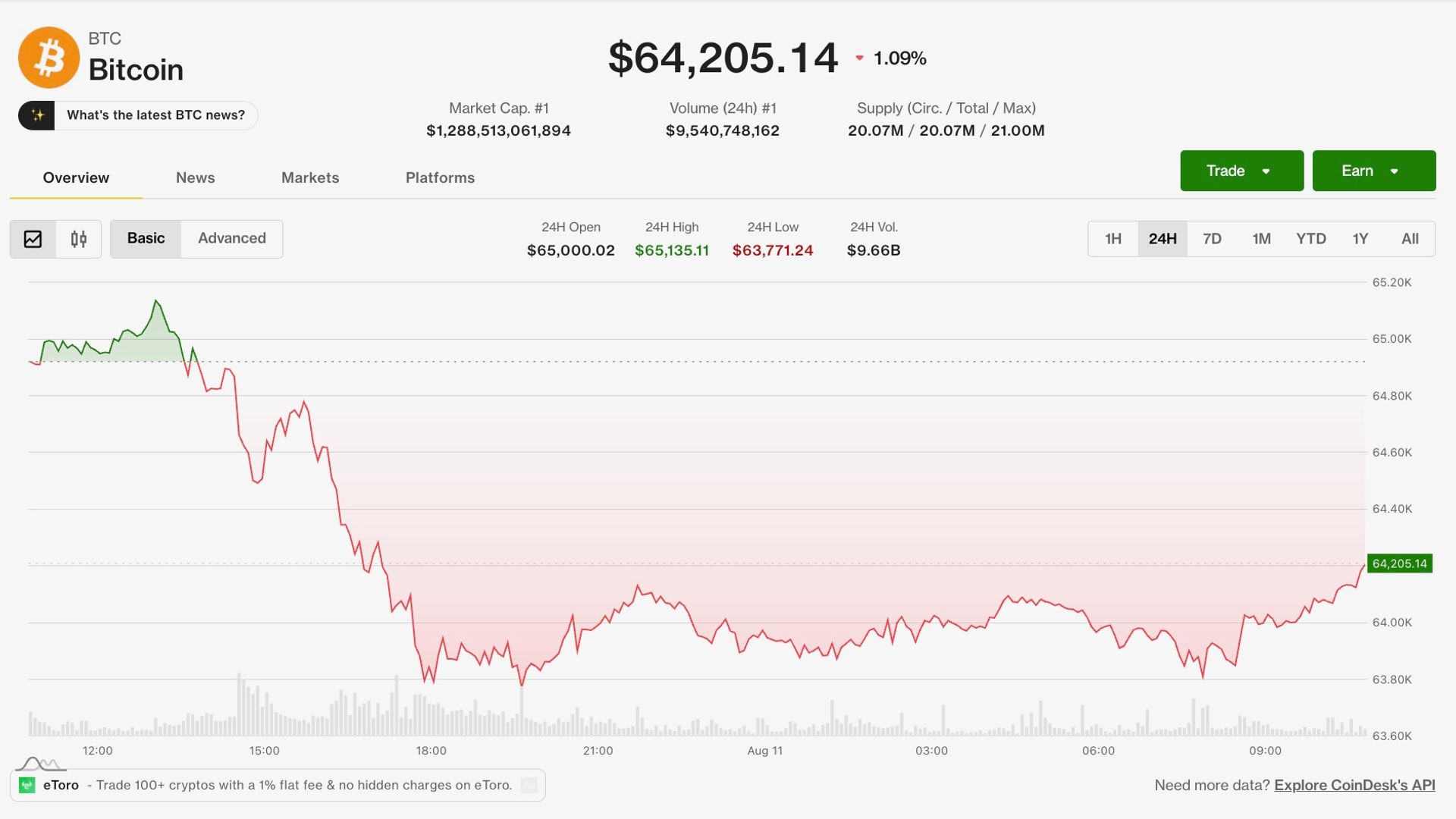
- Bitcoin fell toward $62,000 amid a broad risk-off move triggered by renewed U.S.-Iran tensions, with traders noting aggressive shorting and weak price structure.
- Trump said the U.S. would take control of the Strait of Hormuz, calling for the country to become its 'guardian' and seek reimbursement, after Iran closed the waterway.
- Oil prices held gains near $75 per barrel for WTI crude as the Hormuz standoff disrupted energy security expectations, reinforcing risk-asset volatility.
- Sellers maintained dominance in Bitcoin markets after the weekly close, with price settling at the mVWAP level—a key short-term indicator bulls must defend to prevent a drop to $60,000.
- JDK Analysis observed massive shorting into the New York open, warning of further downside unless spot demand emerges to stabilize the market.
- Roman, a market commentator, maintained a bullish outlook for Bitcoin, citing RSI exhaustion and exchange net inflows as signs a rebound to $70,000–$75,000 remains likely.
Why it matters: Bitcoin’s correlation with macro geopolitical risk is reasserting as U.S.-Iran tensions disrupt oil and equity markets. With open interest rising during the sell-off, leveraged positions face liquidation pressure, increasing volatility just as some analysts bet on a Q3 recovery.
Ask SkimNews