Experts Split on Trump-Xi Summit: AI Progress or Pageantry? — SkimNews
Get the Geopolitics newsletter
Daily geopolitics — wars, elections, sanctions, the diplomatic moves that move markets. Free.
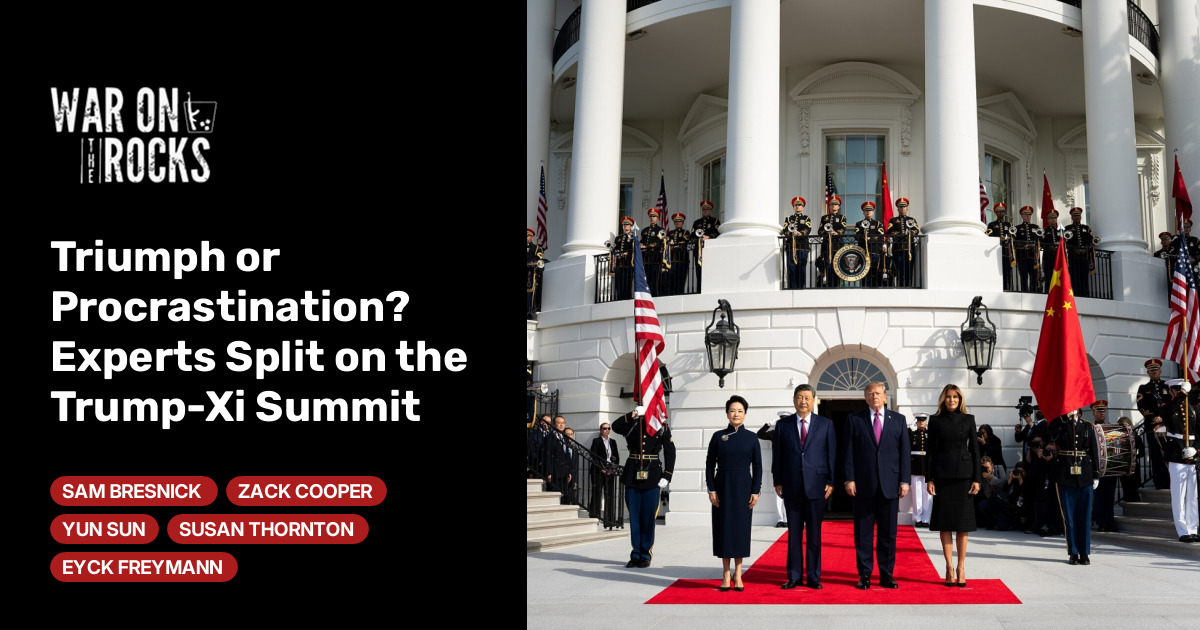
- Trump hosted Xi in Washington for a roughly three-day summit whose agenda spanned trade, AI, and Taiwan, with experts split between those who called it substantive and those who called it a can-kicking exercise
- Treasury Secretary Bessent and Vice Premier He Lifeng agreed to establish an AI risk dialogue and a national security incident notification mechanism, but binding mutual AI regulations remain off the table
- The new notification mechanism is unlikely to be useful because China struggles to share information and communicate during crises, according to Sam Bresnick of Georgetown's Center for Security and Emerging Technology
- Trump is pushing AI acceleration despite warnings from Silicon Valley, while Xi acknowledged the importance of keeping AI under human control — though Beijing reads U.S. safety rhetoric as a strategy to lock China into second place
- Neither government is interested in slowing AI development, leaving the dialogue's best-case outcome as mutual position-understanding rather than enforceable rules
- Zack Cooper of the American Enterprise Institute summarized the summit as 'pageantry and procrastination,' noting Trump met Xi planeside and continued pouring on pomp that left little room for substance over the multi-day visit
Why it matters: With binding AI rules off the table and the incident-notification mechanism already judged ineffective by one cited expert, the summit's central AI deliverable — a dialogue track — amounts to a conversation forum rather than a guardrail, leaving both governments free to keep accelerating the AI race that Bresnick says each side views through a competitive, not cooperative, lens.
Ask SkimNews




