TRIPP failure shields Armenia from Iranian attacks — SkimNews
Get the Geopolitics newsletter
Daily geopolitics — wars, elections, sanctions, the diplomatic moves that move markets. Free.
- Trump launched a war on Iran, which diverted U.S. attention and delayed the implementation of the Caucasus Corridor (TRIPP) project.
- TRIPP was intended to create a transportation link through southern Armenia to the Azerbaijani exclave Nakhchevan and Turkey, but the joint Armenian‑American company that would manage it was never formed and no contracts were signed.
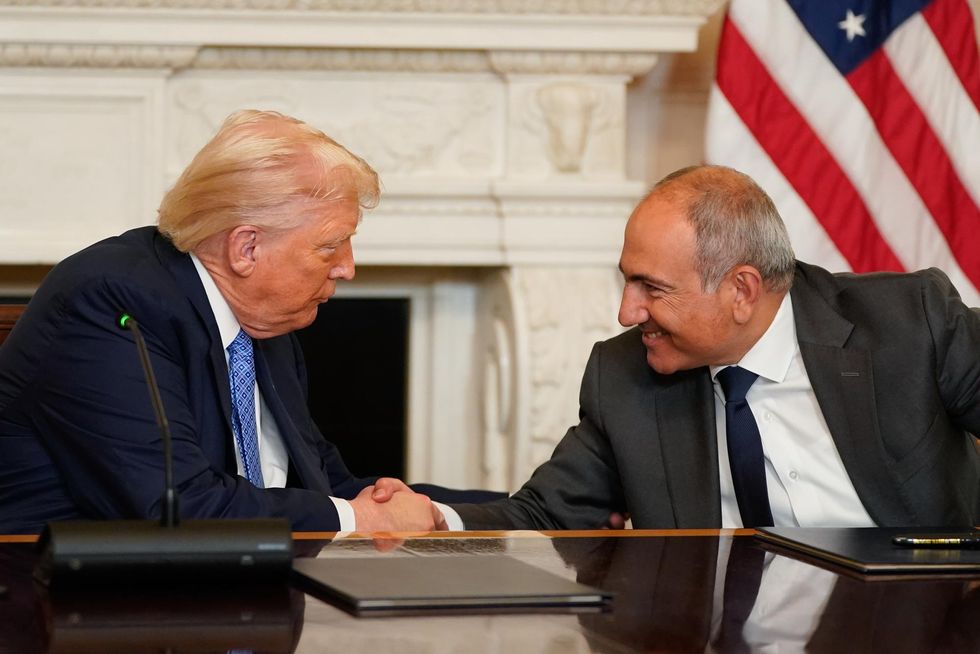
- Azerbaijan insisted on constitutional changes that would permanently renounce Armenia’s claims on Nagorno‑Karabakh, causing talks at the August 2025 White House signing ceremony to stall without a peace agreement.
- Iran launched drones that struck Nakhchevan’s airport in early March, wounding four civilians, underscoring the risk that any TRIPP infrastructure would become a target for Iranian missile and drone attacks.
- Pashinyan acknowledged in March that TRIPP is “not a high priority” for the U.S. administration, noting that the war on Iran could affect the project’s timeline.
- Karapetyan warned that the TRIPP route runs only 30‑40 meters from the Iranian border, raising concerns that an American‑run corridor could invite Iranian retaliation.
- European leaders such as French President Emmanuel Macron and Canadian Prime Minister Mark Carney attended the European Political Community summit in Yerevan, endorsing the TRIPP concept as part of Armenia’s “Western pivot,” despite limited concrete support.
Why it matters: Armenia gains strategic safety because the unfinished TRIPP corridor leaves no U.S. infrastructure for Iran to target, while the United States forfeits a prospective instrument of influence in the South Caucasus, and the region loses a potential conduit for trade and diplomatic engagement.
Ask SkimNews