NVIDIA Unveils DLSS 5 AI Neural Rendering for Fall — SkimNews

Get the Tech newsletter
Daily tech — startups, AI labs, chips, the launches that shape the next decade. Free.
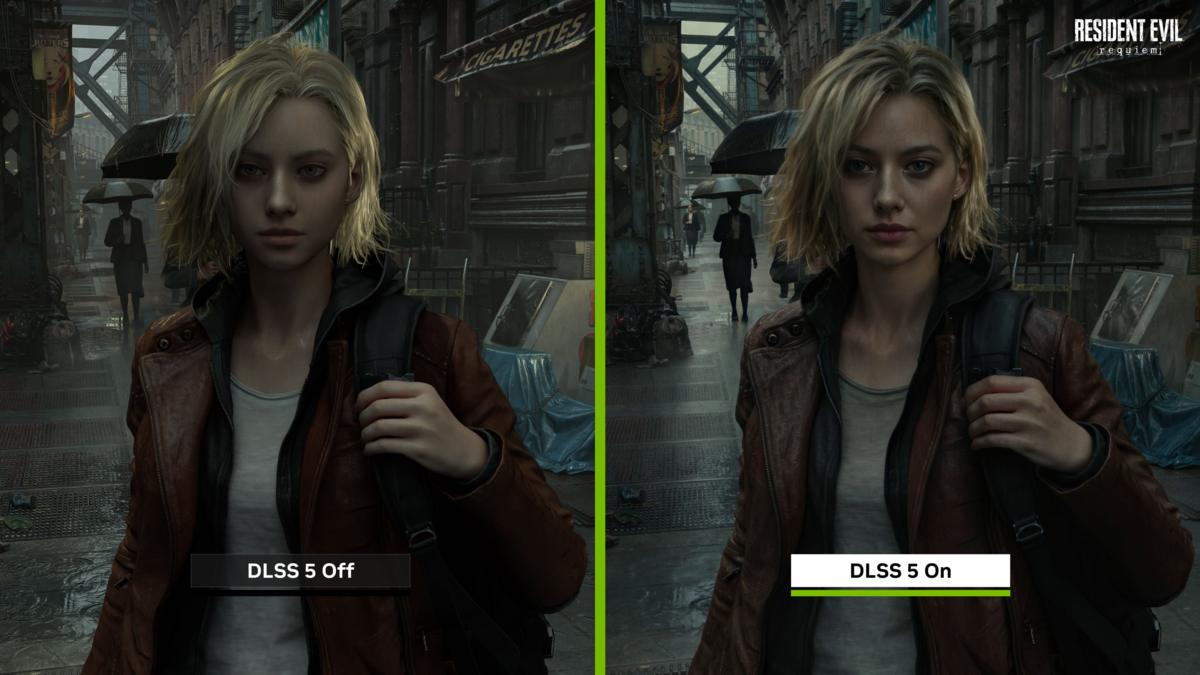
- NVIDIA unveiled DLSS 5 at its GTC 2026 keynote, claiming the technology will deliver "photoreal" image quality using a real-time neural rendering model when it arrives this fall
- DLSS 5 takes a game's color and motion vectors per frame as input and uses an AI model to infuse scenes with photoreal lighting and materials anchored to source 3D content, running in real time at up to 4K resolution
- Jensen Huang demonstrated the technology on Resident Evil: Requiem, Hogwarts Legacy, and Starfield, running a system with two RTX 5090 GPUs, with single-GPU support planned for later
- NVIDIA called DLSS 5 the "biggest breakthrough in computer graphics" since real-time ray tracing arrived in 2018
- Engadget observed that the on-stage comparisons appeared to show DLSS 5 against games with no DLSS features turned on, leaving open how much it improves over DLSS 4.5 with full path tracing enabled
Why it matters: DLSS 5 signals NVIDIA's pivot from AI-assisted upscaling to AI-authored pixels, with Huang pitching Hollywood-quality rendering without studio-grade GPU horsepower. The catch: the launch demo required dual RTX 5090s and was compared against games with DLSS disabled entirely — not DLSS 4.5 maxed out — so the real-world upgrade for existing hardware remains unproven.
Ask SkimNews