NASA targets 2028 nuclear Mars demo with Gateway hardware — SkimNews
Get the Health newsletter
Daily health & science — research, biotech, public health, the studies worth knowing. Free.
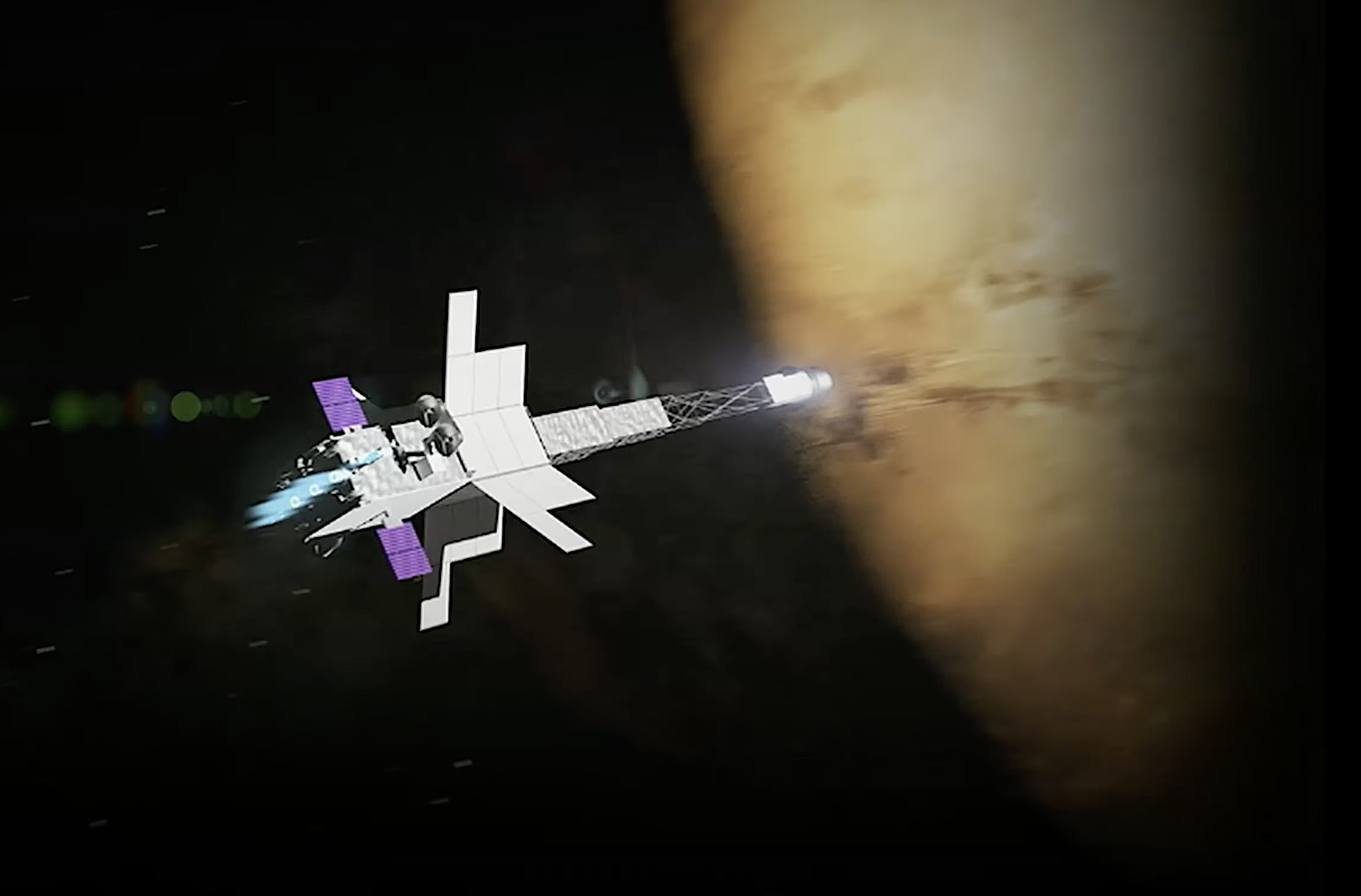
- NASA unveiled SR-1 Freedom, a nuclear-electric propulsion demonstration targeting a Mars launch before the end of 2028, with Administrator Jared Isaacman saying the agency will cannibalize the core module of the paused Gateway program rather than pursue a new program.
- The Power and Propulsion Element under construction at Lanteris Space Systems in Palo Alto will be retrofitted with a uranium-fueled fission reactor alongside its existing solar arrays, carrying what NASA calls the most powerful electric propulsion system ever flown: three 12-kilowatt engines and four 6-kilowatt thrusters.
- The roughly 20-kilowatt fission reactor will produce about 20 times more electricity than the radioisotope generators currently powering NASA's Mars rovers and the Voyager probes, and would be the only US-built nuclear reactor flown in space in more than 60 years.
- NASA acknowledged roughly $20 billion in prior failed nuclear propulsion efforts, including the canceled Project Prometheus and the DRACO program (jointly with DARPA, canceled in 2025), with Isaacman saying the agency 'hasn't won the right' to ask for billions more after that track record.
- The SR-1 mission will also deploy three Mars helicopters dubbed 'Skyfall,' based on NASA's Ingenuity design, each carrying cameras and ground-penetrating radar to scan for subsurface water ice and scout landing sites for future human crews.
- Missing the late 2028 launch window pushes the next Earth-Mars alignment to early 2031; NASA says mission design must be complete by June and large-scale assembly begin at the start of 2028 to meet the 33-month timeline.
- Launching radioactive fuel still requires Department of Energy review, and SpaceX's Falcon Heavy is separately undergoing nuclear certification to launch NASA's Dragonfly mission to Titan.
Why it matters: SR-1 Freedom tests whether NASA can finally operate a nuclear reactor in space after 60+ years without one and roughly $20 billion in prior failed programs. The December 2028 launch window is the only realistic near-term shot — missing it means waiting until early 2031 for the next Earth-Mars alignment — and the mission still requires Department of Energy approval to launch radioactive fuel.
Ask SkimNews


