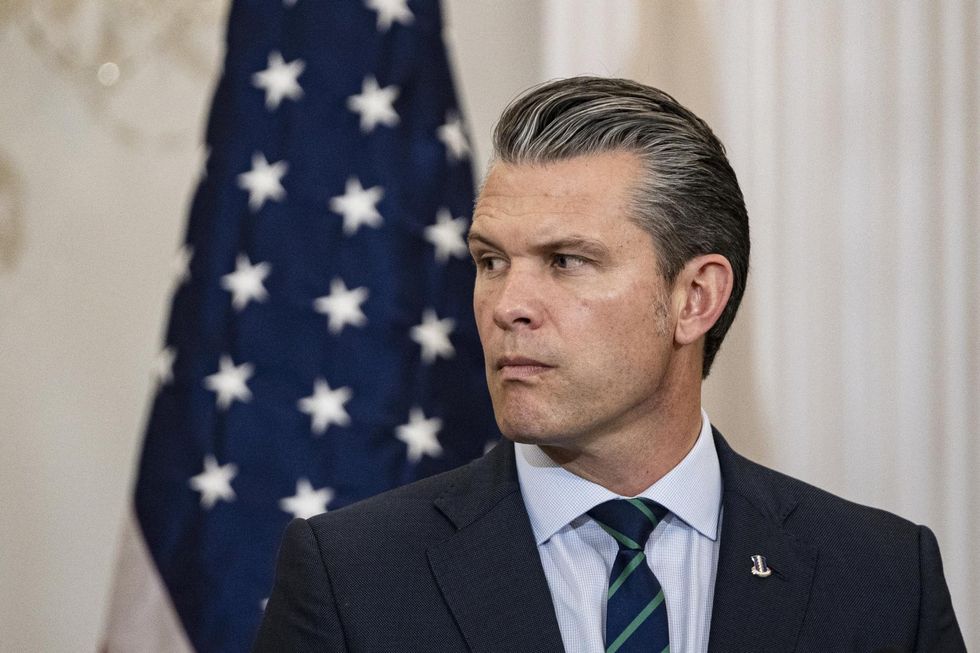
Hegseth Ousts Army Chief as Iran War Hits Week 5 — SkimNews

Get the Geopolitics newsletter
Daily geopolitics — wars, elections, sanctions, the diplomatic moves that move markets. Free.
- Hegseth asked Army Chief of Staff Randy George to retire effective immediately, confirmed by Pentagon spokesperson Sean Parnell; a successor was not announced.
- U.S. Central Command reported forces have struck more than 12,300 targets in Iran, destroying or damaging 155-plus Iranian vessels alongside command centers, IRGC posts, air defenses, ballistic missile sites, and drone facilities.
- Britain convened representatives from more than 40 countries — without the U.S. — to discuss reopening the Strait of Hormuz, through which roughly a fifth of the world's oil typically transits; Iran's closure has pushed oil, gas, and fertilizer prices up.
- Macron rebuked Trump's personal attacks and NATO criticism, saying 'we're talking about war' and calling the remarks 'neither elegant nor appropriate,' while warning that 'if you create doubt about your commitment every day, you drain it of its substance.'
- Iranian President Pezeshkian addressed a letter to the American public questioning the war's rationale and offering a veiled opening for dialogue, though his level of influence in Iran's post-strike leadership is unclear.
- Iran and Iran-backed groups struck across the Gulf: Saudi Arabia intercepted drones and a ballistic missile aimed at its eastern oil region, an Iranian drone set fire to Kuwait International Airport fuel depots, Bahrain closed a key highway amid falling debris, and the U.S. Embassy in Baghdad warned of imminent militia attacks on central Baghdad.
- Israel launched overnight airstrikes on Beirut's southern suburbs, killing at least 50 people in Lebanon on Wednesday, while Defense Minister Israel Katz said Israel is creating a security zone in southern Lebanon and destroying villages to block Hezbollah rocket fire.
Why it matters: The Pentagon leadership shakeup lands exactly as Trump promises a 2-3 week escalation that includes a threat — flagged by an international law expert as potentially constituting war crimes — to destroy Iran's civilian energy and desalination infrastructure. With the U.S. excluded from Britain's 40-country Hormuz meeting, allies are coordinating around Washington rather than with it, while Iran continues striking Gulf states and the Strait stays choked, keeping global oil and gas prices elevated.
Ask SkimNews