Pakistan Builds Rocket Force Below Nuclear Threshold
Get the Geopolitics newsletter
Daily geopolitics — wars, elections, sanctions, the diplomatic moves that move markets. Free.
- Pakistan withheld its Babur cruise missiles during the May 2025 India-Pakistan crisis because all Baburs sit with the Strategic Plans Division, the nuclear custodian, and readying them would have signaled imminent nuclear use to New Delhi, Washington, and other regional capitals
- During Operation SINDOOR (launched May 7, 2025), India struck Pakistani air bases with BrahMos supersonic missiles targeting runways, parked aircraft, and refueler tankers; Pakistan responded with drones and missiles against Indian air defense infrastructure but held back the Babur
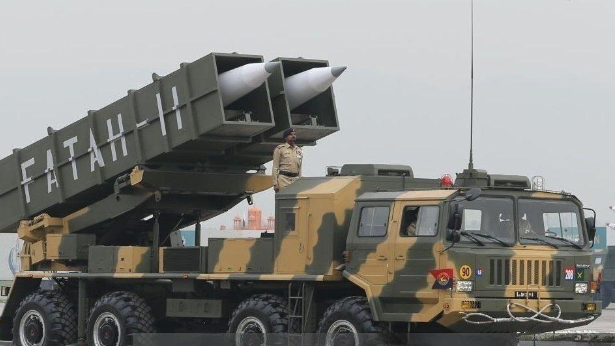
- Pakistan has established the Army Rocket Force Command under General Headquarters, structurally separate from nuclear command channels, and inducted Fatah-II rockets and Fatah-IV subsonic cruise missiles with a range of up to 700 kilometers to hold Indian military targets at risk without crossing the nuclear threshold
- The 2026 Iran war demonstrated that states can impose costs on adversaries through cross-domain integration, including ballistic missiles, one-way attack drones, and proxy networks, without crossing nuclear thresholds, though such conflicts can expand horizontally through maritime disruption and regional spillover
- Pakistan is centralizing command through a proposed Chief of Defence Forces role, while the 27th Amendment entrenched the army chief's ultimate veto over deployments, reflecting the lesson that fragmented command structures are dangerous when wars are fast and multi-domain
- The source flags a built-in contradiction: the same conventional capabilities that make limited war more controllable also make it more usable, potentially making future India-Pakistan crises harder to keep limited
Why it matters: Pakistan's conventional-nuclear entanglement has historically forced it to either escalate to the nuclear level or absorb punishment. The new Army Rocket Force Command, backed by Fatah-series rockets and 700-km cruise missiles, gives Islamabad a usable conventional option to deter India without triggering nuclear alarm, a structural shift the source says makes limited war more operationally viable but also more tempting.
Ask SkimNews