Merz's Asia Tour Puts Rare Earths and China in Focus — SkimNews
Get the Geopolitics newsletter
Daily geopolitics — wars, elections, sanctions, the diplomatic moves that move markets. Free.
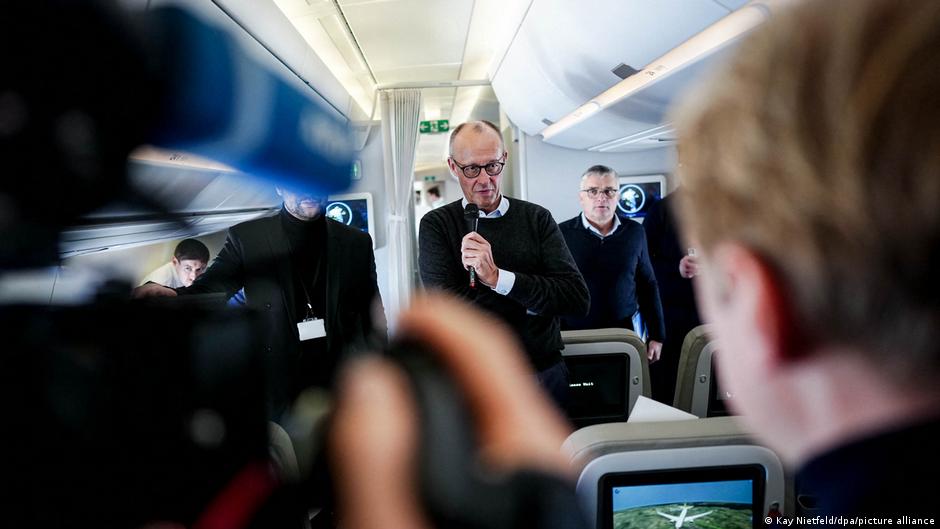
- Friedrich Merz kicked off a five-day Asia tour on Monday, October 26, 2026, heading first to Singapore — where he is set to deliver a major foreign policy speech and meet Prime Minister Lawrence Wong — before visits to Japan and South Korea with an entourage of 30 senior businesspeople from industry, tech, defense and energy.
- Sanae Takaichi will host Merz in Tokyo on Wednesday for the German-Japanese Business Summit, with their talks expected to cover supply-chain resilience, protecting strategically important industries and securing access to rare earths and other components largely controlled by China.
- Japan already welcomes German military deployments: the frigate Bayern docked in Tokyo in May 2021, the German Navy's first warship there in 20 years, and German Eurofighter Typhoons flew joint air drills over northern Japan in July 2024.
- China anchors Tokyo's security agenda as Beijing ties itself more closely to Russia and North Korea, stages joint military exercises off Japan and insists on bringing Taiwan under mainland control; Waseda's Ben Ascione says any conflict over Taiwan or the South China Sea would have a major impact on global trade and Germany, and that Germany has come more into line with Takaichi's view of the China threat.
- Frank-Walter Steinmeier is visiting China at the same time in an officially separate trip that likewise appears aimed at boosting Berlin's economic and security relationships during geopolitical instability threatening global supply chains.
- Lee Jae-myung is due to meet Merz in Seoul, where the chancellor opens the 19th Asia-Pacific Conference of German Business and visits the DMZ — though that leg could be canceled after a North Korean mine injured three South Korean soldiers last month, an incident Pyongyang blames on Seoul; Merz can also point to Germany's 1990 reunification, though the two Koreas remain technically at war with an aspiring nuclear power on Seoul's border.
- Saeme Kim of the Asan Institute says many European countries will be irritated by the Lee administration's outreach to North Korea and Russia — including petroleum exports to Russia, which Seoul says breach no sanctions — and warns some of those policies will damage South Korea's own long-run interests, even as Seoul tries to open a communication channel with Kim Jong Un's regime, which has sent troops to the war in Ukraine.
Why it matters: Germany is lining up security partners around China while relying on Chinese-controlled rare earths for advanced technology, and Merz's 30-member business delegation shows the economic stake riding along with the security talks. Berlin's narrow alternative suppliers for those components are exactly what Tokyo says it wants to hedge.
Ask SkimNews