Harvard scientists turn a silicon chip into a DNA writing machine — SkimNews
Get the Health newsletter
Daily health & science — research, biotech, public health, the studies worth knowing. Free.
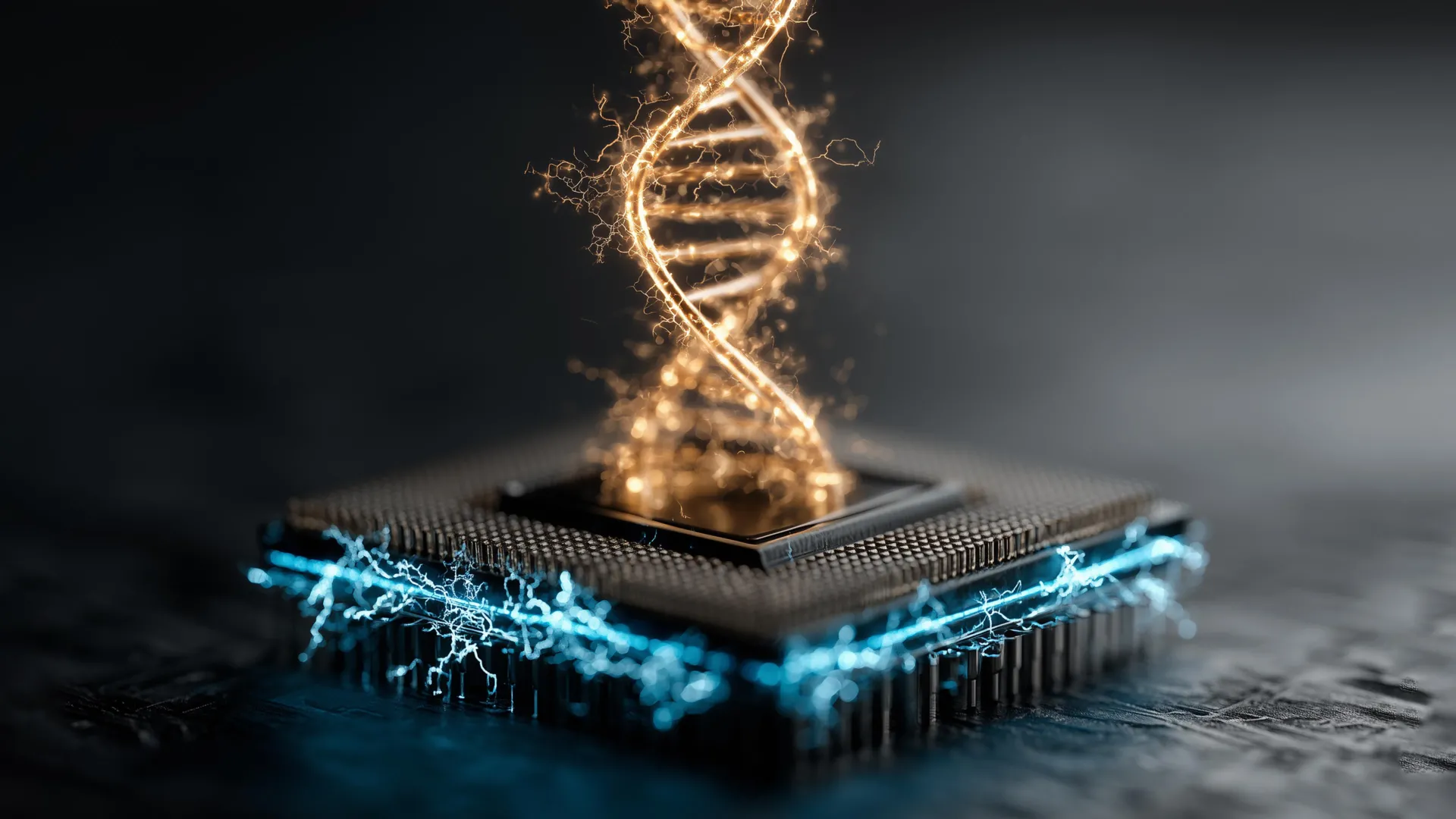
- Harvard SEAS researchers built a silicon chip that synthesizes 64 different DNA sequences in parallel — each up to 39 nucleotides long — roughly quintupling the prior ~12-sequence ceiling for enzymatic DNA synthesis, per the Nature Electronics paper.
- The chip replaces phosphoramidite chemistry's hazardous organic solvents with water-based enzymes, with tiny electrical currents lowering local pH at each of 64 sites to trigger nucleotide addition.
- Each synthesis site uses two concentric ring electrodes: the inner ring generates protons to drop pH and let the DNA strand grow, while the outer ring removes stray protons to keep the acidic zone confined to that single site.
- The underlying electronics were originally developed by Jeffrey Abbott in Donhee Ham's lab to record electrical activity inside large populations of neurons; the team only later realized the same current-control precision could drive DNA synthesis.
- The researchers demonstrated a DNA data storage proof of concept by encoding a 169-byte text across the 64 synthesized sequences on the chip.
- Scaling tests revealed the bottleneck isn't the silicon but the deprotection chemistry — intermediate molecules drift into neighboring sites even when pH is perfectly controlled, so tighter packing will require new chemistry, not new hardware.
- The project is a collaboration among Harvard, the Broad Institute, DNA Script, and POSTECH, funded in part by IARPA, Horizon Europe's Hyperion project, and Samsung Research.
Why it matters: The chip proved it can localize reactions to individual sites; the scaling ceiling now sits with chemists rather than electrical engineers. That handoff narrows the path toward decentralized, solvent-free DNA manufacturing — directly relevant for diagnostics and gene synthesis labs whose growth is constrained by the environmental cost of phosphoramidite chemistry at scale.
Ask SkimNews