Data Centers Turn to Onsite Power to Calm Opposition — SkimNews
SkimNews Take
Onsite generation allows data centers to internalize some grid costs and capacity concerns, shifting the burden of infrastructure expansion away from the local utility and potentially easing community resistance to new development.
Get the Energy newsletter
Daily energy & climate — solar, EVs, oil, the policy fights and tech bets shaping the transition. Free.
- Community opposition to data centers has grown across Indiana, New York, and Georgia, with residents citing noise, emissions, water use, visual impact, land use, and grid‑cost concerns.
- $64 billion in data‑center projects were blocked or delayed nationwide between 2023 and Q1 2025, and the backlog surged to $162 billion in Q2 2025 alone.
- Developers are adopting “bring‑your‑own‑power” (BYOP) strategies, installing onsite generation to reduce reliance on the grid and address ratepayer cost worries.
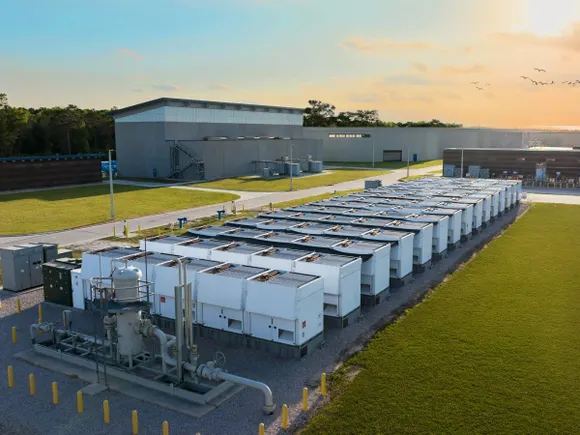
- Flexible onsite generation, especially pipeline‑connected natural‑gas reciprocating engines, can act as bridge power, join demand‑response and energy markets, and export power after interconnection.
- ERock systems have dispatched grid‑supportive power over 200,000 times since 2019, showing the reliability of flexible onsite assets.
Why it matters: Local ratepayers gain relief from grid‑cost burdens while developers avoid costly delays; the $162 billion Q2‑2025 project backlog underscores the economic stakes at play.
Ask SkimNews


