30% of Planned Data Center Power Going Off-Grid — SkimNews

Get the Tech newsletter
Daily tech — startups, AI labs, chips, the launches that shape the next decade. Free.
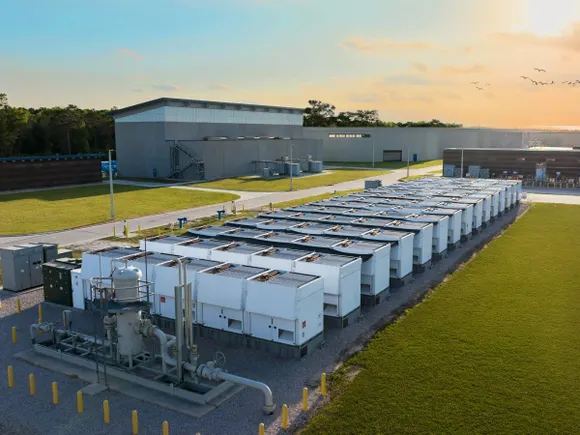
- Chevron is working on a deal to build a natural gas plant dedicated to a Microsoft data center in Texas, one of several signs that on-site power is gaining traction with AI infrastructure builders.
- Cleanview reported in February that roughly 30% of all planned data center power capacity is expected to be on-site, up from almost nothing a year earlier, and founder Michael Thomas said the figure could rise to 50%.
- Crusoe president Cully Cavness said 'speed is the competitive currency' and that islanded data centers can be engineered to operate off-grid for years, bypassing multi-year grid-connection queues and avoiding strain on the electric system.
- EmeraldAI founder Varun Sivaram argued the opposite, saying 'if we decouple the AI ecosystem from the electric grid ecosystem, I think everybody loses' because AI becomes more expensive and the power sector loses its 'largest and most lucrative potential anchor client.'
- Google's Amanda Peterson Corio pushed back on islands, saying operators 'have to overbuild the system for the same amount of reliability'—a sign that not every hyperscaler is on board with going it alone.
- NextEra Energy CEO John Ketchum predicted a hybrid path, saying a data center 'could start as an island' but 'most hyperscalers are going to want an extension cord between data centers and the grid.'
- FERC ordered the nation's largest grid operator last year to rewrite its rules for data center–power plant pairing, and Chair Laura Swett conceded 'we cannot move as deftly as a private corporation'—adding bluntly: 'speed is winning.'
Why it matters: The 30% on-site share of planned data center capacity—up from near zero a year ago—gives natural gas producers and pipeline companies like Williams a new captive buyer, while threatening to strip utilities of the 'largest and most lucrative potential anchor client' EmeraldAI's Sivaram says they need. Hyperscalers' willingness to bypass the grid entirely could reshape how trillions in AI infrastructure costs are distributed between ratepayers and corporate balance sheets.
Ask SkimNews